
The Microgravity Breakthrough
ZBLAN fibers are the gold standard. Gravity usually ruins them. Microgravity solves the crystallization problem. This synthesis process eliminates the convection currents that plague terrestrial factories, preventing the formation of light-scattering crystals. Such precision allows for a level of transparency that silica fibers cannot reach. AI clusters now demand this exact performance to maintain throughput across massive neural networks.
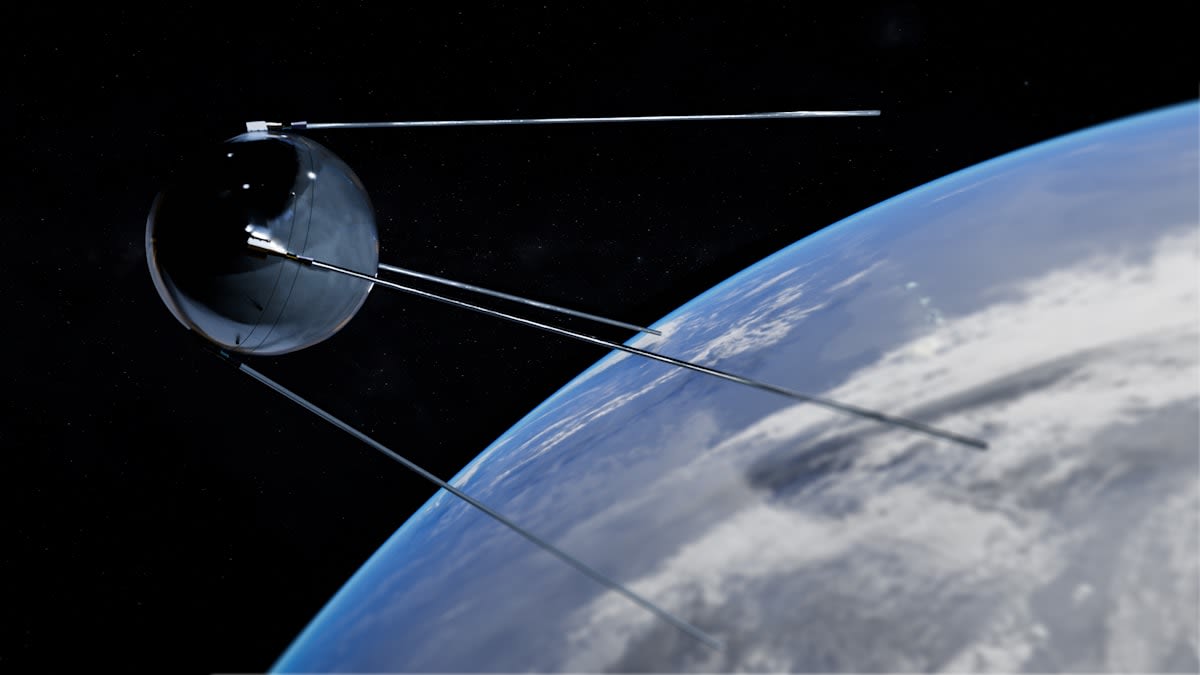
Consider the contrast in global infrastructure. A power outage in Lagos can halt digital commerce in an instant. Meanwhile, a chip shortage in Hsinchu delays the very hardware these fibers will connect. The physical layer of the internet remains the ultimate bottleneck. Space-manufactured glass removes this constraint by providing a transmission medium with near-zero attenuation. This is not a marginal gain but a step-change in capacity.
Material Fact
ZBLAN (Zirconium, Barium, Lanthanum, Aluminum, and Sodium) offers a theoretical loss limit significantly lower than traditional silica, but only when produced without the interference of Earth's gravity.
AI Infrastructure and the Demand Surge
Demand is exploding. Corning's North Carolina factory is already ramping up optical fiber production to keep pace with the AI boom. Their partnership with NVIDIA aims to create 3,000 jobs across two states to support this growth. High-speed networks are the backbone of generative AI. Without these fibers, the compute power of H100 clusters is wasted by slow data transit.
"AI will reshape work like the Industrial Revolution."— Jensen Huang, CEO of NVIDIA
Industrial-scale production in orbit is the next logical step. Terrestrial factories are hitting a physical wall. Corning's fastest growth period in nearly two centuries is driven by this hunger for bandwidth. Flawless ZBLAN fibers would allow these networks to span greater distances without signal regeneration. This reduces the cost of maintaining the AI backbone.
Efficiency is the only metric that matters now. Every decibel of signal loss equals lost revenue in high-frequency trading or AI training. The integration of space-made fibers into terrestrial hubs will create a hybrid network. This architecture optimizes for both massive volume and absolute purity. It is a pragmatic response to the limits of Earth-bound chemistry.
Market Valuations as Signal
Capital is flowing toward the physical layer. Optical Cable Corporation (OCC) currently trades at a trailing 12-month enterprise value-to-EBITDA (EV/EBITDA) multiple of 59.41X. This figure dwarfs the broader industry average of 20.32X. Investors are betting on the specialty fiber market. Such a premium suggests the market expects a breakthrough in transmission technology.
| Metric | Optical Cable Corp (OCC) | Industry Average |
|---|---|---|
| EV/EBITDA Multiple | 59.41X | 20.32X |
| Net Sales Growth | 16.1% | Not Specified |
| Recent Revenue | $38.6 Million | N/A |
Revenue growth validates the trend. OCC saw net sales increase by 16.1% year over year to $38.6 million for the first six months of fiscal 2026. Their collaboration with Lightera further expands their product portfolio. These numbers reflect a growing backlog of orders from enterprise and specialty markets. The market is preparing for a world where bandwidth is no longer the limiting factor.
Valuation spikes usually precede technical adoption. The gap between OCC's multiple and the industry average is a signal of anticipated disruption. Traditional fiber is a commodity. ZBLAN in microgravity is a strategic asset. Those who control the production of flawless glass will control the speed of the AI era.
The Orbital Networking Race
China is moving aggressively. Hongqing Technology, a satellite manufacturer, recently raised $191 million. This funding will enhance their core capabilities in satellite networking services. Their test satellites, launched May 31 on a Long March 2D rocket, focus on direct-to-device internet. High-purity fibers are essential for the laser links connecting these constellations.
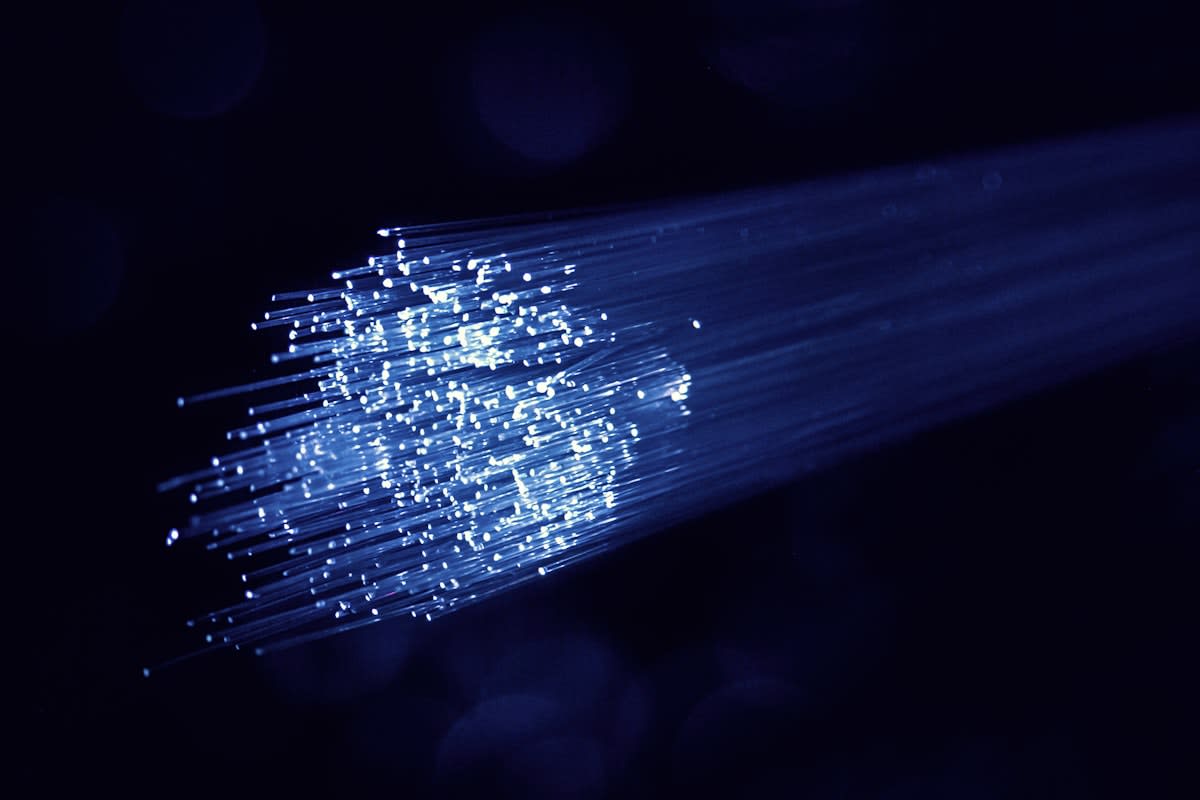
Networking in space requires zero-defect materials. Traditional fibers degrade or underperform in the harsh thermal cycles of orbit. ZBLAN's properties, when synthesized in microgravity, provide the stability needed for permanent orbital backbones. Hongqing's capital raise indicates a shift toward building a full-stack space internet. This involves both the launch vehicle and the high-bandwidth glass.
Competitive pressure is mounting. The U.S. is leveraging partnerships between Corning and NVIDIA to secure the terrestrial end. China is focusing on the orbital end via firms like Hongqing. Both sides recognize that the first to scale space-based synthesis wins the bandwidth war. This is a race for the physical infrastructure of the 21st century.
Delta Analysis: 2025 vs 2026
Twelve months ago, ZBLAN was a laboratory curiosity. Today, it is a corporate priority. The delta is visible in the funding rounds and the valuation multiples. We have moved from theoretical physics to industrial planning. The focus has shifted from whether microgravity synthesis is possible to how quickly it can be scaled.
Investment patterns have changed. Six months ago, capital chased software-only AI plays. Now, the money is flowing into the 'hard' side of AI. Optical Cable Corporation's 59.41X multiple proves that the market now values the pipes as much as the processors. The physical constraints of the world are being priced into the stock market.
Production capabilities are expanding. Corning's ramp-up in North Carolina is a direct result of this realization. They are no longer just providing cables; they are building the nervous system for AI. The integration of space-manufactured ZBLAN into these networks will be the final piece of the puzzle.
The Physical Cost of Failure
Failure in this sector is expensive. A single crystal defect in a ZBLAN fiber can render an entire kilometer of cable useless. Terrestrial attempts to mimic microgravity using acoustic levitation have failed to produce the same purity. The only viable path is actual orbital synthesis. This makes the cost of launch a critical variable in the price per meter of fiber.
Logistics remain the primary hurdle. Moving raw materials up and finished fibers down requires a reliable supply chain. Hongqing's $191 million raise is partly a bet on this logistical capability. If the cost of launch continues to drop, the cost of ZBLAN will follow. Until then, these fibers will remain high-margin specialty products for the AI elite.
Pragmatic realism dictates a slow rollout. We will not see ZBLAN in home routers tomorrow. Instead, it will appear in the core of NVIDIA-powered data centers. It will link the most critical satellites in the Hongqing constellation. The rollout will be surgical, targeting the points of maximum congestion first.