The Dawn of the Bio-City
The urban skyline has remained fundamentally unchanged for a century: a grid of copper wires feeding sodium and LED lamps. But as of July 2026, that paradigm is fracturing. We are seeing the first tangible evidence of a transition where the city does not just contain nature, but becomes nature. The objective is no longer to build a more efficient lightbulb, but to eliminate the bulb entirely in favor of living, breathing infrastructure. This is not about adding a few glowing ornaments to a park; it is a fundamental architectural pivot toward bio-cities powered by water and nutrients instead of a centralized electrical grid.
Why now? The delta between the foundational research of 2023 and the experimental applications of 2026 is staggering. Just a few years ago, the scientific community was documenting the fact that all living things emit ultraweak biophoton emissions, a phenomenon explored in Nature. Today, we have moved from observing these faint signals to amplifying them through synthetic biology. The shift is systemic. We are moving from the era of electronic illumination to the era of biological luminescence, where the very materials used to build our cities—wood, plants, and fungi—provide the light.
The Paradigm Shift
The core transition is a move from energy consumption to biological activation. Instead of transporting electrons across miles of cable, we are now engineering organisms to synthesize light locally using basic metabolic processes.
Switzerland's Glowing Timber
In Switzerland, the Empa Materials-Science Institute has turned a common building material into a light source. By combining balsa wood with the naturally bioluminescent ringless honey fungus, Desarmillaria tabescens, researchers have created wood that emits a faint green glow. This isn't a surface treatment or a chemical paint; it is a biological integration. The fungus lives within the wood, waiting for a specific trigger to activate its light-producing chemical reaction.
The trigger is oxygen. When the treated wood is exposed to the air, the fungus reacts, producing a soft, natural light. While the current luminosity is considered faint, the implications for urban design are profound. Imagine pathway markers, ambient lighting in public squares, or emergency signage that requires zero electricity and zero maintenance beyond the basic biological needs of the fungus. This removes the need for trenching cables through city streets, offering a resilient alternative to traditional infrastructure that is prone to power outages and degradation.
While Switzerland focuses on the structural integration of fungi, the approach in Asia pivots toward the genetic reprogramming of the plants themselves.
The Firefly Blueprint in China
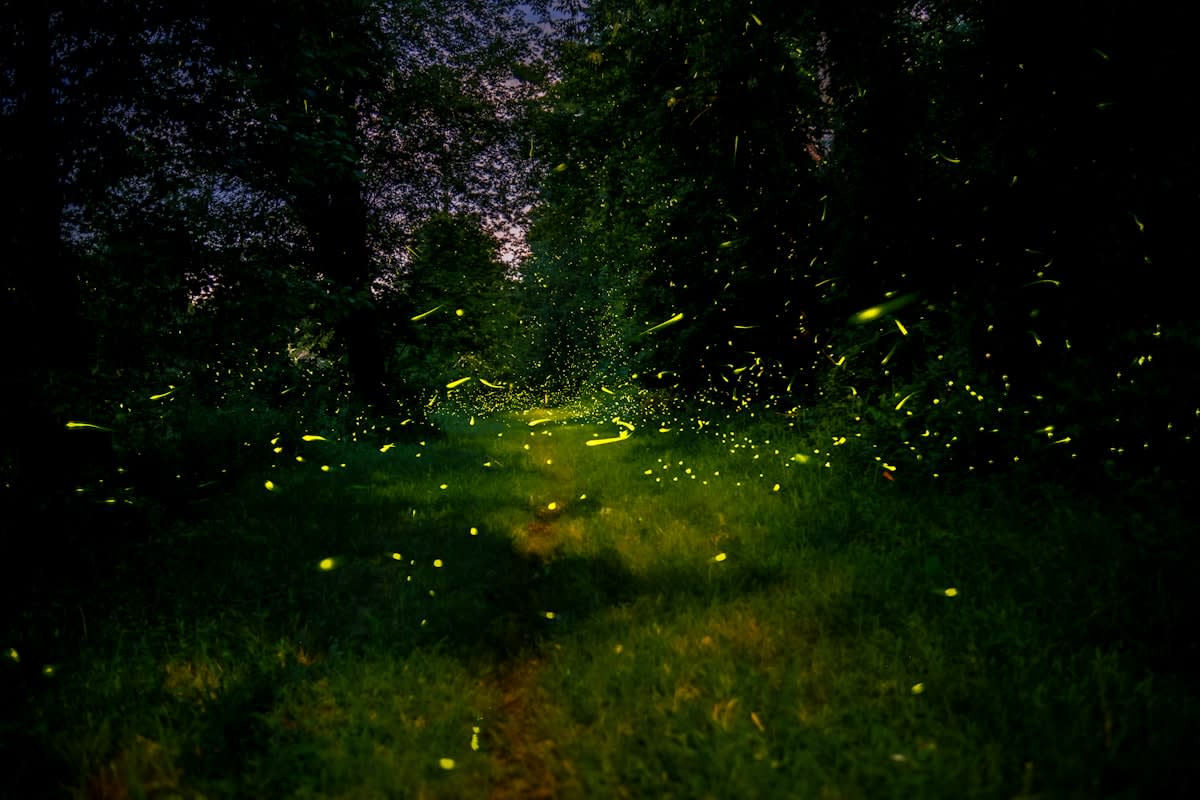
Chinese scientists are pushing the boundaries further by integrating firefly genes directly into plant genomes. The goal is the creation of true bio-cities where streetlights are replaced by towering, glowing flora. Unlike the Swiss fungal wood, which relies on a symbiotic relationship with a fungus, these plants are genetically modified to produce their own light as a primary biological function. This is an aggressive application of synthetic biology aimed at decoupling urban lighting from the energy grid entirely.
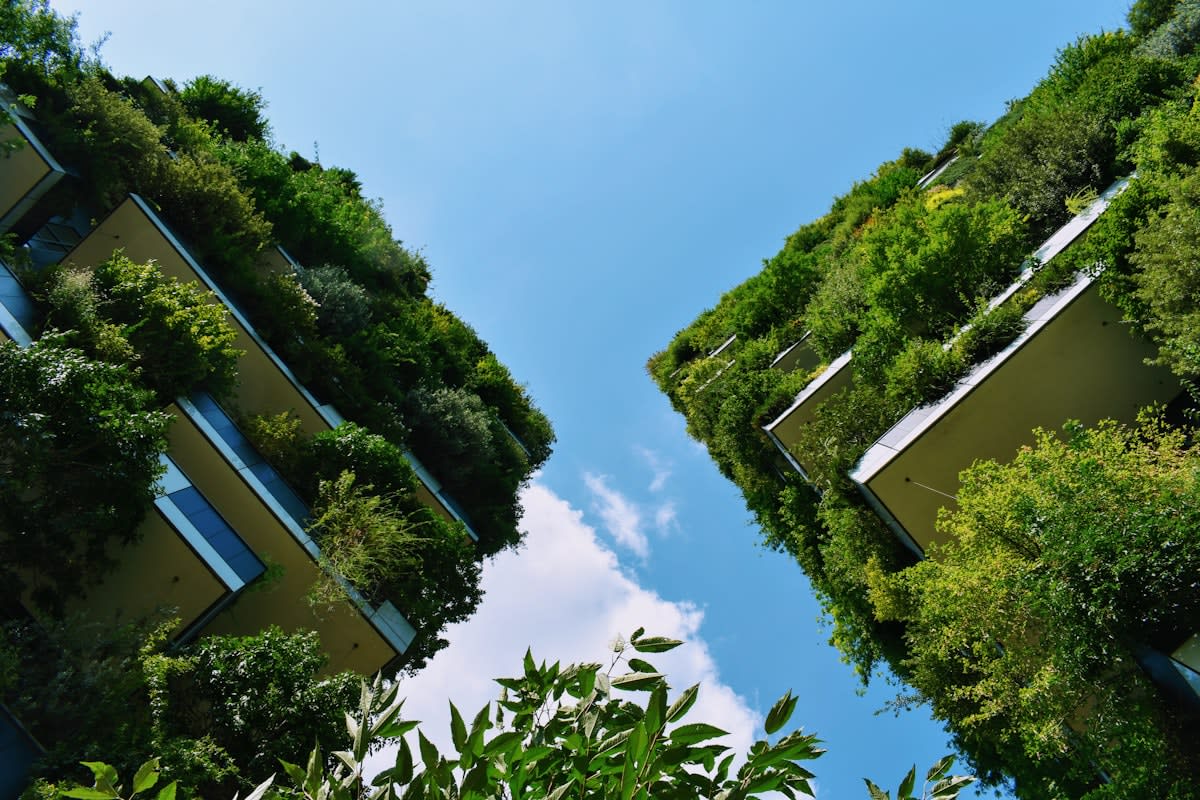
What does a city powered by water and nutrients look like? It is a city where the infrastructure is self-healing and carbon-sequestering. Instead of replacing a burnt-out LED panel, a city worker might simply provide additional nutrients to a glowing tree. This shift transforms the role of urban maintenance from electrical engineering to biological stewardship. The urgency of this research stems from the need for resilient infrastructure that can withstand the volatility of traditional energy markets and the physical decay of metal and plastic.
"The vision of bio-cities is not science fiction; it is a real research project aiming to replace electricity with water and nutrients."— AstroPhilesz Research Report
The Molecular Engine: Beyond the Glow
To understand how we got here, we have to look at the workhorse of plant synthetic biology: Nicotiana benthamiana. This plant has become the gold standard for testing complex genetic circuits. Research published in 2024 across Nature Communications and the Plant Biotechnology Journal shows how scientists are now choreographing root architecture and using multiplex expression cassette assembly to build intricate biological systems. These aren't just experiments in light; they are experiments in control.
The precision is surgical. For instance, the use of site-directed mutagenesis to improve the thermostability of 42 kDa chitinase from Trichoderma asperellum SH16, expressed in Nicotiana benthamiana, demonstrates our ability to fine-tune biological proteins for specific environments. When you can control a protein's stability at the molecular level, you can ensure that a glowing street-plant survives a freezing winter in Oslo or a humid summer in Singapore. The biological light is only as good as the genetic stability of the organism hosting it.
| Feature | Electric Streetlamp | Bioluminescent System |
|---|---|---|
| Energy Source | Centralized Grid | Water and Nutrients |
| Maintenance | Component Replacement | Biological Stewardship |
| Environmental Impact | Carbon-intensive | Carbon-sequestering |
| Failure Mode | Power Outage | Biological Decay |
| Installation | Trenching and Wiring | Planting and Growth |
This molecular precision is the bridge that takes us from a lab-grown glowing leaf to a functional urban lighting system.
The Delta: 2025 vs. 2026
Comparing the landscape of 12 months ago to today reveals a critical acceleration. In 2025, bioluminescence was largely discussed as a novelty or a high-end architectural feature. The focus was on the existence of the light—the simple question of whether we could make a plant glow. By mid-2026, the conversation has shifted toward scalability and integration. We are no longer asking if it works, but how it fits into the zoning laws of a modern metropolis.
The empirical evidence is mounting. The transition from the general study of biophotons in 2023 to the specific application of Desarmillaria tabescens in balsa wood by the Empa Institute marks a move from basic science to applied engineering. The delta is the shift from discovery to deployment. We are seeing a convergence of CRISPR-driven genome modification and materials science that is shortening the pipeline from the petri dish to the public square.
This is not without risk. The use of genetic scissors carries inherent uncertainties, as noted in recent biotechnological reviews. However, the opportunity for resilience outweighs the hesitation. A city that glows through its own metabolism is a city that is fundamentally more adaptive to the shocks of the 21st century.
The Road to Ambient Urbanism
We are entering the era of ambient urbanism. In this model, light is not something we switch on; it is something the environment provides. The initial rollout will likely be subtle—pathway markers in parks or soft ambient lighting in residential courtyards. But as the brightness of these biological systems increases through further genetic optimization, the electric streetlamp will begin to look like a relic of the industrial age.
The transition will be gradual, but the direction is inevitable. When we can grow our light, we stop paying for it in electricity and start paying for it in ecology. The living light is not just a scientific curiosity; it is a blueprint for a world where our cities finally stop fighting nature and start functioning as a part of it.