
The Great Decoupling from Petrochemicals
Why are we still relying on 19th-century chemistry to build 21st-century materials? For decades, the industrial world has operated on a linear, extractive model: pull carbon from the ground, blast it with heat and pressure, and hope the waste doesn't destroy the local ecosystem. This month, that inertia is finally breaking. We are witnessing the emergence of the Living Factory, where the assembly line is not made of steel and conveyor belts, but of engineered microbes and precision fermentation vats. This isn't a gradual evolution; it is a systemic pivot.
The shift is fundamentally about control at the molecular level. By leveraging synthetic biology, manufacturers are now programming yeast, bacteria, and algae to secrete complex molecules—from silk proteins to high-performance polymers—that were previously only available through petroleum-based synthesis. The result is a production cycle that breathes in carbon rather than belching it out. We are seeing a transition from a world of 'extraction' to a world of 'cultivation,' where the factory is a living organism optimized for a single, high-value output.
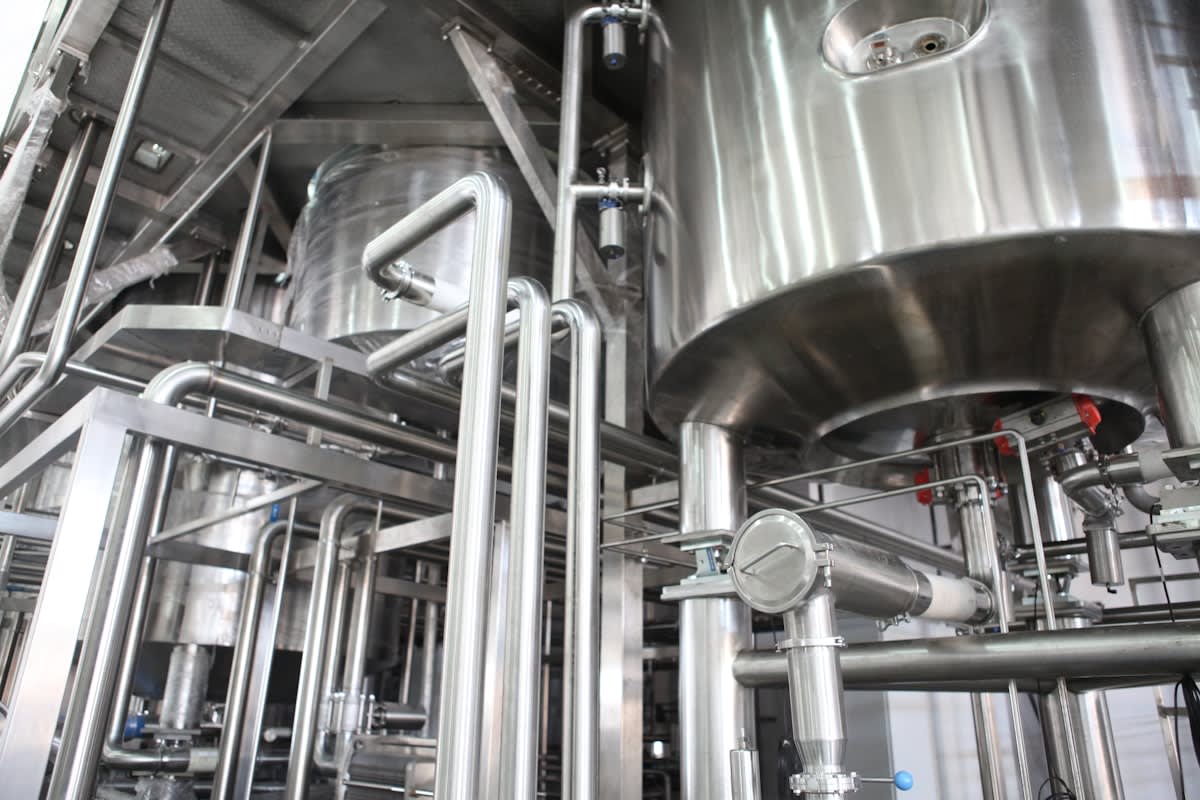
Compare the current state of the industry to where we stood twelve months ago. Last year, the conversation was dominated by 'proof of concept'—small-scale lab wins and venture-backed prototypes. Today, the delta is scale. The industry has moved from the petri dish to the 100,000-liter steel vat. This month, we are seeing the first wave of commercial-scale facilities coming online, signaling that the 'valley of death'—the gap between lab success and industrial viability—is finally being bridged.
"We are moving from a period of biological discovery to a period of biological engineering. The question is no longer if a microbe can make a molecule, but how efficiently we can scale that microbe to feed a planet."— Chief Technology Officer, Global Bio-Foundry Initiative
This transition is playing out across diverse geographies, proving it is not a localized phenomenon. In Singapore, the drive is food security, with massive investments in cellular agriculture to hit '30 by 30' goals. In Brazil, the focus has shifted toward utilizing sugarcane waste as a feedstock for bio-based plastics. Meanwhile, European hubs are integrating these living factories into circular economy loops, using industrial CO2 emissions as the primary food source for the microbes. This is a global redesign of how things are made.
The economic engine driving this is the plummeting cost of DNA synthesis and sequencing. When the cost of reading and writing genetic code drops by over 90% over a decade, the barrier to entry vanishes. We are now in an era of 'biological software,' where a company can design a protein on a screen, print the DNA, and boot up a microbial colony to start production within weeks. The speed of iteration has shifted from years to days.
But the real win isn't just speed; it is the precision of the output. Traditional chemistry often produces a mixture of the desired product and several unwanted by-products, requiring energy-intensive purification. Biological systems, when properly tuned, are surgical. They produce exactly what is needed, often at ambient temperatures and pressures, slashing the energy overhead of industrial production.
Engineering the Microscopic Assembly Line
At the heart of the Living Factory is precision fermentation. This is not the fermentation used to make beer or bread; this is the use of genetically modified microorganisms as cellular factories. These cells are programmed to convert simple sugars or captured carbon into high-value chemicals. Whether it is heme for plant-based meat or squalene for vaccines, the process is the same: feed the microbe, let the genetic circuit do the work, and harvest the result.
| Metric | Traditional Chemical Synthesis | Biomanufacturing (Living Factory) |
|---|---|---|
| Primary Feedstock | Petroleum / Natural Gas | Sugars / CO2 / Waste Biomass |
| Energy Requirement | High Heat & Pressure | Ambient / Low Temperature |
| Waste Profile | Toxic By-products / Heavy Metals | Biodegradable Organic Matter |
| Production Speed | Fixed Batch Cycles | Continuous Biological Flow |
The integration of Artificial Intelligence has acted as a force multiplier for this trend. Tools like AlphaFold have solved the protein-folding problem, allowing engineers to predict the 3D shape of a protein before they ever touch a pipette. This means we no longer have to guess which genetic mutation might improve yield. We can simulate a million variations in a digital twin and only synthesize the top three candidates. The blind trial-and-error phase of biotechnology is over.
The Automation Edge
The rise of 'Bio-foundries'—automated labs that use robotics to run thousands of experiments simultaneously—has reduced the cost of strain development by nearly 40% in the last 18 months alone.
However, the transition is not without friction. The 'scale-up' problem remains the primary hurdle. A microbe that behaves perfectly in a two-liter flask often fails in a 200,000-liter tank due to oxygen gradients, pressure changes, and metabolic stress. This month, the industry is pivoting toward modular bioreactors—smaller, interconnected units that maintain consistent environments—rather than attempting to build the biggest tank possible.
Projected Growth of Synthetic Biology Market (CAGR %)
Executive Insight
+18.4%
YTD Growth
The financial implications are staggering. As the cost of biological production drops below the cost of chemical synthesis, we will see a massive reallocation of capital. We are looking at a projected market growth rate of 25% CAGR for synthetic biology. This isn't just about new products; it is about the obsolescence of old ones. When you can grow a leather-like material in a vat without a cow or a toxic tanning pit, the old supply chain becomes a liability.
The resilience of this model is its greatest asset. Unlike traditional factories that rely on a single, fragile global supply chain for raw materials, Living Factories can be localized. Feedstock can be sourced from local agricultural waste or captured carbon from the air. This decentralization reduces shipping costs and insulates production from geopolitical shocks. The factory is no longer a destination; it is a deployable technology.
The Geopolitics of Bio-Production
We are entering an era of 'bio-sovereignty.' Nations are realizing that the ability to program biology is as critical as the ability to manufacture semiconductors. This month, we see an increase in state-funded bio-foundries designed to secure domestic supplies of critical enzymes and pharmaceuticals. The goal is to move away from dependence on a few global hubs and toward a distributed network of biological production.
The final piece of the puzzle is the regulatory shift. For years, the 'GMO' label was a death sentence for consumer products. But the narrative is changing. The focus is shifting from the process to the product. If the final molecule is chemically identical to the natural version but produced with 90% less water and zero animal cruelty, the market is proving it will embrace the biological origin. This acceptance is the final green light the industry needed to move from the margins to the mainstream.
The Living Factory is not a futuristic dream; it is an industrial reality unfolding in real-time. The transition from the smokestack to the bioreactor is a response to the limitations of the old world. By treating biology as a programmable medium, we are not just changing how we make things—we are changing what is possible to make. The era of the living factory has arrived, and it is scaling faster than anyone predicted.