
The Professionalization of Cognitive Offloading
The modern intellectual landscape is undergoing a quiet but profound transformation. We see this most clearly in the corridors of high-level research and funding. In the United Kingdom, the Biotechnology and Biological Sciences Research Council (BBSRC) and the Science and Technology Facilities Council’s (STFC) DeepTech Catalyst Bio call have become flashpoints for a new tension: the danger of cognitive offloading onto AI during the bid process. When the heavy lifting of synthesis, structuring, and strategic argumentation is delegated to a machine, the author is no longer a creator but a curator. This shift suggests that the 'ego' of the professional is moving away from the mastery of the subject matter toward the mastery of the tool.
Is this a loss of rigor or a strategic adaptation? To view offloading as merely 'laziness' is to miss the systemic shift. The professional who offloads the mundane architecture of a grant proposal to an AI is attempting to optimize their cognitive bandwidth. However, the risk lies in the erosion of the iterative struggle. The process of writing is often the process of thinking; by removing the friction of composition, we may be inadvertently removing the process of discovery itself. The intellectual edge is no longer found in the ability to remember or synthesize, but in the ability to prompt and verify.
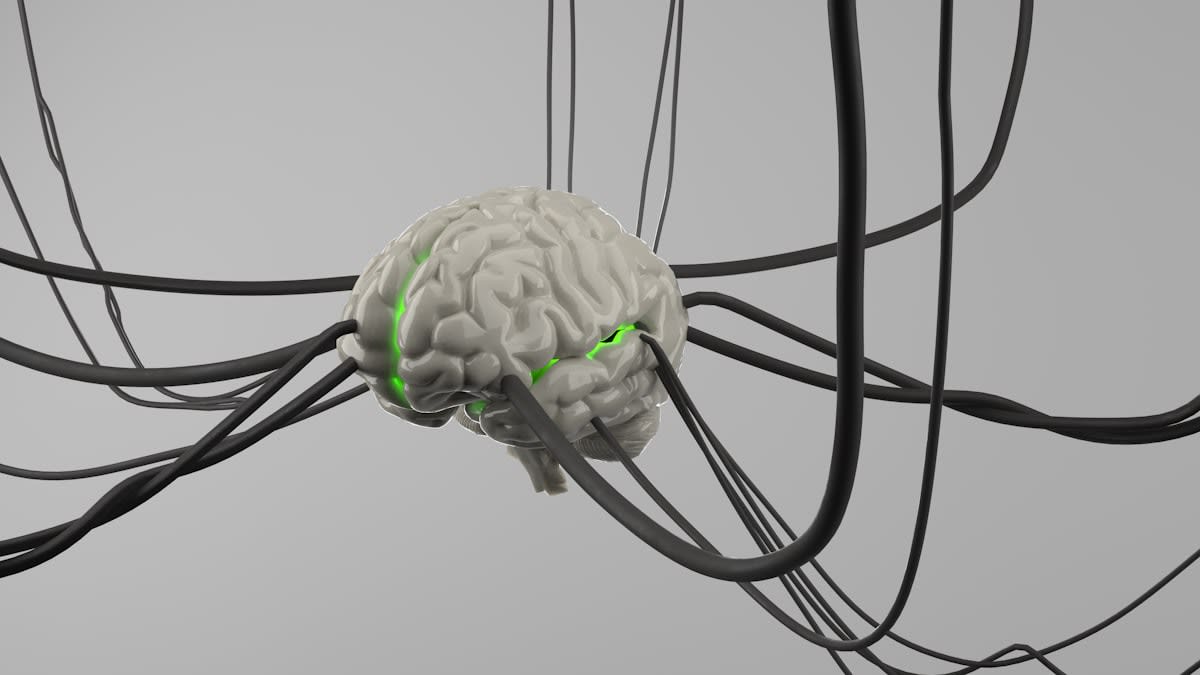
This phenomenon extends far beyond academic bids. It is a global recalibration of how we interact with information. When the cost of retrieving a fact drops to near zero, the value of knowing that fact also plummets. We are witnessing the birth of a 'modular ego,' where the self is not defined by what it contains, but by what it can access. This is not a crisis of memory, but a transformation of identity.
The Neuro-Economics of the Digital Mind
To understand why this is happening, we must look at the brain as a continuous cost-benefit calculator. According to a paper in Nature Human Behavior, titled 'An Effort Recalibration Framework for Digital Media Use and Cognition,' our brains are constantly weighing the expected reward of a task against its subjective effort cost. Digital media, specifically social media, has introduced a disruptive variable: low-friction, algorithmic rewards. These systems provide immediate gratification for almost zero mental expenditure, fundamentally altering the brain's internal valuation of effort.
Over time, this repeated exposure to effortless rewards recalibrates the brain. The delicate balance between deep, sustained mastery and perpetual exploration tilts toward the latter. When exploration becomes phenomenally cheap, the mind learns to abandon demanding tasks before their delayed benefits can manifest. We are not becoming less capable; we are becoming biologically conditioned to avoid the 'cost' of deep thought because the digital environment has taught us that rewards should be instant and effortless.
| Cognitive Dimension | Traditional Mastery Model | Recalibrated Digital Model |
|---|---|---|
| Effort Valuation | High effort viewed as a prerequisite for reward | High effort viewed as an inefficient cost |
| Reward Horizon | Delayed (years of study, months of drafting) | Immediate (algorithmic feed, AI response) |
| Ego Definition | Internalized knowledge and skill | Externalized access and curation |
| Cognitive Mode | Sustained deep-dive | Perpetual effortless exploration |
This recalibration creates a new psychological state: the expectation of the effortless. When the brain is trained to expect immediate returns, the 'friction' required for complex problem-solving is no longer perceived as a challenge to be overcome, but as a signal to stop. This is the systemic core of the offloading effect. It is not that we cannot concentrate; it is that our internal economic scale has been re-weighted to favor the path of least resistance.
"The most important effect of social media might be that repeated exposure to effortless digital rewards changes how we value effort itself."— Nature Human Behavior Research
If the brain is a calculator, then the current digital ecosystem is an inflation event for cognitive rewards. We are receiving 'high-value' hits of dopamine for 'low-value' mental work. The result is a systemic shift in the human ego, which now identifies more with the speed of its navigation than the depth of its understanding.
Flexibility as the Final Frontier
While we focus on the loss of memory, a more critical function may be at stake: cognitive flexibility. Research published in Nature Communications and highlighted by Nautilus indicates that impaired cognitive flexibility—the ability to switch between tasks, adapt to novel situations, and learn new rules—may actually be an earlier sign of cognitive decline, such as Alzheimer's, than memory loss itself. Neuroscientists at Texas A&M University demonstrated this using genetically engineered mice, finding that the ability to adapt behavior for a reward was compromised long before traditional memory markers failed.
This brings us to a critical intersection. If we offload not only our memories but also our decision-making and adaptive processes to AI, are we atrophying the very cognitive flexibility that serves as a bulwark against neurological decline? When an algorithm decides the path of our exploration, we are no longer practicing the 'switch'—the mental leap required to pivot from one concept to another. We are following a paved road rather than forging a trail.

The resilience of the human ego in the digital age will not depend on how much information we can retain, but on how effectively we can remain flexible. The danger is not the device that remembers for us, but the device that thinks for us. If the 'effort recalibration' mentioned earlier leads us to avoid the mental strain of adapting to novelty, we risk a systemic decline in our executive function.
The Friction Paradox
The paradox of the modern mind is that by removing all friction from our intellectual lives, we may be removing the very stimuli required to maintain the brain's adaptive health.
The Outsourcing of Affect and Grief
The offloading effect has now breached the final sanctuary of the human ego: the processing of grief. As reported by Newsweek, a growing number of pet owners are turning to AI-generated letters and interactive chatbots to cope with loss. These tools, trained on photos and personality traits, create a digital simulation of the deceased. This is the ultimate form of memory offloading—not just the facts of a life, but the emotional resonance of a relationship.
This shift raises a profound question: where does remembrance end and simulation begin? Grief is traditionally a process of internalizing a loss and adapting the ego to a new reality. By maintaining a simulated connection through AI, we may be offloading the emotional labor of mourning. Instead of the hard work of memory—which is often painful and transformative—we opt for the low-friction comfort of a digital ghost.
This is the 'Effort Recalibration Framework' applied to the heart. If we can avoid the agony of absence through a chatbot, the brain's valuation of the mourning process changes. We are no longer learning to live with loss; we are learning to simulate presence. This represents a systemic shift in how the human ego processes the most fundamental of all human experiences: the end of a bond.
Ultimately, the offloading effect is not a story of loss, but of redistribution. We are moving from an era of internalized depth to an era of externalized breadth. The challenge for the future is not to fight the tools, but to consciously reintroduce the friction that keeps us flexible, adaptive, and human.