The Iron Law of Megaprojects
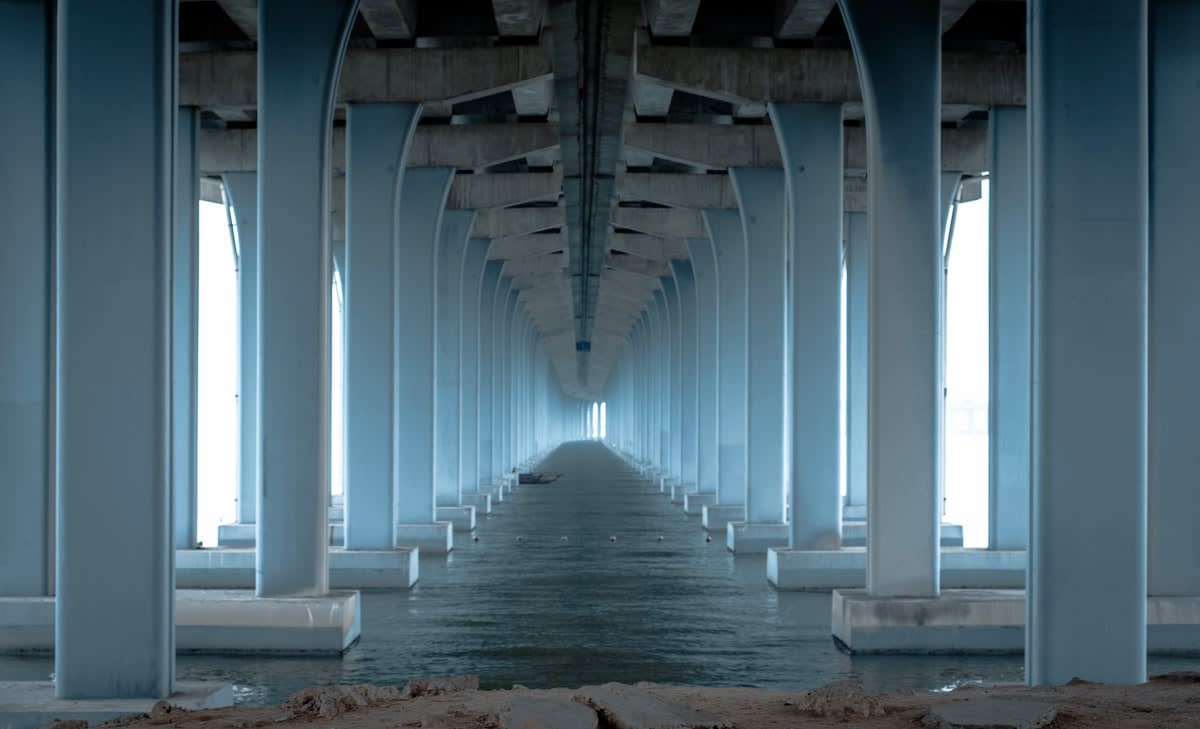
Every century has its monuments to hubris, usually manifesting as a bridge, a tunnel, or a dam that promised to redefine a nation's economy. From the early days of the Panama Canal to the modern sprawl of high-speed rail networks, a recurring pattern emerges: the initial timeline is not a forecast, but a placeholder. This is not merely a failure of engineering or a lack of foresight. It is the manifestation of the Iron Law of Megaprojects: over budget, over time, over and over again. When a project exceeds a billion dollars in cost or impacts millions of lives, the margin for error disappears, yet the psychological drive to underestimate that error intensifies.
Why does this happen consistently across different cultures, political systems, and technical disciplines? The answer lies in the tension between the Inside View and the Outside View. Project managers typically adopt the Inside View, focusing on the specific technical details of their unique project. They believe that because they have the best engineers and the most advanced software, they can avoid the pitfalls that plagued previous projects. This narrow focus ignores the statistical reality of the industry, where the average cost overrun for rail projects often exceeds 40 percent. By ignoring the historical baseline, the Inside View creates a fantasy of precision that collapses the moment the first shovel hits the dirt.
Cognitive Baseline
The Planning Fallacy is a cognitive bias where people underestimate the time, costs, and risks of future actions while overestimating the benefits. In megaprojects, this is not a glitch; it is the default setting.
This psychological blind spot is amplified by the expertise of the people involved. Paradoxically, the more experienced a project lead is, the more likely they are to fall prey to overconfidence. They mistake their familiarity with the process for an ability to control the chaos of a multi-decade build. This creates a dangerous feedback loop where the most authoritative voices in the room are the ones most likely to provide the most unrealistic timelines. The result is a baseline that is mathematically impossible to achieve, yet is codified into law or corporate charter as a hard deadline.
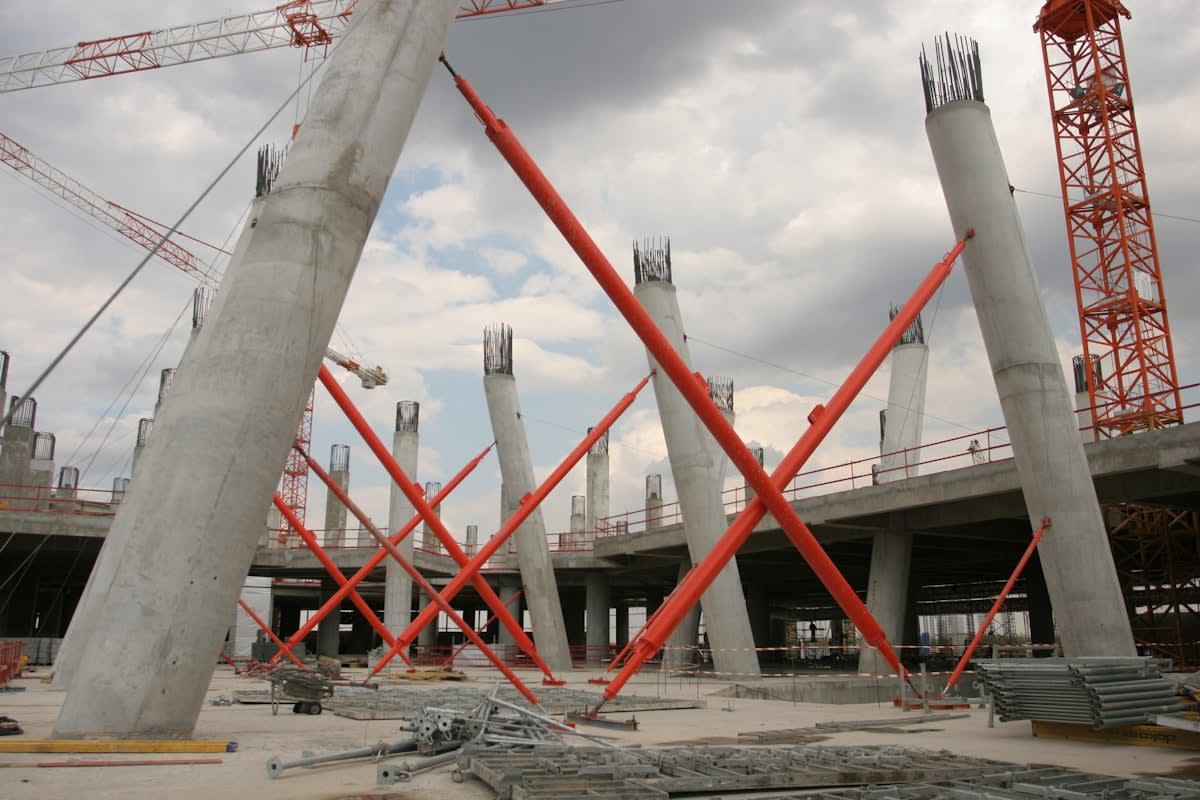
But cognitive bias only explains half of the failure. To understand the full scope of the disaster, we must move from psychology to politics. While optimism bias is an honest mistake, strategic misrepresentation is a calculated choice.
The Political Tax of Project Approval
In the arena of public infrastructure, the project that gets funded is rarely the one with the most accurate estimate; it is the one with the most attractive estimate. This creates a perverse incentive for project proponents to deliberately underestimate costs and overestimate benefits to secure political approval. If a minister or CEO presented a realistic, probabilistic range—acknowledging a 30 percent chance of a five-year delay—the project would likely be killed in the cradle. To ensure the project survives the approval process, the truth is sacrificed for the sake of viability.
"The primary driver of cost overruns in megaprojects is not technical incompetence, but the strategic underestimation of costs to get the project started."— Bent Flyvbjerg, Professor of Planning
Once the project is approved and the first phase of construction begins, a phenomenon known as lock-in occurs. The project has now become a symbol of national pride or a critical strategic asset. At this point, the cost of cancellation far outweighs the cost of continuing, regardless of how much the budget balloons. The public and the politicians are now hostages to the project's completion. The initial 'lie' is no longer a lie; it is a sunk cost that must be chased to the end, no matter how many deadlines are missed.
| Project | Region | Initial Est. Cost | Final/Current Cost | Cost Delta (%) |
|---|---|---|---|---|
| Crossrail | UK | 14.8 Billion GBP | 18.8 Billion GBP | 27% |
| Belo Monte Dam | Brazil | 13 Billion BRL | 30 Billion BRL | 130% |
| Gotthard Base Tunnel | Switzerland | 15 Billion CHF | 22 Billion CHF | 46% |
| Jakarta-Bandung HSR | Indonesia | 6.07 Billion USD | 7.2 Billion USD | 18% |
The data reveals a chilling consistency. Whether in the disciplined environment of Switzerland or the volatile landscape of Brazil, the delta between expectation and reality remains stubbornly high. These numbers are not outliers; they are the rule. The disparity suggests that the error is not located in the execution, but in the very definition of the goal.
Friction in the Global South
When we examine projects in the Global South, the psychological failures are compounded by systemic instability. In the case of Brazil's Belo Monte Dam, the initial deadlines failed to account for the profound social friction of displacing indigenous populations and the resulting legal battles. The planners treated social impact as a checkbox rather than a primary risk factor. When the courts stepped in, the timeline shattered. This illustrates a common failure in megaproject psychology: treating 'soft' risks—politics, sociology, and ecology—as secondary to 'hard' engineering.
Similarly, the Jakarta-Bandung High-Speed Railway faced delays that were less about the technology of the trains and more about the friction of land acquisition. In densely populated regions, the assumption that land can be acquired on a linear schedule is a fantasy. Every acre of land involves a negotiation, a dispute, or a legal challenge. By applying a deterministic timeline to a stochastic process, the project was doomed to miss its first deadline before the first rail was even laid.

These examples demonstrate that the first deadline is often a reflection of the planner's desire for the world to be orderly. It assumes a frictionless environment where permits are granted instantly and social unrest is non-existent. In reality, the larger the project, the more points of friction it creates. The project does not fail because of a single catastrophe, but because of a thousand small delays that the Inside View simply refuses to acknowledge.
The Shift Toward Reference Class Forecasting
To break this cycle, a fundamental shift in how we forecast is required. We must move from deterministic planning to probabilistic forecasting. The most effective tool for this is Reference Class Forecasting (RCF). Instead of asking, 'How long will this specific bridge take to build?', RCF asks, 'How long did the last 100 bridges of this scale take to build?' By using a distribution of actual outcomes from a peer group, planners can create a realistic range of completion dates. This removes the 'uniqueness' fallacy and replaces it with statistical evidence.
Implementing RCF requires a cultural revolution in governance. It demands that politicians accept a range of outcomes rather than a single, comforting date. It requires the courage to say, 'There is a 90 percent chance this project will take 12 years, even though we want it to take 8.' While this honesty might make a project harder to approve, it makes it infinitely easier to manage. It replaces the cycle of failure and apology with a framework of resilience and predictability.
The Ego Trap
The 'Outside View' forces us to acknowledge that our project is not special. It is just another data point in a long history of similar attempts.
Ultimately, the failure of the first deadline is a symptom of a deeper intellectual dishonesty. We treat the future as a known quantity rather than a set of probabilities. Until we stop rewarding the most optimistic bidder and start rewarding the most realistic one, the Iron Law of Megaprojects will remain undefeated. The path to success is not through better engineering, but through a more rigorous application of human psychology and statistical truth.