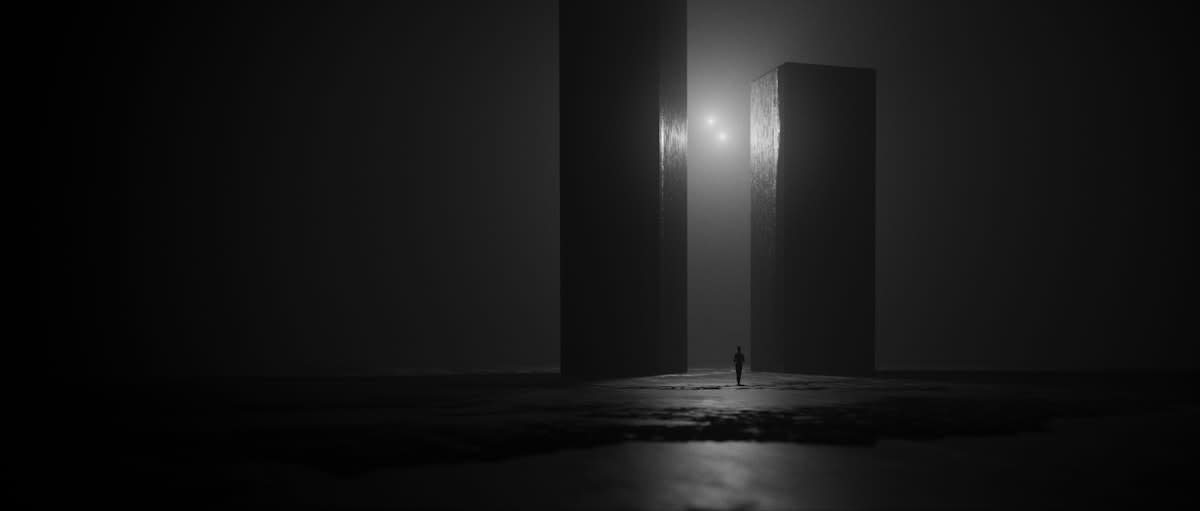
We have been sold a lie about empowerment. For decades, the prevailing narrative in both consumer capitalism and personal development has been that more choice equals more freedom. We are told that having fifty types of olive oil or a thousand potential partners on a dating app expands our horizons. In reality, this abundance has created a psychological bottleneck. We no longer choose based on what we need; we choose based on the fear that a better option exists just one more click away. This is the optimization trap: a state of perpetual dissatisfaction where the cost of searching for the best exceeds the value of the choice itself.
Is this simply a matter of personal indecision? Hardly. This is a systemic shift in how the human mind interacts with information. We have migrated from a world of scarcity to a world of hyper-abundance, but our cognitive architecture remains evolved for the savannah. The mental energy required to filter through infinite variables is finite. When we attempt to optimize every single variable—from the most efficient route to work in Sao Paulo to the most 'correct' ergonomic chair for a home office in Berlin—we trigger decision fatigue. This isn't just tiredness; it is a measurable decline in the quality of our judgment (Source: Psychology Today, 2021).
The Maximizer's Burden
To understand the mechanics of this paralysis, we must distinguish between two types of decision-makers: maximizers and satisficers. A satisficer looks for an option that meets a predefined set of criteria; once that threshold is hit, they stop searching and commit. A maximizer, however, cannot stop. They must exhaustively evaluate every possible alternative to ensure they have found the absolute best. While maximizers often achieve objectively better outcomes—such as a slightly higher salary or a more fuel-efficient car—they are consistently less happy with those outcomes (Source: Barry Schwartz, 2004).
"The paradox of choice is that while some choice is better than none, more choice is not necessarily better than some. When the number of options increases, the effort required to make a choice increases, and the regret over the choice made grows proportionally."— Barry Schwartz, Psychologist and Author of The Paradox of Choice
This psychological friction is amplified by the digital infrastructure we inhabit. Algorithms are designed to keep us in the 'search' phase. Whether it is a streaming service suggesting a movie or a job board showing 'similar roles,' the system is optimized for engagement, not for decision closure. We are kept in a state of perpetual comparison, which feeds a loop of anticipated regret. If I choose Option A, I am haunted by the ghosts of Options B through Z. The result is a cognitive freeze where the fear of a sub-optimal choice outweighs the benefit of any choice at all.
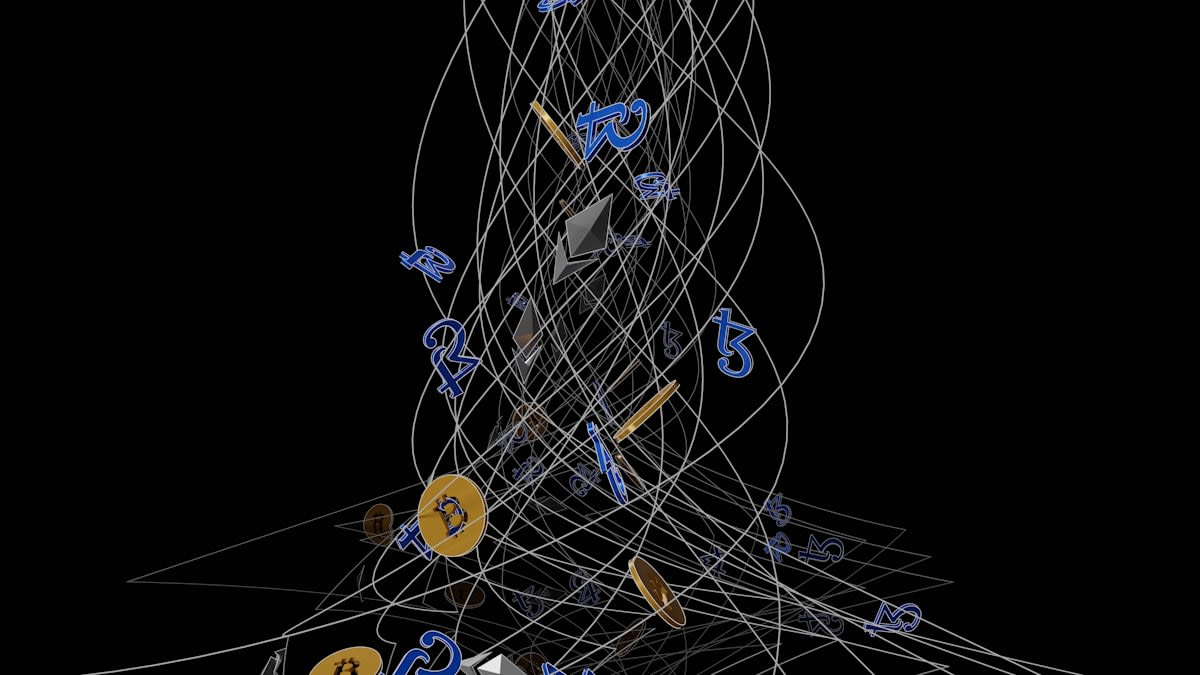
This trend is not localized to the West. In high-density urban centers like Tokyo or Seoul, the sheer volume of commercial options creates a similar pressure to optimize. The cultural drive for precision and quality, when merged with digital hyper-abundance, creates a unique form of social anxiety. People aren't just choosing a product; they are performing an act of identity through the 'correctness' of their choice. When the standard for 'correct' is the absolute best in the global market, the bar becomes impossible to clear.
The Practitioner's Friction: CRO vs. Cognition
From my perspective in the field, this manifests as a violent tension between Conversion Rate Optimization (CRO) specialists and cognitive psychologists. In the boardrooms of major tech firms, the debate is constant. The CRO team wants to add more filters, more comparison tools, and more 'recommended' tags to guide the user. They see more data as a way to reduce friction. However, the psychologists argue that every additional filter is another cognitive tax. I have seen products fail not because they lacked features, but because the interface demanded too much 'optimization energy' from the user. The real winners in the current market are those who dare to limit choice—the 'curated' experience that tells the user, 'We have already done the optimizing for you; just pick one of these three.'
This is where the industry is shifting. We are seeing a move away from the 'everything store' model toward highly curated, niche ecosystems. The value proposition has shifted from 'We have everything' to 'We have the only things that matter.' This recognizes that the modern consumer is not looking for the best possible option in the universe, but for a reliable way to stop searching.
| Metric | The Maximizer | The Satisficer |
|---|---|---|
| Decision Speed | Slow (Exhaustive Search) | Fast (Threshold-based) |
| Objective Outcome | Higher (Statistically) | Adequate/Good |
| Subjective Satisfaction | Low (Regret/Comparison) | High (Contentment) |
| Cognitive Load | High (Mental Exhaustion) | Low (Cognitive Ease) |
| Post-Purchase Emotion | Anxiety/Second-guessing | Acceptance |
The data suggests a stark trade-off. While the maximizer might find a hotel that is 5% cheaper or 10% better rated, the mental cost of that search often results in a lower overall quality of life. This is the 'optimization tax.' We spend hours of our finite time to save pennies or gain marginal utility, effectively trading our most precious resource—time—for an illusory perfection.
Systemic Implications: The Death of Intuition
When we outsource our decision-making to optimization tools, we atrophy our intuitive muscles. In the past, choosing a career or a partner involved a degree of trust in one's gut feeling—a synthesis of subconscious patterns. Now, we treat these life-altering decisions like a spreadsheet exercise. We look for the 'optimal' career path based on projected growth rates and salary benchmarks (Source: World Economic Forum, 2023). This quantification of life strips away the serendipity that often leads to the most fulfilling outcomes.

Can we recover from this? The answer lies in a conscious return to 'bounded rationality,' a concept pioneered by Herbert Simon. Bounded rationality posits that humans make decisions that are 'good enough' given the information available and the time constraints they face (Source: Herbert Simon, 1956). By embracing the 'good enough,' we reclaim the mental bandwidth necessary for deeper, more creative pursuits. The goal is not to ignore quality, but to define a 'success threshold' and stop the search the moment it is met.
Ultimately, the quest for the perfect choice is a treadmill with no finish line. In a globalized economy where there is always a newer version, a cheaper supplier, or a more prestigious title, the optimizer is doomed to eternal restlessness. The only way to win the game is to stop playing by the rules of optimization and start playing by the rules of sufficiency.
Fact-Check & Accuracy Note
This analysis focuses on the systemic shift in decision-making psychology. While the 'Paradox of Choice' is a widely accepted framework, the specific impact of algorithmic curation on decision fatigue is an area of ongoing debate among behavioral economists and UX researchers.
Editorial Governance
Editorial Note: This piece takes a contrarian view of 'choice' as a liability rather than an asset. It challenges the standard consumerist narrative that more options equal more freedom, arguing instead that curated limitation is the true path to agency.