
We have spent the last twenty years obsessing over the removal of friction. From one-click ordering and algorithmic curation to the seamless integration of smart homes, the goal has been singular: the total elimination of effort. We treat friction as a bug to be patched, a barrier to be demolished. But look closer at the resulting landscape of hyper-efficiency. Does the seamless life actually feel better, or does it simply feel empty? When the gap between desire and gratification shrinks to zero, the reward system in our brain begins to atrophy.
The psychological cost of a frictionless existence is a phenomenon known as hedonic adaptation. When every need is met instantly, the baseline for satisfaction shifts upward. What was once a luxury becomes a necessity, and eventually, a neutral background noise. We are trapped in a loop where we optimize for ease, only to find that ease is the enemy of meaning. Why do we feel a profound sense of accomplishment after a grueling hike in the Andes or a difficult project in a Tokyo design studio, but feel nothing after a day of effortless digital consumption? The answer lies in the paradox of friction.
The IKEA Effect and the Value of Labor
Human beings are biologically wired to value things more when they have invested effort into them. This isn't just a quirk of personality; it is a systemic cognitive bias. When we struggle to assemble a piece of furniture or spend hours mastering a complex skill, our brain assigns a higher value to the outcome. This is not because the final product is objectively better, but because the process of creation creates a psychological bond between the individual and the object.
"Labor leads to love. When people invest effort into creating something, they value it more than if they had simply purchased the finished product."— Michael I. Norton, Associate Professor of Business Administration at Harvard Business School
This phenomenon, documented as the IKEA Effect (Source: Norton, Mochon, & Ariely, 2012), suggests that the 'friction' of assembly is exactly what generates the satisfaction. If a company delivered a pre-assembled desk, the customer would be satisfied with the utility. But if the customer spends four hours fighting with an Allen wrench to build it, they develop an emotional attachment to that desk. We see this globally: from the painstaking art of Japanese Kintsugi, where the effort of repair adds value to the broken, to the rugged endurance of Finnish Sisu, where the struggle itself is the point of pride.
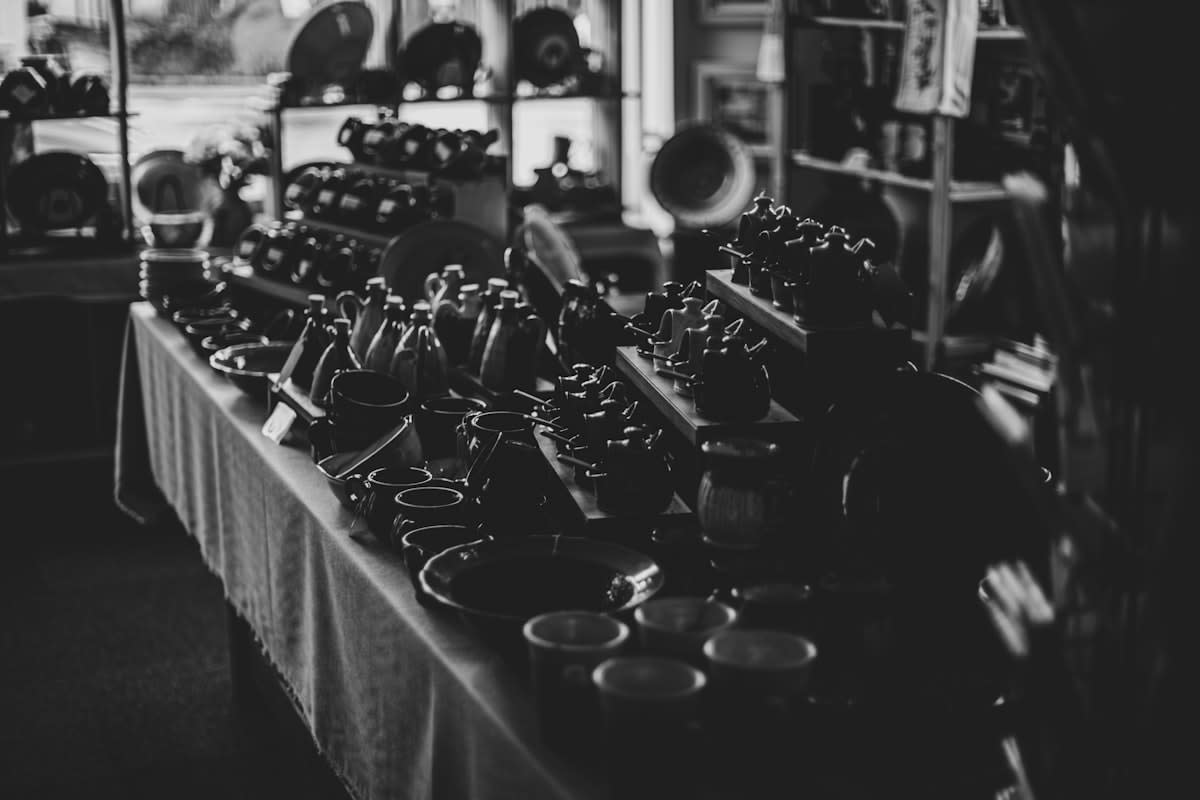
Is it possible that our modern obsession with 'user experience' (UX) has gone too far? By removing every possible point of resistance, we have removed the 'effort justification' that makes achievements feel real. When the path is too smooth, the mind wanders. We stop engaging with the process and start obsessing only over the destination. But the destination is a fleeting moment; the process is where life actually happens.
The Practitioner's Perspective: The War on Conversion
Having spent over a decade analyzing systemic shifts in consumer behavior, I have watched the internal debates within product teams shift. For years, the mantra was 'reduce churn' and 'minimize clicks.' The goal was a frictionless slide from the landing page to the checkout. But in the corridors of high-end design firms from Berlin to San Francisco, a contrarian view is emerging. Practitioners are now debating the concept of 'positive friction'—the intentional introduction of obstacles to force mindfulness and increase the perceived value of the service.
On the ground, this looks like a deliberate slowing down. Some luxury brands are moving away from instant digital gratification, reintroducing waiting lists or requiring manual applications for membership. They aren't doing this to be pretentious; they are doing it because they recognize that a customer who has to fight slightly for access is a customer who will be more loyal and more satisfied once they arrive. The debate is no longer about how to make things faster, but about where to put the brakes to ensure the experience actually registers in the user's consciousness.
This shift reflects a broader realization: when we remove all resistance, we remove the sense of agency. If an algorithm chooses my music, my news, and my partner, am I the protagonist of my own life, or am I just a passenger in a highly optimized vehicle? The friction of choice—the struggle to decide, the risk of picking the wrong thing—is exactly what makes the right choice feel like a victory.
| Domain | Frictionless Approach (The Norm) | Intentional Friction (The Paradox) | Psychological Outcome |
|---|---|---|---|
| Learning | Watching a summary video | Active recall and difficult practice | Deep encoding and mastery |
| Consumption | One-click instant delivery | Sourcing from local artisans | Higher perceived value and gratitude |
| Relationships | Algorithmic matching | Organic, slow discovery | Stronger emotional bond and narrative |
| Fitness | Passive calorie tracking | High-intensity physical struggle | Endorphin release and resilience |
Consider the difference in cognitive load. A frictionless experience requires almost no mental energy, which means it leaves almost no memory trace. We forget the things that are too easy. In contrast, the 'desirable difficulty' framework in educational psychology suggests that when students struggle to retrieve information, they actually learn it more deeply (Source: Bjork & Bjork, 2011). By making the learning process slightly harder, we make the knowledge more permanent.

Systemic Shifts: Reclaiming the Struggle
We are seeing a global counter-movement against the seamless. In South Korea, the 'slow life' movement is gaining traction among Gen Z, who are rejecting the hyper-competitive, high-speed efficiency of Seoul in favor of rural living and manual crafts. In Brazil, there is a resurgence of interest in traditional, slow-form community organizing over the efficiency of digital activism. These aren't just nostalgic trends; they are survival mechanisms. People are instinctively seeking out friction because they are starving for the feeling of competence.
Competence is the feeling of successfully navigating a challenge. If there is no challenge, there can be no competence. When we automate the struggle out of our lives, we accidentally automate away our self-esteem. This is the hidden danger of the frictionless economy: it creates a population that is comfortable but fragile, capable of consuming everything but mastering nothing.
- Cognitive Friction: Forcing a pause to ensure conscious decision-making rather than habitual clicking.
- Physical Friction: Engaging in manual labor or difficult movement to anchor the mind in the present.
- Social Friction: Navigating the awkwardness and effort of face-to-face conflict resolution instead of ghosting.
- Intellectual Friction: Reading dense, challenging texts that require multiple passes to understand.
The goal is not to return to a primitive state of hardship, but to implement 'strategic friction.' This means identifying the areas of your life where ease has become a liability. Where has efficiency robbed you of joy? Where has convenience replaced growth? By intentionally reintroducing a degree of difficulty, we can reactivate the reward circuits of the brain and reclaim a sense of agency.
This is a systemic shift in how we define a 'good life.' For decades, the metric was time saved. But as we enter an era of unprecedented automation and AI, the most valuable currency will not be time, but meaning. And meaning is rarely found in the absence of friction; it is forged within it.
Fact-Check & Accuracy Note
Key claims regarding the IKEA Effect are sourced from the 2012 study by Norton, Mochon, and Ariely. The concept of 'desirable difficulty' is attributed to the research of Robert and Elizabeth Bjork (2011). The discussion on hedonic adaptation is a widely accepted principle in positive psychology and behavioral economics. Ongoing debate in the field focuses on the precise threshold where 'positive friction' becomes 'excessive frustration,' which can lead to task abandonment.