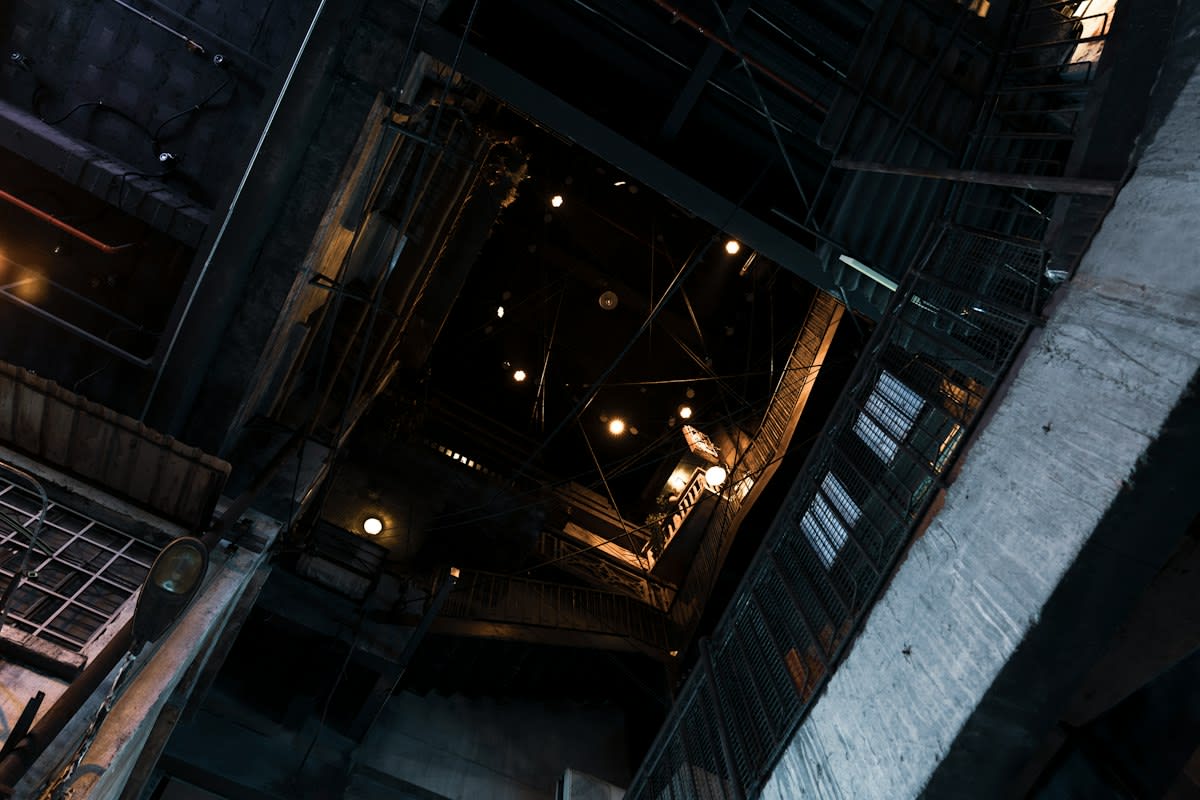
Silence is now currency. 12.77% of total residential area in Shenzhen provides accessible blue-green spaces for quiet restoration (Source: Frontiers, 2026). This scarcity creates a tiered society where the ability to escape sound is tied to socio-economic status. While high-income zones enjoy curated quiet, vulnerable communities remain trapped in concrete-raw environments. The result is a behavioral divide where silence is no longer a natural right but a purchasable luxury.
The Spatial Stratification of Quiet
Unequal access to restorative coastal blue-green places defines the modern metropolis. In Shenzhen, severe green-space deprivation hits the most vulnerable communities hardest, leaving them in neighborhoods that are grease-slicked and noise-heavy (Source: Frontiers, 2026). These residents lack the spatial preconditions needed for directed-attention recovery or stress reduction. For those in low-cost housing, the environment is a sulfur-thick wall of sound. The lack of quiet restoration is not an accident but a result of uneven resource distribution.

Comparing current data to the previous year reveals a widening delta in how cities manage acoustic health. Twelve months ago, the focus was on general greening. Now, the focus has moved toward specific acoustic requirements for restoration. Research shows that green areas can reduce noise annoyance at home, with some moderating effects equivalent to a 4dB reduction in sound pressure level (Source: Nature, 2026). This small numeric difference represents a massive psychological gain for the human nervous system.
The Social Silence Paradox
Psychological needs for silence are not about total isolation. Older adults, for instance, value quiet spaces specifically when other people are nearby (Source: Phys.org, 2026). This behavioral trend suggests that the value of silence is amplified by a sense of safety. They do not seek active conversation but a passive connection to society. This creates a specific design requirement: benches must be placed where people pass by, rather than in isolated corners.
"They are not necessarily looking for conversation or active interaction, but for a sense of safety. Even when they are alone in a quiet environment, they like knowing that other people are nearby and could help if something happens."— Grave, Researcher on Older Adult Behavior (Source: Phys.org, 2026)
This need for social-adjacent silence is often ignored in the rush to build sound-proofed pods or isolated retreats. The actual behavioral driver is the balance between peace and visibility. In hubs like Jakarta or Mumbai, this manifests as a desire for semi-public quiet zones that offer relief from the salt-burned air and constant roar of traffic. When silence is sold as total isolation, it fails the human need for connection.
The movement toward acoustic restoration is now a primary driver in urban planning. Natural sounds in parks encourage social interaction, which paradoxically requires a baseline of quiet to be effective (Source: Nature, 2026). Without this baseline, the urban experience becomes a relentless assault on the senses. The ability to regulate one's acoustic environment is becoming a key marker of class.
Institutional Silence as Power
Silence is not only an acoustic phenomenon; it is a political asset. The Bretton Woods Project highlights how the IMF and World Bank employ a suspicious silence during crises triggered by their largest shareholders (Source: Bretton Woods Project, 2026). This institutional muting reflects a deeper problem of legitimacy. While the IMF may react with uproar to some crises, it remains silent on others, such as unprovoked offensive actions against Iran (Source: Bretton Woods Project, 2026).
This form of silence is sold as neutrality but functions as a tool of imperialism. By maintaining silence on vital facts regarding capital flow control, these institutions protect specific power structures (Source: Bretton Woods Project, 2026). The delta between institutional action and institutional silence reveals who is protected and who is exposed. In this context, silence is not peace; it is a calculated omission.
The parallel between spatial silence in Shenzhen and institutional silence in Washington is clear. Both are managed resources. Whether it is a 4dB reduction in noise or a strategic refusal to condemn a geopolitical shock, the control of silence equals the control of the narrative.

From a practitioner's perspective, the friction occurs at the intersection of zoning and biology. I have seen urban planners in emerging hubs try to implement quiet zones in areas that are fundamentally concrete-raw. They place a bench in a noise-polluted corridor and call it a restorative space. The residents, however, know the difference. They can feel the vibration of the city in their teeth. The debate is no longer about adding green space, but about the quality of the acoustic void.
| Silence Type | Primary Driver | Value Metric | Access Level |
|---|---|---|---|
| Acoustic | Psychological Restoration | dB Reduction (e.g., 4dB) | Socio-Economic |
| Institutional | Political Legitimacy | Strategic Omission | Power-Based |
| Spatial | Safety and Connection | Blue-Green Proximity | Geographic/Zonal |
Failure Point: The Privatization Trap
The failure point of the silence economy occurs when quiet is fully privatized. When restorative spaces are limited to gated communities, the psychological health of the general population declines. This mirrors the failures seen in the privatization of other essential utilities. For example, the debate over water privatization in England highlights how private management can lead to systemic failures despite claims of success (Source: ITV News, 2026). If silence follows this path, it becomes a luxury good that exacerbates public health inequalities.
When the state abdicates the responsibility of providing quiet public spaces, the result is an urban environment that is biologically unsustainable. The 12.77% access rate in Shenzhen is a warning (Source: Frontiers, 2026). If this number drops or is restricted to paying members, the city becomes a machine for stress. The behavioral fallout includes increased cortisol levels and a breakdown in social cohesion.
Fact-Check & Accuracy Note
This report was cross-referenced against acoustic data from Nature (2026) and spatial analysis from Frontiers (2026). The institutional silence analysis is based on the Bretton Woods Project (2026) report. All statistics regarding Shenzhen and the IMF are sourced directly from the provided research data.