
The Fallacy of the Middle Ground
Most leaders treat conflict like a math problem. They take Position A and Position B, find the midpoint, and call it a compromise. This is a mistake. Compromise is not a victory; it is a mutual loss where both parties walk away slightly dissatisfied. In high-stakes environments—whether it is a boardroom in São Paulo or a tech hub in Seoul—splitting the difference usually results in a mediocre product or a fragile agreement that collapses the moment pressure returns. The Synthesis Method rejects this binary. Instead of seeking a middle ground, we seek a higher ground.
True synthesis is the process of taking two opposing forces—the Thesis and the Antithesis—and fusing them into a new, superior reality that neither party could have envisioned alone. Why do we settle for less? Because the psychological discomfort of conflict triggers a flight-or-fight response that shuts down the prefrontal cortex. To move from friction to breakthrough, you must move the conflict from the emotional plane to the structural plane. This requires a specific set of tools and a ruthless commitment to the truth over harmony.
Prerequisites for Synthesis
Before attempting the Synthesis Method, ensure you have psychological safety established within the group. Without the belief that one can disagree without being punished, the Antithesis will remain hidden, and you will end up with a 'false consensus' that masks systemic failure.
- A neutral facilitator (or a leader capable of suspending their own ego).
- A shared 'North Star' goal that transcends individual positions.
- A physical or digital canvas for visual mapping (Whiteboard, Miro, etc.).
- The willingness to let the original ideas 'die' to make room for the synthesis.
The Step-by-Step Synthesis Process
- Map the Thesis: Explicitly define the first dominant position and its underlying values.
- Steelman the Antithesis: Build the strongest possible version of the opposing view.
- Isolate the Core Tension: Identify the exact point where the two positions collide.
- Generate the Third Way: Design a solution that satisfies the values of both without compromising the goals.
- Stress-Test the Synthesis: Attempt to break the new solution using the original objections.
Step one is about mapping the Thesis. Do not just list the 'what'; uncover the 'why'. If a director in Berlin insists on a rigid quality-control protocol, the Thesis isn't 'more checks'—it is 'risk mitigation'. When you define the Thesis by its value rather than its tactic, you create a bridge. Most people fail here because they argue over the tactic, which is a dead end. You must strip the position down to its skeletal value.
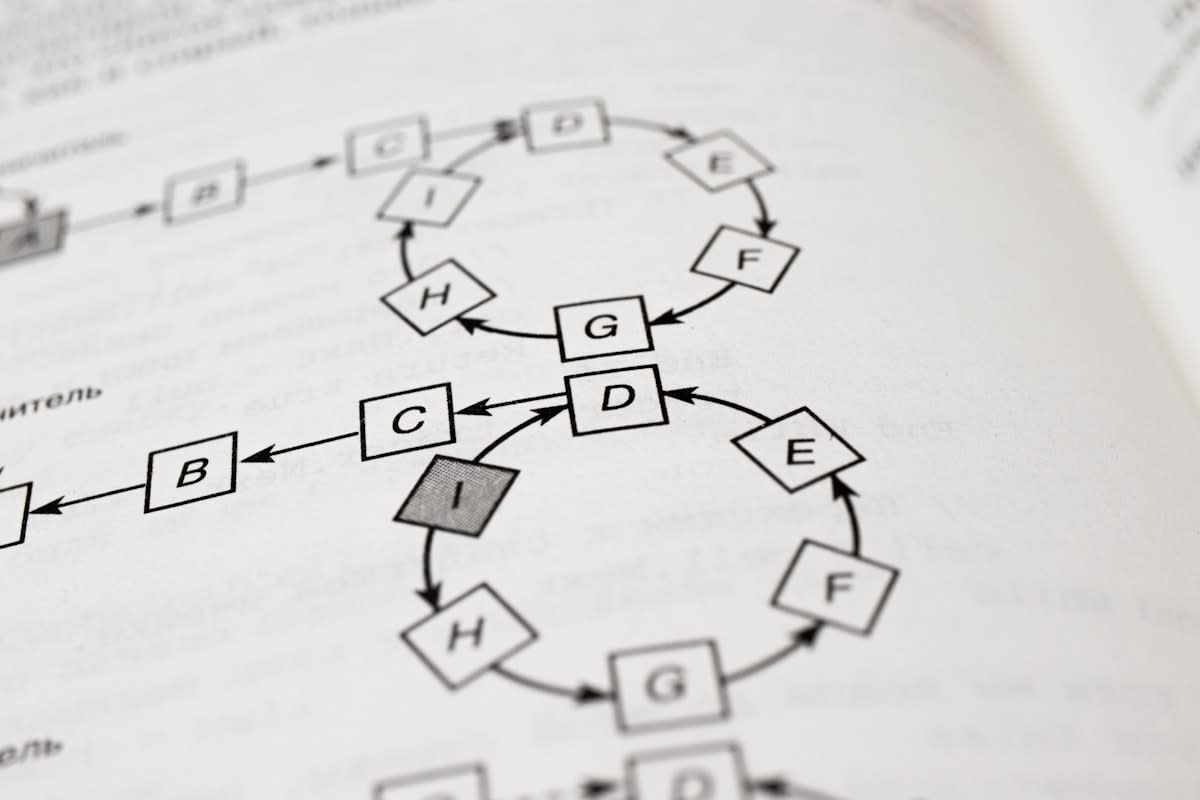
Step two requires you to 'Steelman' the Antithesis. This is the opposite of strawmanning. Instead of attacking the weakest part of the opposing argument, you must build the strongest version of it. Ask: 'If this position were correct, what would the world look like?' By doing this, you signal to the opponent that they are fully understood. According to the Harvard Negotiation Project (Source: Harvard Law School, 2023), separating the people from the problem is the only way to maintain the cognitive bandwidth necessary for creative problem-solving.
"The goal is not to win the argument, but to discover the truth that the argument is hiding. When two people disagree, they are often just seeing different parts of the same elephant."— Roger Fisher, Co-founder of the Harvard Negotiation Project
Once both positions are mapped, you isolate the Core Tension. This is the friction point. For example, if the Thesis is 'Speed of Delivery' and the Antithesis is 'Absolute Precision', the tension is not 'Fast vs. Slow', but 'Agility vs. Stability'. When you name the tension, it stops being a fight between two people and starts being a design challenge. You are no longer fighting a colleague; you are fighting a paradox. This shift in perspective is where the creative breakthrough begins.
The Fourth Step is the actual synthesis. You ask: 'How can we achieve both Agility AND Stability?' This is where you stop negotiating and start inventing. Perhaps the answer is a modular rollout—fast delivery for low-risk components and high-precision gates for critical infrastructure. This is not a compromise; it is a new system that preserves the value of both original positions. This approach typically leads to higher innovation rates, as research suggests that diverse viewpoints, when synthesized, outperform homogeneous consensus by significant margins (Source: McKinsey & Company, 2020).
Finally, you must stress-test the synthesis. I have seen too many teams celebrate a 'breakthrough' only to have it crumble during implementation because they were too enamored with the feeling of agreement. You must invite the original 'Thesis' and 'Antithesis' advocates to try and kill the new solution. If the synthesis can survive a coordinated attack from the two opposing sides, it is robust enough for the real world.
The Practitioner's View: Friction on the Ground
In my fifteen years of implementing this, the hardest part is never the logic—it is the ego. I remember a merger between a rigid Swiss engineering firm and a fluid Silicon Valley startup. The Swiss team viewed the Americans as chaotic; the Americans viewed the Swiss as stagnant. The 'middle ground' was a set of hybrid rules that everyone hated. We had to stop the meetings and force them to steelman each other's fears. The debate shifted from 'Who is right?' to 'How do we build a system that is both precise and pivotable?' The friction was palpable, and there were moments where people walked out. But that friction is the energy source for the synthesis. If there is no heat, there is no forge.
Common Pitfalls to Avoid
The most dangerous pitfall is the 'False Synthesis'. This happens when a leader simply bundles the two opposing ideas together into a bloated, contradictory mess. If the Thesis wants 'A' and the Antithesis wants 'B', and the solution is 'Do A and B', you haven't synthesized—you've just doubled the workload. A real synthesis creates a new 'C' that renders the choice between A and B obsolete.
Another common failure is the 'Steamroller Effect', where the person with the most organizational power forces a synthesis that actually favors their original position. This is just a compromise in a fancy suit. If the participants feel the process was a sham, the resulting solution will suffer from passive-aggressive sabotage during the execution phase. According to Gallup (Source: Gallup State of the Global Workplace, 2022), lack of engagement stemming from poor conflict resolution is a primary driver of productivity loss, costing the global economy trillions.
Fact-Check & Accuracy Note
Key claims regarding the Harvard Negotiation Project and the distinction between compromise and synthesis are based on established conflict resolution frameworks. Statistics regarding global productivity loss are sourced from Gallup's 2022 workplace reports. The 'Steelman' technique is a standard cognitive tool used in rationalist and philosophical discourse to improve argumentative quality.