
The Architecture of Obsolescence
Your brain is an efficiency machine, not a truth-seeking missile. It builds mental models—shortcuts and frameworks—to process information rapidly without exhausting your metabolic reserves. These models serve you well until the environment shifts. What was a competitive advantage in the industrial era of Tokyo or the financial hubs of London becomes a cognitive anchor in a decentralized, AI-driven economy. When the world changes but your internal map remains static, you don't just stall; you actively move in the wrong direction.
This is the competence trap. You become so proficient at a specific way of solving problems that you stop questioning if the problem itself has evolved. Why do seasoned executives struggle with agile pivots? Why do master craftsmen resist digital fabrication? It is not a lack of intelligence, but a refusal to engage in the painful process of unlearning. Unlearning is not the erasure of memory, but the conscious decision to stop applying a specific logic to a new context.
Defining the Term
Unlearning is the act of consciously choosing to ignore a previously successful pattern of behavior because the environment that made that pattern successful has vanished.
Consider the half-life of a professional skill. In many technical fields, the utility of a specific mental model drops by 50% every five years. If you are relying on a framework built a decade ago, you are operating with a 25% efficiency rate. Does that sound like a winning strategy? The friction you feel in your career or your personal growth is often the sound of an obsolete model grinding against a new reality.
Prerequisites for the Protocol
You cannot dismantle a structure while you are still emotionally invested in its perceived stability. Before attempting the Unlearning Protocol, you must cultivate a specific psychological state: intellectual humility. This is the recognition that your current expertise is a snapshot of a past version of reality. Without this, your ego will perceive the dismantling of a mental model as a personal attack rather than a strategic upgrade.
- A High Discomfort Threshold: The ability to tolerate the 'vacuum' period where you have no answer.
- A Feedback Loop: Access to a contrarian peer or a mentor who is not afraid to tell you that your logic is outdated.
- A Deconstruction Journal: A dedicated space to map the origin and failure points of your beliefs.
- Cognitive Distance: The capacity to view your thoughts as tools rather than identity markers.
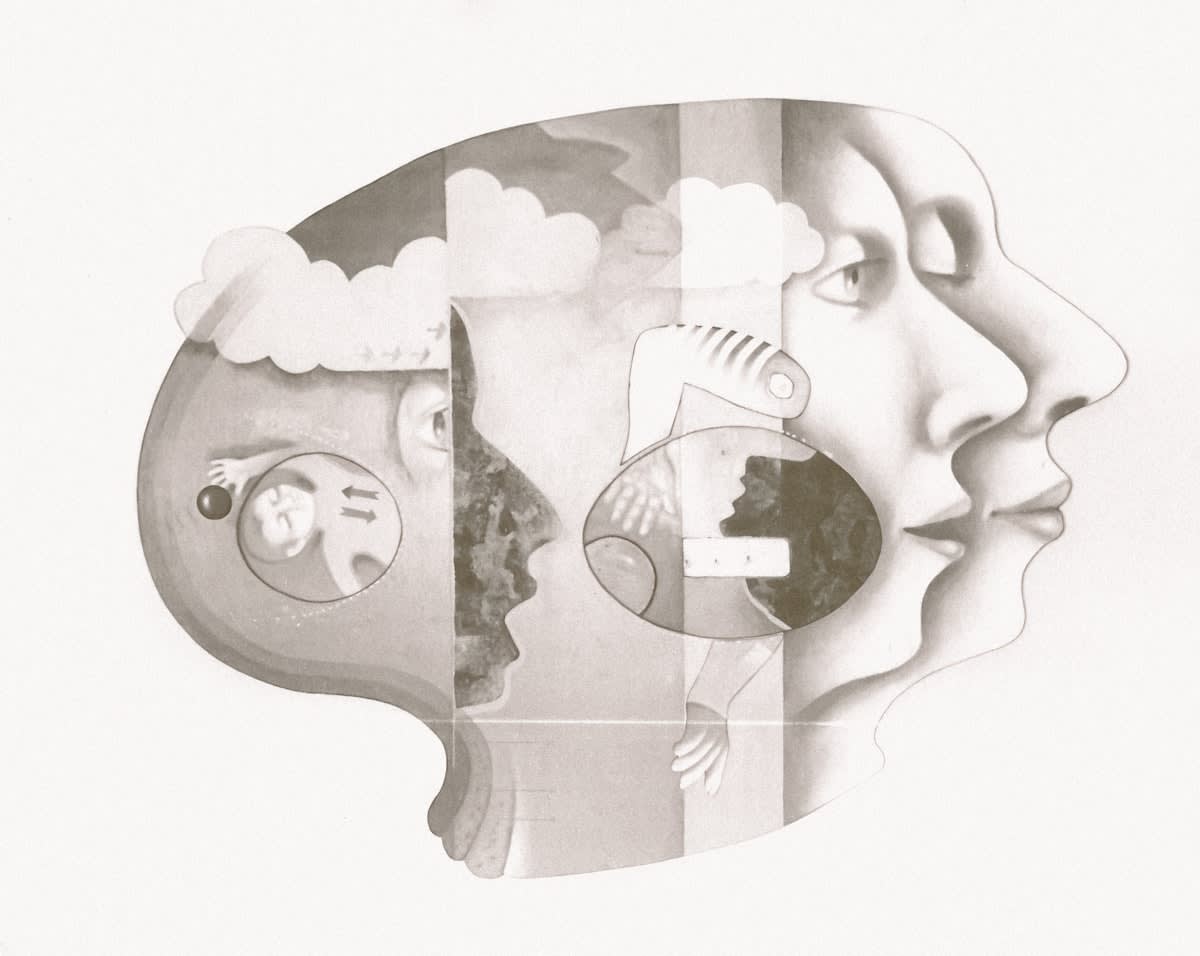
The 5-Step Unlearning Protocol
This is not a passive exercise in reflection. It is a surgical strike on your own cognition. You will feel a sense of vertigo as you remove the pillars of your certainty. Embrace it. That instability is the only place where genuine adaptation occurs.
- The Model Audit: Map your default reactions to common challenges.
- Trigger Identification: Isolate the exact moment your model fails to produce the expected result.
- Origin Tracing: Determine when and why this model was first adopted.
- The Vacuum Phase: Deliberately suspend the old model without immediately replacing it.
- Iterative Re-integration: Test new hypotheses in low-stakes environments.
Step one, the Model Audit, requires you to act as an anthropologist of your own mind. For one week, document every 'obvious' conclusion you reach. When you say, 'This is obviously the right way to handle this client,' or 'This is how we've always scaled this product in the Brazilian market,' stop. Why is it obvious? What is the underlying rule you are following? Most of these rules are invisible ghosts haunting your decision-making process.
Once the models are visible, you must find their breaking points. Trigger Identification happens when there is a delta between your prediction and the outcome. If you applied a 'proven' management style and the team's productivity plummeted, that is not a failure of the team; it is a signal that the model is obsolete. Treat these failures as data points. The more frequently a model fails, the higher its priority for decommissioning.
"The most dangerous phrase in the language is 'We've always done it this way.' It is the funeral dirge of innovation."— Industry Maxim
Origin Tracing is where you strip the emotional power from the model. Ask yourself: Was this model learned in a 2010 MBA program? Was it a survival mechanism developed during a specific crisis in a previous role? By identifying the source, you realize the model was a tool for a specific time and place. It is not a universal truth; it is a historical artifact. This realization makes it significantly easier to let go.
The Vacuum Phase is the most difficult step. Most people rush to replace an old model with a new one to avoid the anxiety of not knowing. Resist this urge. If you jump from one rigid framework to another, you are simply swapping one set of blinkers for another. Spend time in the uncertainty. Ask questions. Observe the environment without trying to categorize it. This creates the cognitive space necessary for a truly adaptive model to emerge.
Finally, Iterative Re-integration involves small-scale experimentation. Instead of committing to a new global strategy, test a new mental model on a single project or a small team. If the new approach yields a 10-15% increase in efficiency or a reduction in friction, you have found a viable replacement. Scale the model only after it has survived the crucible of real-world application.

Measuring the Cognitive Delta
To track your progress, you must quantify the shift in your approach. Compare the logic used in a decision six months ago to the logic used today. If the reasoning remains identical despite a change in results, you haven't unlearned anything. True progress is marked by a fundamental shift in the 'why' behind your actions.
| Attribute | Obsolete Model (The Anchor) | Adaptive Model (The Sail) |
|---|---|---|
| View of Failure | A mistake to be avoided at all costs | A high-signal data point for iteration |
| Decision Basis | Precedent and historical success | Current environmental signals |
| Approach to Knowledge | Accumulation of static facts | Ability to synthesize and discard |
| Risk Profile | Risk mitigation through control | Risk management through agility |
Notice the shift in the table above. The obsolete model focuses on preservation; the adaptive model focuses on evolution. When you move from a control-based mindset to an agility-based one, you stop fighting the current and start using it. This shift is often the difference between a leader who is respected for their past and one who is essential for the future.
Common Pitfalls in the Unlearning Process
The path to cognitive flexibility is littered with traps. The most pervasive is the Sunk Cost Fallacy. You feel that because you spent ten years mastering a specific methodology, it is too 'expensive' to discard. This is a mathematical error. The cost is already gone; the only question is whether continuing to use a broken tool will cost you more in the future.
- The Identity Trap: Confusing your mental models with your identity. (Example: I am a 'Command-and-Control' leader, therefore I cannot delegate).
- Confirmation Bias Loop: Only seeking data that proves your obsolete model still works.
- The Replacement Rush: Adopting a 'trendy' new framework without doing the work of dismantling the old one first.
- Intellectual Arrogance: Believing that your past success guarantees future relevance.
Avoid these traps by maintaining a rigorous schedule of mental audits. Set a quarterly 'Obsolescence Review' where you intentionally look for the things you believe most strongly and try to prove them wrong. If you can't find a way to break your model, you aren't looking hard enough. The goal is not to be right, but to be less wrong over time.