
The Architecture of Cognitive Inertia
Stop trying to learn more. Start subtracting. Most professionals treat their minds like hard drives, constantly downloading new frameworks, certifications, and methodologies. But the real bottleneck isn't a lack of information; it is the presence of obsolete cognitive software. We call this cognitive inertia. It is the psychological tendency to cling to mental models that served us in a previous environment, even when those models have become liabilities in the current one. When you operate with a map of a city that has since been rebuilt, you don't need a newer map—you first need to admit the old one is wrong.
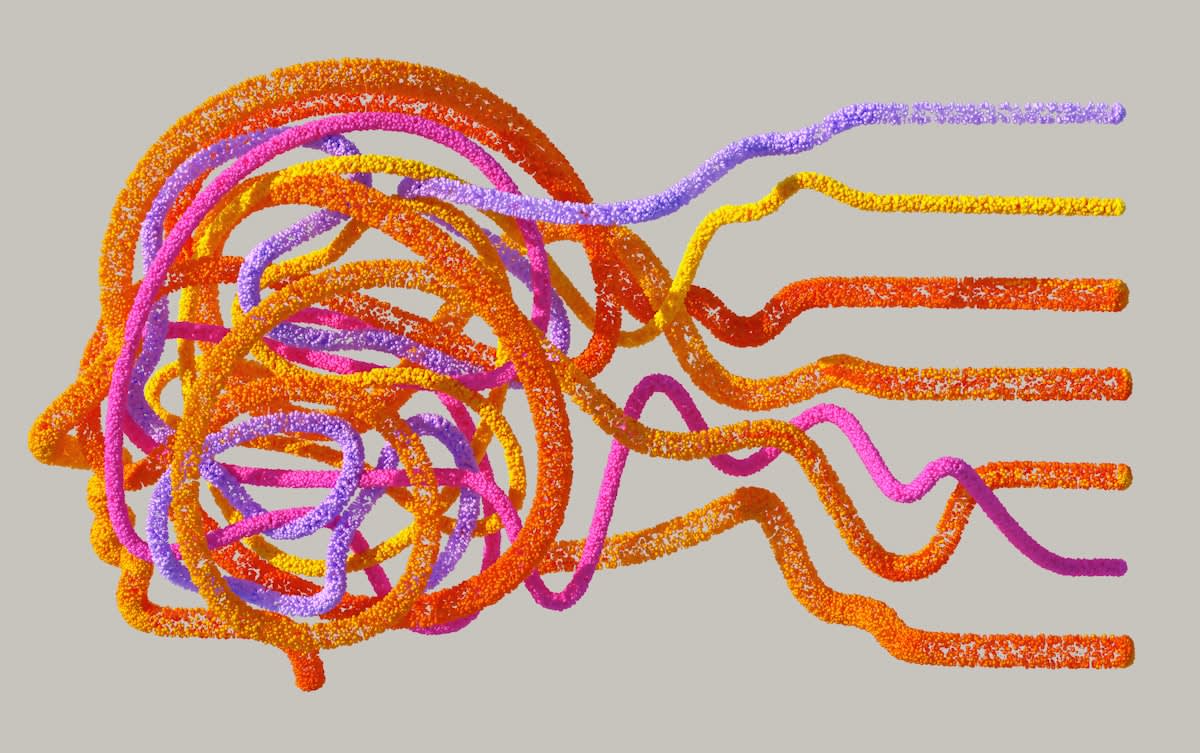
Why is this so difficult? Our brains are wired for efficiency, not necessarily for accuracy. According to the American Psychological Association (2022), the brain utilizes heuristics to reduce the cognitive load of decision-making. While these shortcuts are vital for survival, they create deep grooves in our neural pathways. Unlearning is not about erasing a memory—which is biologically nearly impossible—but about creating a new, stronger pathway that inhibits the old one. It is a process of active suppression and strategic replacement.
Prerequisites for Deconstruction
You cannot unlearn while you are still defending your ego. The protocol requires a specific psychological state: the Beginner's Mind. This is not about ignorance, but about the intentional suspension of expertise. If you approach this process as an expert, you will instinctively filter out the evidence that suggests your current habits are failing. You must be willing to feel incompetent for a period of time. This discomfort is the primary signal that the unlearning process is actually working.
- Radical Intellectual Humility: The acceptance that your current 'best practice' may be a legacy habit.
- High Tolerance for Ambiguity: The ability to operate without a clear mental map during the transition phase.
- Observation Capacity: The ability to notice your own triggers in real-time without immediate judgment.
- A Low-Stakes Testing Ground: A project or environment where you can fail safely while experimenting with new habits.
Before moving to the steps, consider the cost of inaction. The World Economic Forum's 2023 Future of Jobs Report suggests that adaptability and lifelong learning are now top priorities for employers, yet many struggle because they cannot let go of the 'command and control' structures of the 20th century. In high-pressure hubs from Singapore to Sao Paulo, the most successful leaders are not those who know the most, but those who can unlearn the fastest.
The Unlearning Protocol: Step-by-Step
- Audit the Automatic: For two weeks, document every 'automatic' reaction you have in high-stakes situations. Do not analyze them yet; simply record the trigger and the response. For example, if a subordinate asks a question and your immediate internal reaction is to provide the answer rather than ask a clarifying question, mark this as a 'legacy habit' of directive leadership.
- Trace the Origin: Ask yourself: 'When did this habit become useful?' Most cognitive roadblocks were once survival mechanisms. Perhaps being overly cautious was a requirement in a previous role in a highly regulated industry in Germany, but it is now slowing down your innovation cycle in a fast-paced startup in Nairobi. Acknowledging the original utility reduces the emotional resistance to letting it go.
- Interrupt the Loop: Implement a 'Pattern Interrupt.' This is a physical or mental cue that breaks the trigger-response chain. When the trigger occurs, use a five-second pause or a physical gesture (like touching your desk) to create a gap between the stimulus and the habit. This gap is where the possibility of a new choice exists.
- Install the Counter-Habit: Design a specific, actionable behavior to replace the old one. If the old habit was 'interrupting to correct,' the counter-habit is 'taking three notes before speaking.' The new behavior must be as concrete as the old one; vague goals like 'be more open' will fail because they provide no neural roadmap.
- Stress-Test and Iterate: Apply the new habit in a controlled environment, then gradually increase the stakes. Use a feedback loop to measure the outcome. Does the new habit produce a better result? If the result is neutral or negative, refine the counter-habit. This is an iterative process of cognitive sculpting.
This sequence is not a linear path but a spiral. You will often find that unlearning one habit reveals a deeper, more ingrained habit beneath it. For instance, unlearning a tendency to micromanage often reveals a deeper fear of failure or a lack of trust in systemic processes. This is where the real work happens. The goal is not perfection, but a reduction in the latency between realizing a habit is obsolete and choosing a new response.
"The most critical skill for the 21st century is the ability to unlearn. It is the capacity to let go of a mental model that is no longer serving you, even if it brought you success in the past."— Adam Grant, Organizational Psychologist and Author
From my years implementing these frameworks in diverse corporate environments, I have seen a recurring friction point: the 'Expert's Paradox.' I recall working with a senior engineering lead in Tokyo who struggled to move from a waterfall to an agile methodology. He didn't lack the technical knowledge of Agile; he lacked the emotional capacity to unlearn the feeling of security that comes with a 100-page specification document. We spent less time on Scrum training and more time on the psychological process of decoupling his professional identity from the act of 'perfect planning.' This is the ground-level reality of the protocol—it is as much about identity as it is about cognition.
Learning vs. Unlearning: The Key Distinctions
| Feature | Learning (Additive) | Unlearning (Subtractive) |
|---|---|---|
| Primary Goal | Acquiring new skills/knowledge | Deconstructing obsolete habits |
| Neural Action | Creating new synaptic connections | Inhibiting existing neural pathways |
| Emotional State | Excitement, Curiosity | Frustration, Incompetence |
| Risk | Information overload | Identity crisis / Ego threat |
| Metric of Success | Ability to perform a new task | Absence of an old reaction |
Many people mistake 'learning a new way' for 'unlearning the old way.' If you simply layer a new methodology over an old habit, you create a cognitive conflict. This is why you see managers who attend leadership seminars but return to their desks and continue to micromanage. They have learned the theory, but they haven't unlearned the impulse. True unlearning requires the active inhibition of the previous response.
Common Pitfalls and How to Avoid Them
The most dangerous pitfall is the Reversion Trap. This happens when you experience a high-stress event and instinctively snap back to your legacy habit. Because the old pathway is deeper and more efficient, it is the brain's default under pressure. When this happens, most people feel they have failed and abandon the protocol. Instead, view the reversion as a diagnostic tool. It tells you exactly where your new habit is still fragile.
Another frequent error is the Intellectualization Shield. This occurs when a practitioner can explain the psychology of their habit perfectly but cannot change the habit itself. They use their knowledge of the protocol to avoid the discomfort of the practice. If you find yourself analyzing why you are stuck rather than implementing the pattern interrupt, you are shielding yourself. Stop analyzing; start interrupting.
Fact-Check & Accuracy Note
The claims regarding neuroplasticity and the inhibitory nature of unlearning are based on established cognitive behavioral principles and general psychological consensus. While specific outcomes vary by individual, the framework follows the standard 'Cue-Routine-Reward' loop modification used in habit reversal training. There is ongoing debate in the field regarding the speed at which inhibitory pathways can fully supersede primary pathways in adults.