
The New Acoustic Order
August 2026 has marked a definitive pivot in how we approach the invisible pollution of our oceans. For decades, the global community treated underwater noise as a secondary concern, a mere byproduct of shipping and seismic exploration. That complacency is dead. We are now witnessing a sophisticated arms race between industrial expansion and acoustic preservation. Why does this matter? Because for a sperm whale or a giant river turtle, sound is not just a sense; it is their map, their social network, and their survival mechanism. When we flood the ocean with the cacophony of construction and mining, we aren't just adding noise; we are erasing their world.
The scale of the challenge is staggering. From the northern Adriatic, where human noise soundscapes are being meticulously mapped, to the Amazon waterways where the social lives of giant river turtles are under threat, the sonic footprint of humanity is expanding. The U.N. has already provided a roadmap for reducing this pollution, but the real shift this month lies in the transition from passive observation to active shielding. We are no longer just asking ships to slow down; we are engineering materials that can physically block the noise without choking the environment.

The Shielding Breakthrough: Air Flow Meets Sound Block
The most electrifying development this month comes from the labs of Boston University. Engineers led by Professor Xin Zhang have unveiled a sound-shield technology that Fast Company has named a 2026 World Changing Idea. The brilliance of this innovation lies in its duality: it reduces noise while allowing air to flow freely. In the past, soundproofing meant creating a wall—a dense, suffocating barrier that sacrificed energy efficiency for silence. This new technology breaks that trade-off. While currently highlighted for air conditioners and data centers, the implications for marine infrastructure and surface-to-sea noise mitigation are profound.
Engineering Milestone
The BU sound-shield represents a paradigm shift in acoustic physics, proving that we can isolate sound without isolating the system from its environment. This is the blueprint for the next generation of sustainable industrial design.
This leap in material science coincides with a broader industry interest in vibration damping. Companies like ABM Insulation, which operate across the automotive and marine sectors, are leveraging butyl materials to stop noise at the source. The science is clear: low-frequency bass waves slip through almost every gap. By combining BU's flow-through shielding with high-density vibration damping, the industry is finally building a toolkit capable of tackling the 'bass' of industrial noise—the kind of deep, rumbling frequencies that travel for hundreds of miles underwater.
The Abyss: Deep-Sea Mining and the Silence Crisis
Nowhere is the tension higher than in the deep ocean. The Metals Company recently shared findings from one of the most complex deep-sea scientific studies ever undertaken. Their claim? That operational noise levels above NOAA-designated thresholds will be limited to within several kilometers of their production vessels. To some, this sounds like a controlled impact. To conservationists, it is a gamble with an ecosystem we barely understand. The Oceano Azul Foundation is calling for a precautionary pause, arguing that the uncertainty surrounding underwater noise and artificial light could devastate biodiversity and carbon storage functions.
"You’d never use one of these machines to drive through a forest and be OK with crushing deer, squirrels, trees and rocks. People would never allow that kind of mass death to occur."— DFO Scientist via The Tyee
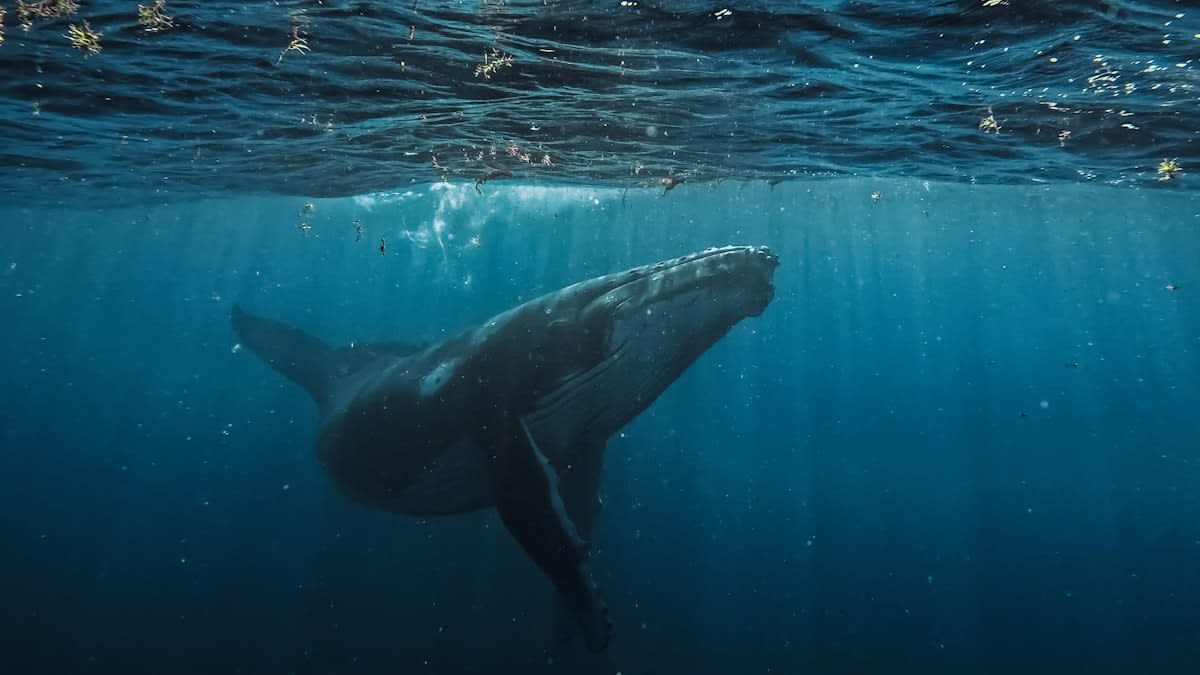
The biological stakes are visceral. Consider the sperm whale, capable of diving 3 kilometers below the surface. While adults dive deep, juveniles remain at the surface, relying on sound to stay connected to their pod. If the ocean floor becomes a construction site of mining plumes and machinery, these juveniles could be permanently separated from their families. This isn't just a localized issue; the ocean current on the Canada-Alaska border flows north to south, meaning mining pollution from seamounts could sweep directly into northern B.C. and Haida Nation territory.
Global Frontlines: From Mangroves to the Amazon
The war on noise is being fought on multiple fronts. In Indonesia, the rush to build a new capital is putting wildlife-rich mangroves under immense pressure, introducing industrial noise into fragile coastal buffers. Meanwhile, in Peru, proposed copper mine modifications have sparked community outcry, highlighting a global trend where acoustic pollution is becoming a primary trigger for social unrest. Even in the Galapagos, fast traffic noise is reportedly infuriating warblers, proving that the sonic disruption of nature transcends the water's edge.
This globalized crisis requires a globalized response. The shift we are seeing in August 2026 is the move toward real-time, technology-driven mitigation. We are moving away from static regulations and toward dynamic systems that react to the presence of wildlife in real-time. This is the 'Delta'—the difference between the 2023 approach of listing ways to reduce noise and the 2026 approach of implementing active surveillance and shielding.
Tactical Mitigation: The AIS Revolution
One of the most practical wins this month is the expansion of the Automated Identification System (AIS) network along the U.S. East Coast. NOAA and its partners have repurposed this maritime safety technology into a real-time alert network. When a vessel transits through a Seasonal Management Area at speeds exceeding 10 knots, the system triggers a timely text message to the crew. By forcing a reduction in speed, NOAA isn't just preventing vessel strikes on North Atlantic right whales; they are drastically lowering the acoustic output of the shipping lane.
| Mitigation Strategy | Target Impact | Technology Used | Scale |
|---|---|---|---|
| Real-time Speed Alerts | Vessel Strike & Noise Reduction | AIS Technology | Regional (US East Coast) |
| Flow-Through Shielding | Industrial Noise Isolation | BU Sound-Shield | Global/Industrial |
| Vibration Damping | Low-Frequency Noise Block | Butyl Materials | Marine/Automotive |
| Precautionary Pause | Ecosystem Preservation | Policy/Scientific Research | Deep-Sea Global |
Can we actually silence the industrial machine? Perhaps not entirely. But the integration of BU's shielding, NOAA's real-time alerts, and a rigorous adherence to the precautionary principle suggests we can at least create 'sonic sanctuaries.' The goal is no longer total silence—which is impossible in a global economy—but rather the preservation of the critical acoustic frequencies that allow marine life to thrive. The resilience of our oceans depends on our ability to stop treating the water as a void and start treating it as a medium for communication.