
We are told that communication is the key to every lock. The corporate world screams for transparency. The therapy couch demands confession. But is the drive to speak always a virtue? In reality, the compulsion to fill every silence is a vulnerability. True power does not reside in the broadcast; it lives in the void. Whether it is a soldier returning from war or a state negotiating a security pact, the decision to remain silent is often the only way to preserve a position of strength or survive a crushing internal weight.
Consider the psychological wreckage of the mid-20th century. Alfred Stewart, a regimental sergeant major in the British Army during World War II, returned home with psychological wounds that he never voiced. This was not a lack of communication skills. It was a survival mechanism. He carried the weight of Dunkirk in a silence that echoed through his household for decades (Source: Military.com, 2026). This kind of silence is a heavy, suffocating blanket, yet for the veteran, it was the only available playbook for a world that had no language for his trauma.
"My father suffered in silence with the psychological wounds he sustained in the Second World War."— Patrick Stewart, Actor and Veterans' Mental Health Advocate
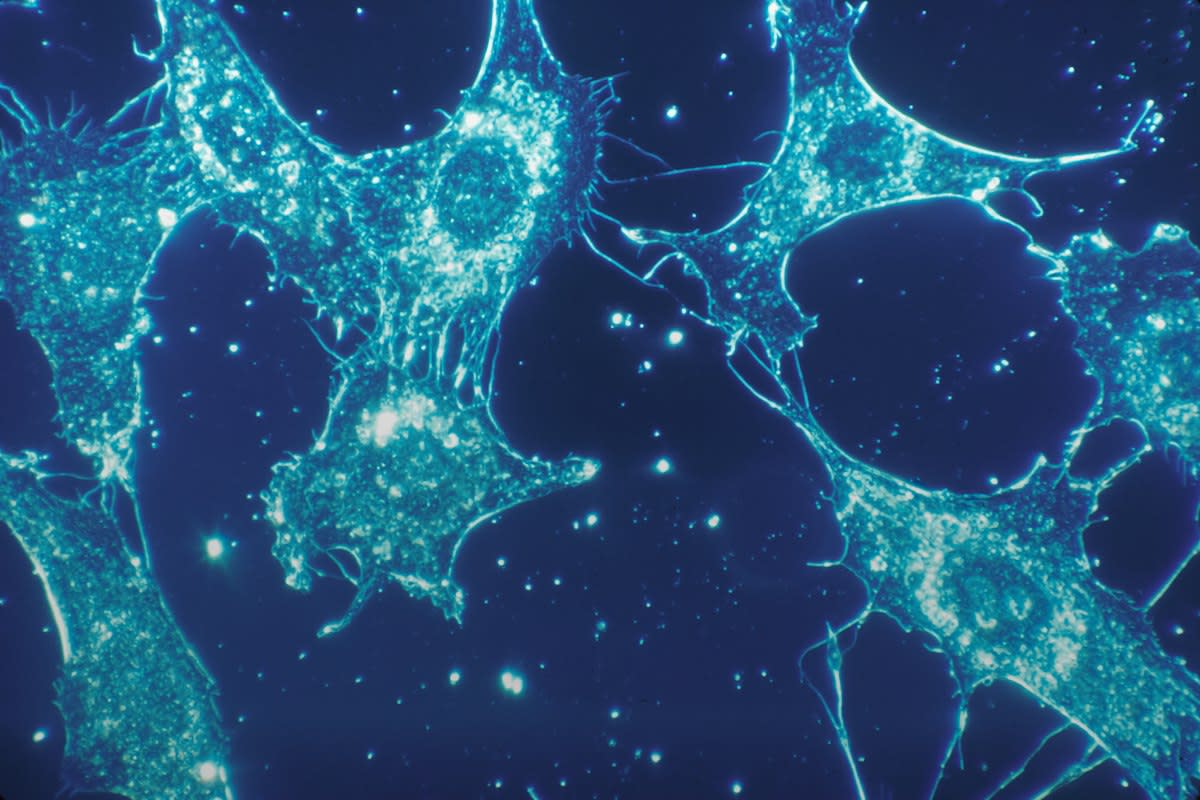
This silence isn't just a human quirk. It is a biological imperative. In the realm of oncology, the goal is often to force a specific kind of silence upon the cell. Researchers have found that targeting a MYC-directed metabolic vulnerability can sensitize tyrosine kinase inhibitor therapy. Specifically, the drug vandetanib acts as a potent transcriptional repressor of the serine synthesis pathway (SSP) in non-small cell lung cancer (Source: Nature, 2026). By silencing the SSP, the treatment creates a metabolic dead end. The cancer cell cannot speak its way out of this restriction; it simply starves.
But there is a dark side to this inhibition. When we silence the wrong pathways, the cost is clinical decline. In the PROOF-HD Phase 3 clinical trial, a post hoc analysis of 247 placebo-arm participants revealed a dangerous contradiction (Source: BioSpace, 2026). Those exposed to antidopaminergic medications (ADMs)—drugs designed to quiet certain neural signals—showed a greater worsening of overall clinical outcomes. The silence imposed by ADMs didn't stabilize the patients; it accelerated the decay of motor function and cognition (Source: BioSpace, 2026). This is the risk of the hard turn toward inhibition: you might kill the symptom but starve the system.
| Domain | Mechanism of Silence | Strategic Outcome | Primary Risk |
|---|---|---|---|
| Psychology | Trauma Suppression | Immediate Survival | Intergenerational Trauma |
| Oncology | SSP Repression | Tumor Sensitization | Off-target Toxicity |
| Neurology | Antidopaminergics | Symptom Control | Cognitive Decline |
| Diplomacy | Security Agreements | Institutional Stability | Lack of Public Oversight |
Moving from the cellular to the sovereign, strategic silence becomes a tool of statecraft. Look at the recent summit between President Lee Jae Myung of South Korea and German Chancellor Friedrich Merz (Source: Korea.net, 2026). While the joint media statement speaks of an enhanced strategic partnership, the real meat of the agreement lies in the shadows. The two nations are seeking the early conclusion of a general security of military information agreement. This is the institutional foundation for cooperation. It is a pact of shared secrets. The strength of this bond is not in what they announce to the press, but in what they agree to never disclose.
Why do they do this? Because transparency in military intelligence is a liability. The web of security is built on the ability to compartmentalize. By creating a secure, silent channel for military information, Seoul and Berlin create a buffer against external volatility. It is a calculated move to solidify the terrain of their defense cooperation without inviting the scrutiny of rivals (Source: Korea.net, 2026).
This operational silence creates a friction point in the corporate world, particularly where regulation meets innovation. The EU's Digital Networks Act (DNA) was supposed to be a watershed moment for cloud communications. Instead, it was an anticlimax (Source: Telecoms.com, 2026). The industry was champing at the bit for a regulatory holiday—a period of silence from the regulators that would allow for rapid growth. Instead, they got a framework that failed to level the playing field with hyperscalers.
Now, the Coalition of Innovators in Communication (CiC) is fighting back. They aren't just asking for changes; they are advocating for a single market that facilitates cross-border services in API-based services and communications fraud intelligence (Source: Telecoms.com, 2026). The friction here is a classic insider's battle. The providers want the regulators to be silent on certain constraints while being loud about removing barriers. It is a delicate dance of selective speech.
As someone who has spent years observing these corridors of power, I can tell you that the most important negotiations never happen in the boardroom. They happen in the hallway, in the whispered conversation during a coffee break, or in the deliberate silence after a proposal is made. The amateur speaks to fill the air; the professional uses silence to force the other side to blink. In Brussels, the gap between a public policy draft and the final law is often filled by the silent influence of lobbyists who know exactly which strings to pull without leaving a paper trail.

Even in the high-stakes world of resource extraction, silence is a strategic asset. Golden Rapture Mining recently launched a $700,000 financing round to advance gold projects in northwestern Ontario (Source: The Globe and Mail, 2026). While they highlight their portfolio of six underexplored projects, the real value is in the 'underexplored' part. In mining, revealing too much too soon is a mistake. You keep the specifics of your hydraulic drill access and your site data quiet until the financing is locked and the ground is secured. The silence regarding the exact nature of the find is what drives the valuation.
Is this a blueprint for success? Not necessarily. The contradiction remains: silence can be a shield or a shroud. For Alfred Stewart, it was a shroud that hid trauma (Source: Military.com, 2026). For the patients in the PROOF-HD study, the chemical silence of ADMs was a catalyst for decline (Source: BioSpace, 2026). But for the strategist, the diplomat, or the oncologist, silence is the edge. It is the difference between a noisy failure and a quiet victory.
Fact-Check & Accuracy Note
The data regarding antidopaminergic medications (ADMs) in Huntington's disease is based on a post hoc analysis of the PROOF-HD trial. While it shows a strong association between ADM exposure and worsening clinical outcomes, academic debate continues regarding whether this is a direct causal link or a result of baseline disease severity in patients requiring such medications. Similarly, the effectiveness of SSP repression in NSCLC is currently in the peer-review stage and subject to further edits before the final Version of Record is published (Source: Nature, 2026).
Ultimately, the ability to trade speech for strategic silence is about control. It is about knowing when the noise of the world is a distraction and when the void is an opportunity. Whether you are managing a portfolio of gold mines in Ontario or negotiating a security pact in Seoul, the goal is the same: control the flow of information. Those who can master the silence are the ones who define the terrain.