
Why do we insist that stress is a matter of mindset? Most people treat anxiety as a cognitive error, a glitch in thinking that can be solved with a positive affirmation or a breathing app. This is a mistake. Stress is not a thought; it is a mechanical failure of the autonomic nervous system to signal safety to the brain. When the vagus nerve—the primary highway of the parasympathetic system—loses its grip, the body defaults to a state of high alert. You cannot think your way out of a physiological state that your body believes is a matter of survival.
Prerequisites for Regulation
Before attempting to regulate the vagus nerve, you must establish a baseline of environmental safety. You cannot suture a nervous system that is currently under active attack. This requires a physical space where the external weight of threat is minimized. You will also need an awareness of your current state: are you in a state of social engagement, fight-or-flight, or a hollow state of shutdown? Without this internal map, any intervention is just noise.
- A quiet, low-stimulus environment to reduce sensory saturation.
- Basic knowledge of your physiological triggers (e.g., tight chest, shallow breath).
- Willingness to engage in embodied movement rather than purely mental analysis.
- A commitment to gradual exposure rather than forcing a state of calm.
The Polyvagal Framework: Understanding the Default
The Polyvagal Theory suggests that our autonomic regulation is not a simple on-off switch between stress and rest. Instead, it is a complex web of responses. According to Stephen Porges, this theory provides an account of safety, threat, and autonomic regulation (Source: PACJA, 2022). When we feel safe, the ventral vagal complex allows for social connection and healing. When that fails, we collide with the sympathetic nervous system, leading to the familiar grip of anxiety. If the threat is perceived as insurmountable, the system drops into a dorsal vagal state—a brittle, frozen state of dissociation.
"The Polyvagal Theory provides a plausible explanation of how trauma disrupts homeostatic physiological processes and social behavior and how treatments can be designed to restore these processes."— Polyvagal Institute
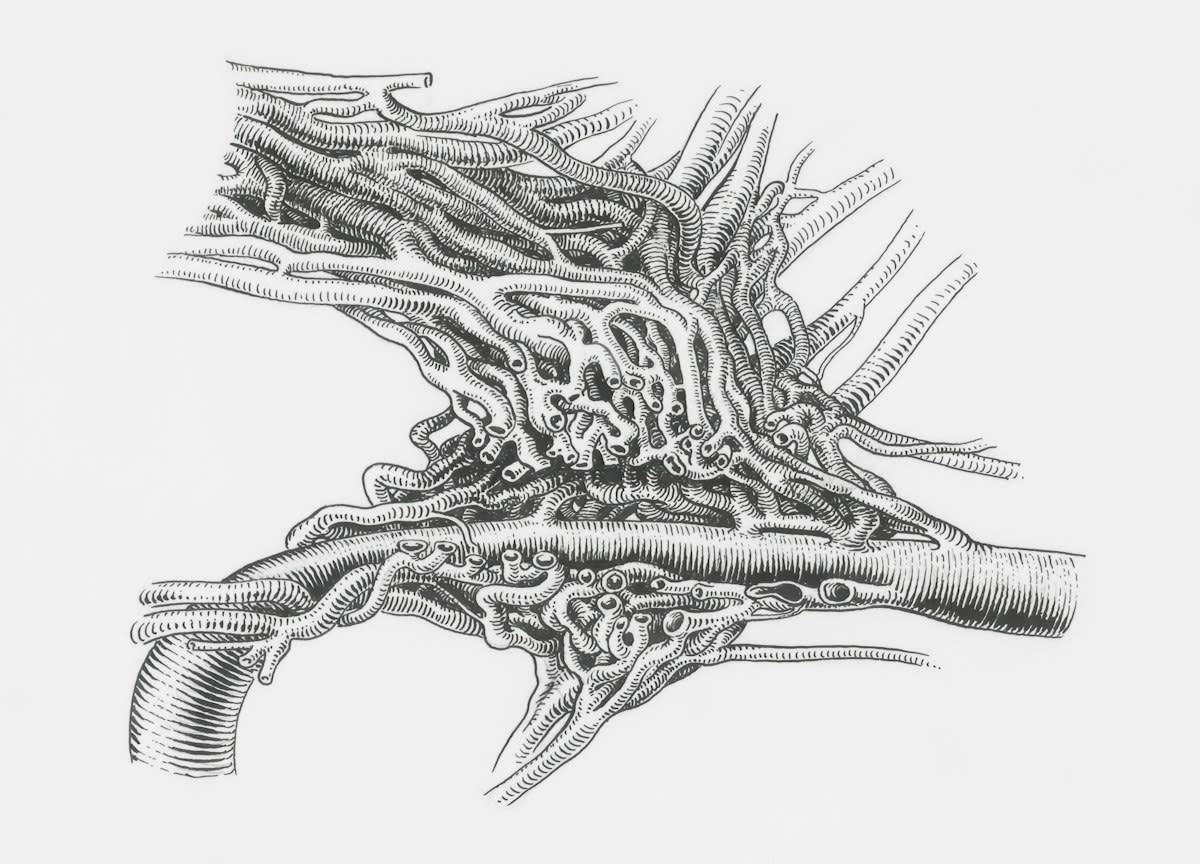
This physiological state often manifests in ways we mistake for character flaws. Take emotional eating, for example. It is frequently characterized as a lack of willpower, but it is more accurately a response to affective states rather than physiological hunger (Source: Frontiers in Psychology, 2026). The microbiota-gut-brain axis serves as a mechanistic framework for this behavior. When the vagus nerve cannot regulate the stress response, the body seeks a chemical shortcut to safety, often through food, to soothe a frayed nervous system.
Step-by-Step Regulation Protocol
Regulating the vagus nerve requires moving from the 'bottom-up.' We do not start with the mind; we start with the body. This approach uses embodied interventions to signal to the brain that the environment is no longer hostile. By changing the physical state, we force the autonomic nervous system to update its safety calibration.
- Identify the State: Notice if you are in a 'fight-flight' state (agitation, rapid heart rate) or a 'shutdown' state (numbness, brain fog).
- Engage Embodied Interventions: Use creative and embodied interventions to support emotion regulation (Source: Wiley Online Library, 2026). This could include rhythmic movement, humming, or tactile arts that ground the body in the present moment.
- Soothe the Gut-Brain Axis: Address the microbiota-gut-brain axis by focusing on gentle digestive support and avoiding high-stress eating patterns that reinforce emotional hunger (Source: Frontiers in Psychology, 2026).
- Establish Social Safety: Seek out a trusted peer or a safe social environment. The ventral vagal system is specifically tuned to social cues of safety, which can pull the body out of a dorsal shutdown (Source: PACJA, 2022).
- Integrate and Observe: Slowly return to your daily tasks, noticing where the tension still grips the body and repeating the embodied interventions as needed.
These steps are not a linear path but a cycle. In many non-Western contexts, such as community-based healing circles in Sub-Saharan Africa or traditional somatic practices in East Asia, this integration of social connection and bodily movement is the default, not a clinical addition. They understand that the individual cannot be sutured in isolation; the social web is part of the biological hardware.
The Practitioner's Reality: Invisible Frictions
In the clinic, there is a quiet war between cognitive-behavioral traditionalists and polyvagal practitioners. The friction lies in the 'top-down' versus 'bottom-up' debate. Traditionalists argue that changing the thought changes the feeling. As a practitioner, I have seen this fail repeatedly with trauma survivors whose bodies are in a state of dorsal shutdown. You cannot 'reframe' a thought when the prefrontal cortex has effectively gone offline due to a mechanical failure of the vagus nerve. The real struggle is convincing patients—and some clinicians—that the body is not 'lying' when it feels panic; it is simply reporting a lack of safety.

Common Pitfalls in Vagus Regulation
Many people attempt to 'force' relaxation, which ironically triggers more stress. If you are in a high-sympathetic state (fight-or-flight), trying to force yourself to be 'calm' can feel like a collision. The body perceives the forced stillness as a trap, increasing the internal weight of anxiety. The key is to move through the states gradually—from shutdown to mobilization, and then from mobilization to safety.
- Forcing calm: Trying to jump from a panic attack straight to deep meditation often fails.
- Ignoring the gut: Treating the brain while ignoring the microbiota-gut-brain axis leaves the physiological trigger intact (Source: Frontiers in Psychology, 2026).
- Isolation: Attempting to regulate in total isolation when the ventral vagal system requires social cues to activate (Source: PACJA, 2022).
- Over-intellectualizing: Spending more time reading about Polyvagal Theory than actually performing embodied interventions.
Fact-Check & Accuracy Note
The evidence for Polyvagal Theory is widely used in clinical settings to explain trauma and autonomic regulation, but it remains a subject of academic debate. Some researchers argue that the anatomical distinctions between the 'ventral' and 'dorsal' vagal responses in humans are not as clearly delineated as Porges suggests. However, the clinical utility of using safety-based, embodied interventions is well-documented in creative arts therapy and trauma recovery (Source: Wiley Online Library, 2026; PACJA, 2022).
Editorial Note
Editorial Note: This guide prioritizes physiological state-shifting over cognitive restructuring. While CBT has its place, the focus here is on the biological default of the nervous system. Always consult a medical professional before starting new somatic practices if you have a history of severe dissociation or cardiovascular issues.