The Silicon Ceiling
For decades, the trajectory of human progress was measured in nanometers—the shrinking of transistors on a silicon wafer. But we have hit a wall where raw processing power no longer equates to true intelligence or biological understanding. The industry is now pivoting toward 'wetware,' a term describing the integration of living biological neurons with synthetic hardware. Why settle for a simulation of a brain when you can interface with the actual cellular machinery? This shift represents a fundamental move from mimicking neural networks in code to harnessing them in protein and lipid.
This is not a distant sci-fi projection but a current industrial pivot. Recent breakthroughs in induced pluripotent stem cell-derived 3D models are allowing researchers to create spinal cord organoids that do more than just sit in a petri dish. These structures can now be used to investigate cell-autonomous mechanisms and motor neuron-glia interactions with a precision previously impossible. By merging these biological models with bioengineering and machine learning, we are seeing the birth of systems that can reproduce the coordinated co-development of multiple tissues, effectively turning biological tissue into a programmable interface.
The Wetware Paradigm
The transition from silicon to wetware is the difference between writing a book about a forest and planting a living ecosystem that grows its own information.
Scaling the Bio-Interface: The Rise of AI-Organoids
The geographical center of this revolution is shifting toward specialized biotech hubs. In July 2026, a Taiwanese delegation at the BIO International Convention in San Diego highlighted a massive surge in AI-enabled organoid technologies. Companies like CancerFree Biotech are no longer just researching cancer; they are advancing the distribution and licensing of organoid platforms specifically for drug development. This indicates a commercialization phase where the 'wet' component of the hardware is becoming a standardized product for the global pharmaceutical industry.
The scale of this momentum is evident in the numbers. The Taiwanese delegation secured more than 100 one-on-one business meetings with global pharmaceutical companies and investors, signaling an aggressive international appetite for precision medicine and AI-powered health solutions. This is a stark delta from just a year ago, when organoids were primarily academic curiosities. Now, they are the centerpiece of strategic partnerships aimed at expanding technology commercialization across global markets, moving from the lab to the boardroom with startling speed.
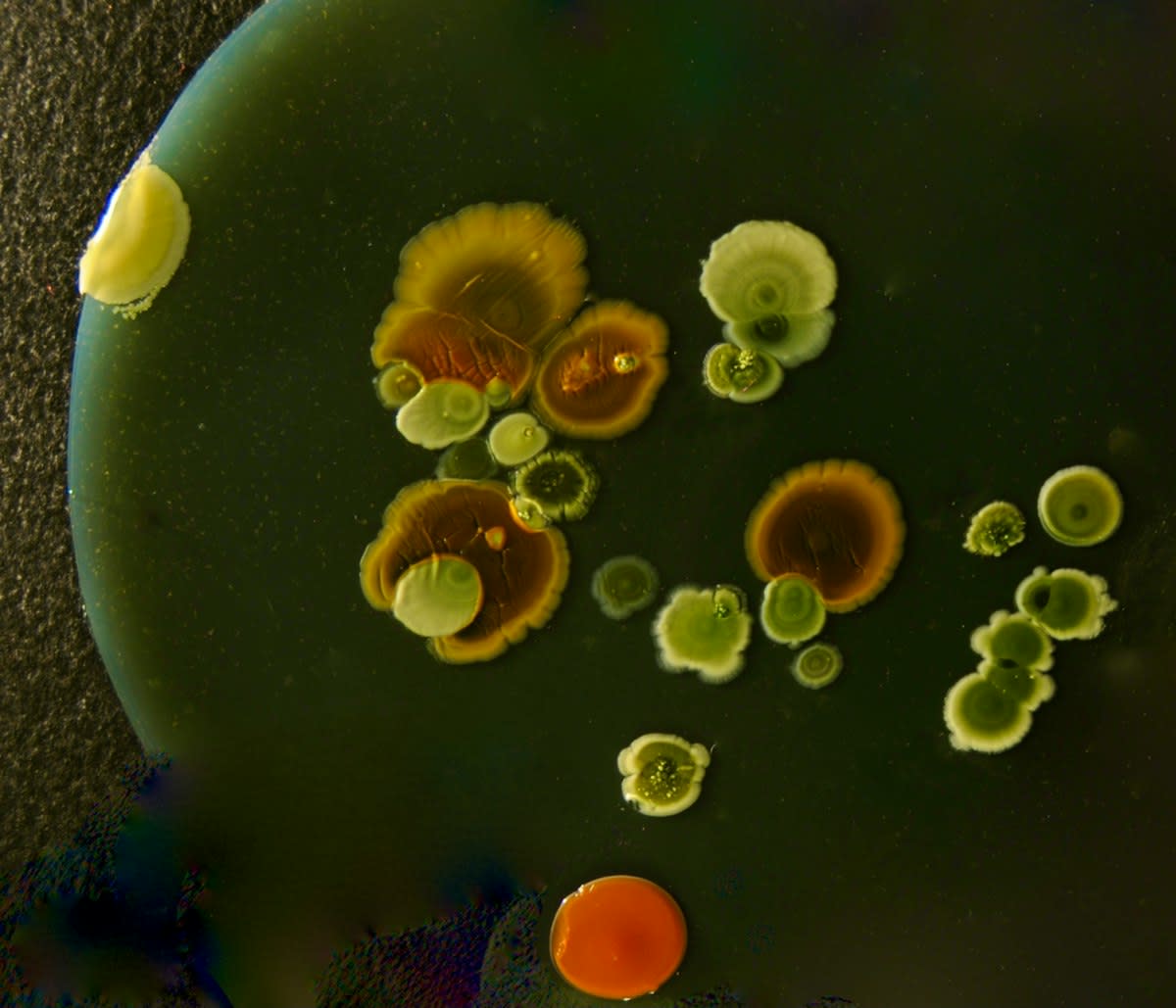
What happens when these organoids are paired with machine learning? According to research published in Nature, the combination of human trunk-like models and ML is beginning to reproduce the spatial organization of tissues affected by motor neuron diseases (MNDs). This allows scientists to dissect neuromuscular junction dismantling in real-time. We are no longer guessing how a drug might interact with a human nerve; we are testing it on a living, 3D-printed version of that nerve that is monitored by an AI, creating a feedback loop that accelerates discovery by orders of magnitude.
This convergence is creating a new class of 'bio-hybrid' systems. By integrating axially elongated spinal cord organoids into combined neuromuscular models, researchers can now study developmental vulnerability with clinical precision. This isn't just about curing disease; it is about understanding the very architecture of how biological information is processed and transmitted, laying the groundwork for hardware that can actually think and feel in a biological sense.
The Quantum Architecture of Thought
To truly merge neurons with hardware, we must understand the physics of the neuron. For nearly forty years, Oxford physicist Roger Penrose has argued that consciousness is not a product of algorithmic processing—the kind of processing current AI uses—but is instead tied to the deep structure of spacetime. Penrose, alongside Hameroff, proposes that quantum superpositions collapse inside microtubules within the brain. This suggests that the 'wetware' of our minds operates on quantum principles that silicon chips simply cannot replicate.
"Consciousness isn't something the brain produces, but the very means by which the universe becomes aware that it exists at all."— Roger Penrose
This theoretical framework aligns with the broader evolution of quantum mechanics. As Dr. Marlan Scully of Texas A&M and Princeton University notes, quantum mechanics has evolved from an abstract theory about tiny particles into the foundation of lasers, microchips, and emerging quantum computers. If consciousness itself is a quantum process occurring in microtubules, then the next generation of hardware will not be based on binary switches, but on the orchestration of quantum collapses within biological structures.
The implication is profound: we are moving toward a synthesis where quantum computing and biological neurons coexist. Imagine a processor that uses the spacetime geometry Penrose describes to achieve a level of awareness and processing efficiency that makes current LLMs look like abacuses. This is the 'so what' of the wetware trend—it is not about making faster computers, but about creating a new form of existence where the boundary between the observer and the machine disappears.
| Feature | Traditional Silicon | Emerging Wetware |
|---|---|---|
| Processing Unit | Transistors (Binary) | Living Neurons (Analog/Quantum) |
| Architecture | Fixed Circuitry | Dynamic 3D Organoids |
| Information Basis | Algorithmic Logic | Spacetime/Microtubule Collapse |
| Primary Goal | Computation Speed | Biological Integration/Longevity |
This shift toward quantum-biological hardware is being mirrored in the global push for innovation. In Israel, a massive editorial project launched in July 2026 is spotlighting breakthroughs that transform industries. While the specific details of these Israeli innovations are often closely guarded, the trend is clear: the world is searching for the 'next big thing' beyond the chip, and the answers are increasingly found in the intersection of physics and biology.
The 2032 Horizon: Longevity and Escape Velocity
If we can successfully merge human neurons with hardware, the concept of aging becomes a technical glitch rather than a biological certainty. Futurist Ray Kurzweil has predicted that by 2032, humanity could reach 'longevity escape velocity.' This is the point where science adds at least one year of healthy life for every year that passes. This isn't magic; it is the result of the triad: AI, computational medicine, and molecular biology working in tandem.
The roadmap to 2032 relies on the very wetware we are discussing. By using 3D organoids to test molecular interventions and AI to predict protein folding and cellular decay, we can move from treating symptoms to rewriting the biological code. The integration of computational medicine allows us to treat the body as a system of data that can be optimized, patched, and upgraded, much like the software in a smartphone.

This convergence creates a resilient future where human capability is no longer limited by the fragility of organic tissue. When we merge the durability of hardware with the plasticity of neurons, we aren't just extending life—we are evolving the human experience. The resilience of this new system comes from its hybrid nature; it possesses the raw power of quantum computing and the intuitive, adaptive capacity of the human brain.
The transition is already underway. From the bio-sensing technologies of PlasmonicTron in Taiwan to the quantum theories of Oxford, the pieces are falling into place. We are witnessing the end of the 'digital age' and the beginning of the 'biological age,' where the most valuable hardware in the world isn't made of silicon, but of cells, proteins, and quantum superpositions.
The New Biological Standard
As we look toward the next decade, the 'so what' is clear: the competitive advantage of nations and corporations will no longer be based on who has the fastest chips, but on who can most effectively integrate biological intelligence into their systems. The emergence of AI-enabled organoids and quantum-biological theories suggests a future where the distinction between 'natural' and 'artificial' is entirely obsolete. We are not just building tools; we are building a new version of ourselves.