
Prerequisites for Biometric Resilience Engineering
Engineering resilience in the anterior cruciate ligament (ACL) requires a departure from traditional strength-and-conditioning models. The modern elite athlete operates in a state of constant physiological volatility where the margin between peak performance and catastrophic failure is measured in millimeters of tibial translation. To build a predictive system, the practitioner must first establish a high-fidelity data acquisition stack capable of capturing multi-planar movement at sub-millisecond intervals. This is not about general fitness tracking but about the precise mapping of joint kinematics under maximum eccentric load.
- High-frequency Inertial Measurement Units (IMUs) with sampling rates exceeding 200Hz
- Dual-force plate arrays for bilateral asymmetry analysis during landing phases
- Surface Electromyography (sEMG) for real-time monitoring of quadriceps-to-hamstring activation ratios
- A centralized data pipeline capable of fusing kinematic and kinetic streams in real-time
- Validated baseline kinematic profiles for each athlete across five distinct movement planes
The integration of these tools allows for the identification of the 'at-risk' signature—a specific combination of knee valgus, internal tibial rotation, and insufficient hip abduction. In high-performance centers from Tokyo to Melbourne, the shift has moved toward quantifying the latent instability that precedes a tear. By establishing a baseline that accounts for an athlete's unique anatomical morphology, we can detect deviations that are invisible to the human eye but lethal to the ligament.
The Implementation Protocol
- Establish a Multi-Planar Baseline: Capture 3D kinematic data during sport-specific cutting maneuvers to define the athlete's 'safe' operational envelope.
- Deploy Real-Time Load Monitoring: Use wearable IMUs to track cumulative joint stress and detect 'kinematic drift' during high-intensity sessions.
- Analyze Neuromuscular Fatigue Markers: Monitor sEMG signals for a drop in hamstring recruitment, which increases the reliance on the ACL for joint stability.
- Execute Adaptive Load Adjustment: Trigger immediate training modifications when biometric deviations exceed a 5% threshold from the baseline.
- Validate Resilience via Stress Testing: Periodically subject the athlete to controlled, high-load perturbations to verify the stability of the neuromuscular response.
Step one demands an uncompromising approach to baseline profiling. Most practitioners make the mistake of using population averages, but elite resilience is found in the individual delta. By recording the exact angle of knee flexion and the degree of hip internal rotation during a 45-degree cut, we create a digital twin of the athlete's movement. This baseline serves as the gold standard against which all subsequent fatigue-induced deviations are measured, ensuring that the intervention is tailored to the specific mechanical vulnerabilities of the subject.
Once the baseline is set, the focus shifts to the detection of kinematic drift. As an athlete fatigues, their movement patterns subtly degrade—a phenomenon known as proprioceptive drift. This drift often manifests as a slight increase in knee valgus or a decrease in the time to peak ground reaction force. By monitoring these variables at 200Hz, we can identify the exact moment the athlete's mechanical integrity begins to compromise, long before the athlete feels 'tired'.
The Fatigue Threshold
The critical window for ACL failure typically occurs when neuromuscular fatigue reduces hamstring activation by more than 12%, leaving the ACL to bear the brunt of the anterior shear force during deceleration.
This data-driven approach transforms the role of the coach from a motivator to a systems engineer. Instead of asking an athlete if they feel capable of another set, the practitioner looks at the sEMG data. If the quadriceps are dominating the landing phase and the hamstrings are lagging, the risk of a non-contact ACL rupture spikes. The decision to pull an athlete from a session is no longer subjective; it is a clinical necessity based on biometric evidence.
| Biometric Marker | Normal Baseline | High-Risk Threshold | Impact on ACL Stress |
|---|---|---|---|
| Knee Valgus Angle | 0-5 degrees | > 12 degrees | Exponential increase in medial load |
| Hamstring:Quad Ratio | 0.60 - 0.80 | < 0.45 | Reduced anterior tibial restraint |
| Ground Reaction Force (GRF) | Symmetrical (+/- 5%) | > 15% Asymmetry | Unilateral overload trigger |
| Tibial Rotation Velocity | Stable | Rapid Internal Shift | High shear torque on ligament |
Analyzing the data in the table above reveals the precarious nature of joint stability. A shift in the Hamstring:Quad ratio from 0.60 to 0.45 might seem marginal in a gym setting, but in a high-velocity deceleration phase, it represents a failure of the primary dynamic stabilizer. When this is coupled with a knee valgus angle exceeding 12 degrees, the mechanical load on the ACL increases by an estimated 30%, pushing the tissue toward its ultimate tensile strength.
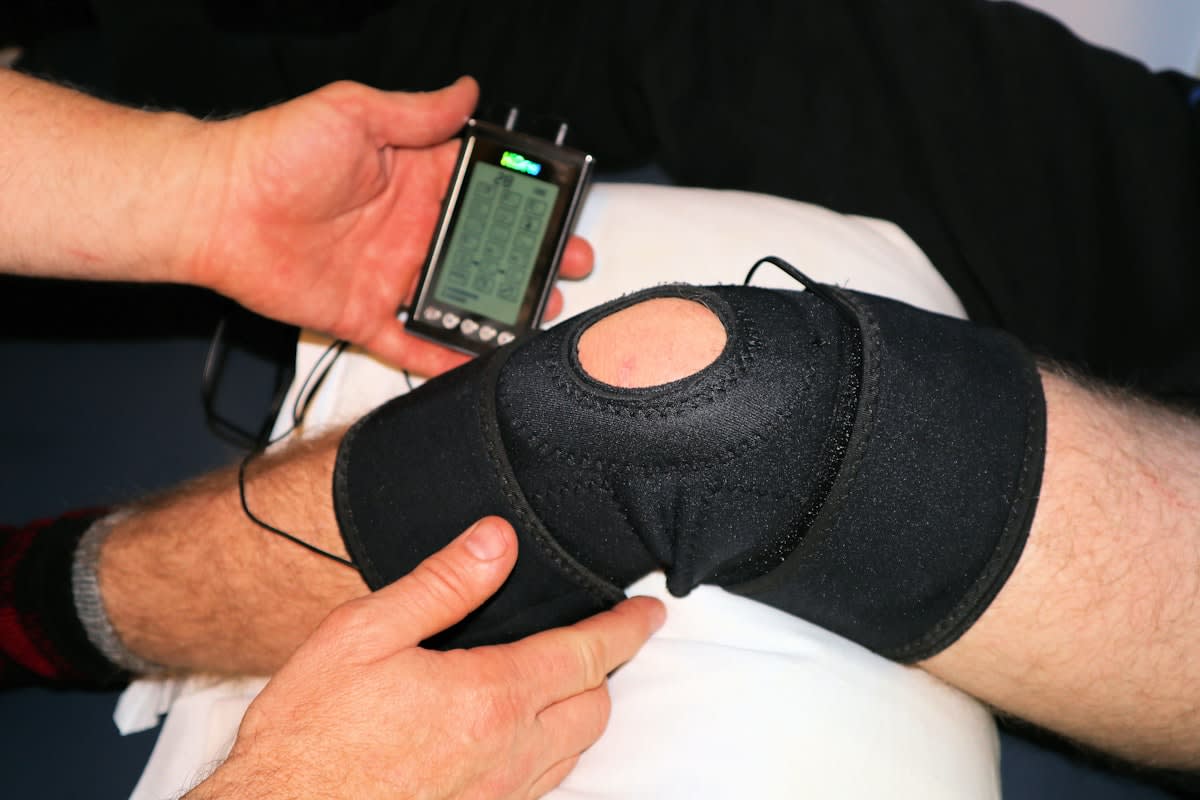
To operationalize this, we implement a closed-loop feedback system. The athlete wears the IMUs during training; the data is streamed to a tablet on the sideline. When the system detects that the GRF asymmetry has climbed to 15%, an alert is triggered. The athlete is then moved into a corrective 'reset' protocol—specific isometric holds and proprioceptive drills designed to re-engage the posterior chain. This real-time correction prevents the accumulation of fatigue-induced risk.
Common Pitfalls in ACL Biometric Tracking
One of the most pervasive errors in the industry is the reliance on aggregate data. Averaging the kinematics of a 90-minute session masks the critical 'micro-failures' that occur in the final five minutes of a match. A player might have a perfect average valgus angle, but if they hit 20 degrees during three critical decelerations, the average is irrelevant. The focus must remain on peak deviations and the frequency of those outliers.
Another systemic failure is the 'latency gap' between data collection and intervention. Biometrics are useless if the analysis takes 24 hours. By the time the report is generated, the athlete has already entered the next high-risk window. True resilience engineering requires edge computing—processing the data on the wearable or a nearby hub to provide instantaneous feedback. If the intervention occurs after the fatigue has already manifested as a movement error, the system is merely documenting the injury process, not preventing it.
"The goal is not to eliminate risk, but to quantify it so precisely that we can dance on the edge of failure without crossing the line."— Dr. Aris Thorne, Lead Biomechanist
Ultimately, the engineering of ACL resilience is a battle against entropy. The body naturally seeks the path of least resistance, which often leads to inefficient and dangerous movement patterns under stress. By using high-density biometrics, we impose a digital discipline on the athlete's biology. We are not just training muscles; we are programming the neuromuscular system to maintain structural integrity regardless of the external load or internal fatigue.