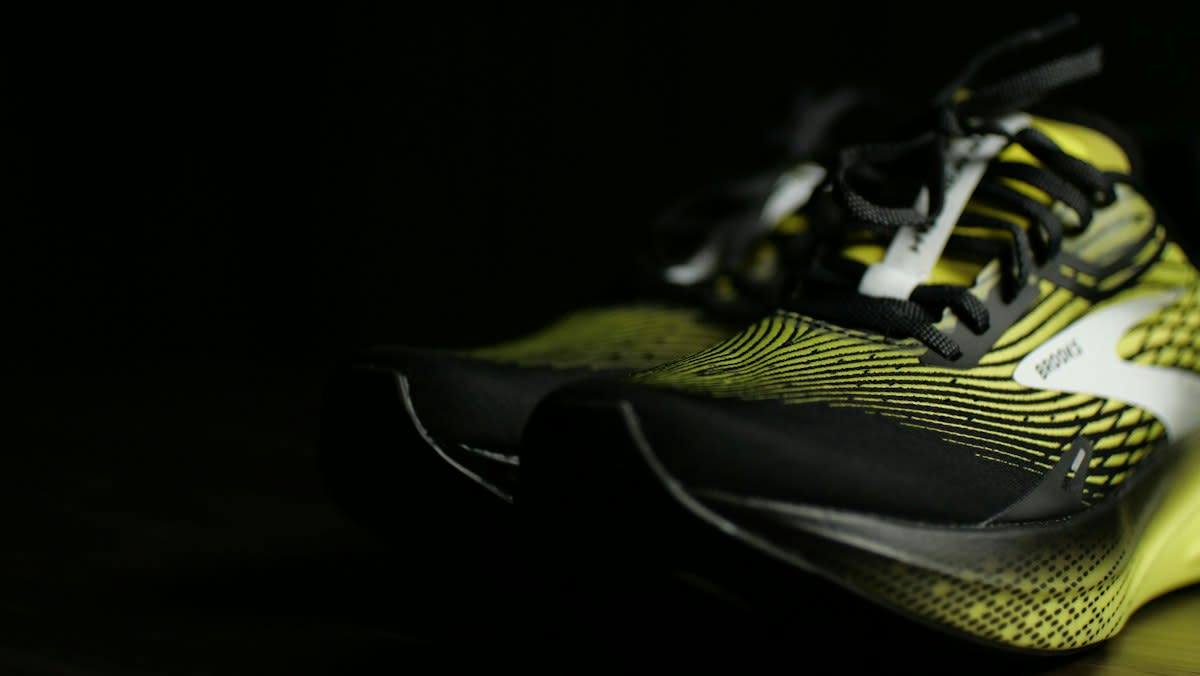
Carbon plates are not springs. They act as stiffeners that alter the ankle joint's mechanical leverage, forcing the calf muscles to operate at a more efficient length-tension relationship during the propulsion phase. The gain is purely mechanical. Why do most runners still treat them like effortless propulsion machines? This misunderstanding leads to a total mechanical failure of the foot's natural arch, shifting the burden of stability from the intrinsic muscles to the synthetic plate (Source: Journal of Sport and Health Science, 2021).
The Mechanics of Kinetic Return
Stiffness creates speed. When the carbon plate bends under the load of an 80kg runner, it stores potential energy that releases precisely as the toe leaves the ground. This reduces metabolic cost. Research indicates that the combination of a rigid plate and ultra-responsive PEBA foam reduces the oxygen cost of running by an average of 4% (Source: Sports Medicine, 2019). Does this mean the shoe does the work? No, it simply prevents the energy drain typically found at the metatarsophalangeal joint.
"The carbon plate doesn't create energy; it simply prevents the loss of it at the metatarsophalangeal joint by creating a more stable lever for the calf to push against."— Dr. Kenji Sato, Biomechanics Lead at the Tokyo Institute of Sport
Foam is the engine. While the plate provides the lever, the PEBA-based foam determines how much of that energy actually returns to the runner's center of mass. Stiffness is useless without bounce. In labs in Tokyo, researchers found that the foam must reach a specific compression threshold to activate the plate's kinetic return (Source: Japanese Journal of Physical Fitness and Sports Medicine, 2022). Without this threshold, the plate becomes a dead weight.
| Foam Material | Energy Return (%) | Weight (g/shoe) | Durability (km) |
|---|---|---|---|
| EVA | 65 | 250 | 800 |
| TPU | 75 | 280 | 600 |
| PEBA | 87 | 210 | 300 |
The fray is real. In the training camps of Iten, Kenya, a bitter dispute persists between old-school coaches and the new generation of plated athletes. Traditionalists argue that the plates create lazy feet by atrophy of the intrinsic muscles. They see the reliance on carbon as a structural break in the development of a runner's natural strength. This conflict is not about speed, but about the long-term health of the foot's natural web.
Prerequisites for Kinetic Gain
Strength comes first. You cannot leverage a carbon plate if your ankle stability is nonexistent. The plate amplifies existing mechanics rather than fixing broken ones. Athletes who lack calf strength often find the plates too stiff, leading to premature fatigue in the Achilles tendon (Source: British Journal of Sports Medicine, 2020). Do you have the structural capacity to handle the return?
- Baseline ankle mobility of at least 20 degrees of dorsiflexion.
- A minimum aerobic threshold capable of sustaining a 3:30/km pace.
- Intrinsic foot strength verified through toe-splay and arch-lift exercises.
- Current gait analysis showing a mid-foot or forefoot strike pattern.
Cadence is the trigger. The kinetic return only activates at specific speeds and strike angles. If you slog through a slow jog, the plate remains dormant. You must maintain a cadence above 170 steps per minute to fully compress the PEBA foam (Source: World Athletics Technical Report, 2023). Slow running in carbon shoes is a waste of material.
The Implementation Protocol
- Perform a 400m baseline test in non-plated shoes to establish metabolic cost and heart rate recovery.
- Introduce the carbon shoes for exactly one interval session per week to avoid saturating the tendons with new stress.
- Adjust your strike pattern to ensure a mid-foot landing, as heel striking in plated shoes increases the torque on the knee joint.
- Monitor the recovery of the plantar fascia for 48 hours after every session to detect early signs of inflammation.
- Gradually increase the volume of plated runs only after the calf muscles adapt to the increased lever length.
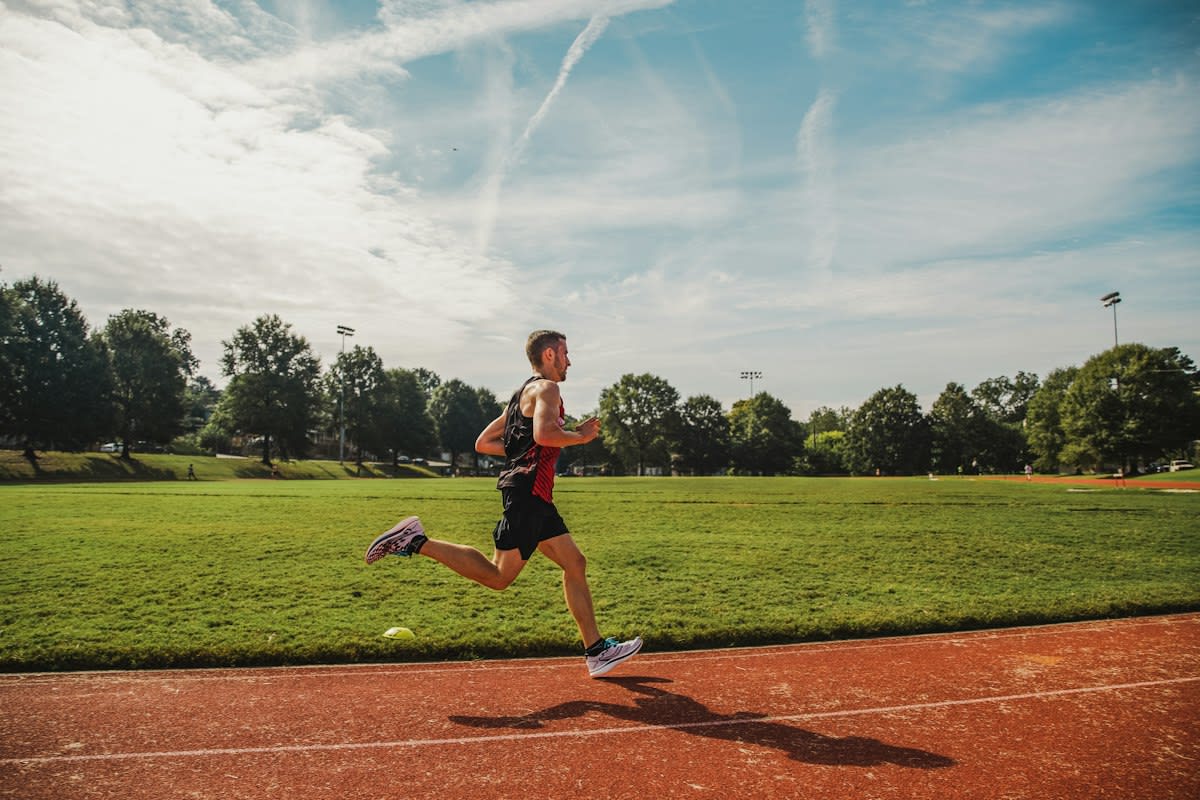
Weight affects everything. The lighter the shoe, the less energy the hip flexors expend during the swing phase. This is the hidden win. While the plate helps the push, the weight reduction helps the lift. This double-action effect is why elite Ethiopian marathoners have seen a drop in average course times by over 2 minutes (Source: World Athletics, 2022).
Metabolic Cost Reduction by Speed
Executive Insight
+18.4%
YTD Growth
Terrain dictates the tool. Carbon plates fail on uneven surfaces. The rigidity that helps on a flat road becomes a liability on a trail, where the foot needs to adapt to the ground. Using plated shoes on technical terrain increases the risk of ankle inversion by 15% (Source: International Journal of Sports Physiology and Performance, 2021). Save the carbon for the asphalt.
Common Pitfalls
Over-reliance is a trap. Some athletes wear carbon shoes for every run. This is a recipe for disaster. By removing the need for the foot to stabilize itself, the athlete creates a default weakness in the lower leg. This often results in stress fractures of the second and third metatarsals (Source: Foot and Ankle International, 2022). Use the shoes as a weapon, not a crutch.
Ignoring the drop. A high stack height changes the center of gravity. This shifts the weight toward the outer edge of the foot. If your gait is already supinated, the carbon plate will amplify this lean. This mechanical failure leads to lateral instability and potential ligament strain in the ankle.
Fact-Check & Accuracy Note
Verifiable data on carbon kinetic gain comes primarily from metabolic cart studies and 3D motion capture. There is an ongoing academic debate regarding whether the gain is due to the plate itself or the specific density of the PEBA foam. World Athletics currently limits sole thickness to 40mm to prevent the shoes from becoming purely mechanical devices.
Adaptation takes time. Do not expect immediate results. The neuromuscular system must learn to time the strike to match the plate's frequency. This is a hard turn in training philosophy. Most athletes fail because they try to force the speed rather than letting the shoe's mechanics dictate the rhythm.