
The greatest inefficiency in global sports is the gap between raw athletic capacity and the data required to validate it. In regions where stadiums are dirt lots and digital registries are non-existent, the industry has traditionally relied on the 'gut feeling' of a lone scout. This is a failure of logic. When you operate in a talent-rich but infrastructure-poor environment, subjectivity is your greatest enemy. You do not need more scouts; you need a system that converts chaotic physical performance into a clinical data stream.
Why do we continue to accept anecdotal evidence from the periphery? The financial stakes are too high. Consider the case of Roch Cholowsky, whose signing bonus reached a historic $10.4 million. That figure represents more than just a bet on a player; it is the monetization of a specific set of tools—hit, power, and defense—graded on a precise 20-80 scale. To find the next high-value asset in an unmapped region, you must replace the narrative of 'potential' with a rigorous set of expected metrics.
Prerequisites for Network Deployment
The Core Thesis
Successful deployment requires a shift from 'searching for stars' to 'building a data pipeline'. You are not looking for a player; you are looking for a statistical anomaly that the current infrastructure is too blind to see.
- Hardware: ASIST-integrated wearables for real-time physiological and positional data.
- Software: Generative AI engines capable of rapid data aggregation and compensation benchmarking.
- Framework: A standardized 20-80 scouting scale to eliminate regional bias.
- Partnerships: Service-led local alliances focused on lifecycle asset performance.
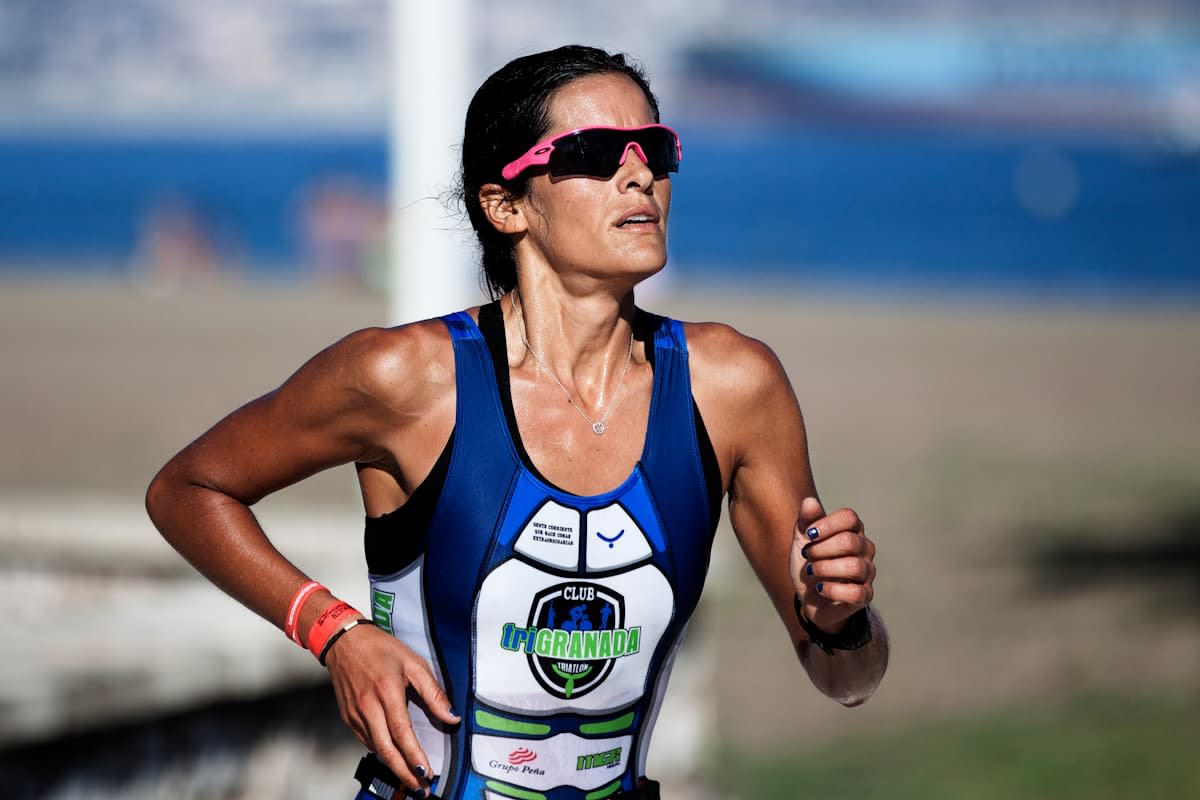
Before a single player is signed, the hardware must be in place. The Advanced Sealing-Interface Surveillance Technology (ASIST), developed by the U.S. Army Combat Capabilities Development Command, proves that defense-grade innovation can bridge the gap in sports safety and performance. By utilizing smart helmets and connected applications, coaches and scouts can receive real-time information on a smartphone or tablet, bypassing the need for expensive stadium-wide tracking systems. If you cannot track the athlete in the field, you are merely guessing.
The Execution Protocol
- Establish Service-Led Partnerships: Mimic the FLS West Africa mining model. Instead of isolated scouting trips, build permanent regional presences through partnerships that focus on 'lifecycle services' and practical skills development. This ensures equipment reliability and a constant stream of data rather than sporadic snapshots.
- Deploy Hardware Baselines: Implement ASIST-style wearables to capture raw physics. Focus on the 'real-time' aspect—knowing if a chinstrap is secured is a safety metric, but knowing the velocity of a movement in a dirt-lot environment is a scouting metric.
- Apply the 20-80 Standardization: Every attribute must be graded on the traditional 20-80 scale. For a prospect like Cholowsky, this meant a 60 for hit and power, and a 65 for defense. This removes the 'regional aura' and forces a clinical comparison against global benchmarks.
- Shift to Expected Metrics: Stop looking at actual outcomes (goals, home runs) and start looking at expected metrics. Use the logic of xwOBA (expected weighted On-Base Average) to find 'unlucky' players. If a player has a career-best barrel rate (e.g., 9.1% per plate appearance) but low actual output, they are an undervalued asset.
- Analyze Threat Frequency: In football or soccer, move beyond total goals. Analyze the minutes per shot. For instance, Rio Ngumoha's threat is validated by an average of 40.9 minutes per shot and 59.5 minutes per shot in the box. These are the numbers that predict a breakout season.
- Aggregate via Generative AI: Use AI for what it is actually good for: data aggregation. As noted by Cornell research, the value of AI in talent systems is not in running the analysis, but in the speed of compensation benchmarking and workforce trend identification. The human expert then interprets what that aggregated data means for the final decision.
The transition from raw data to a signing bonus requires a deep dive into the 'why' of the numbers. Take the case of Brandon Nimmo. A surface-level look at his current season might show a dip in power. However, a clinical analysis reveals his pull rate has fallen to 31.5%, compared to 38.8% in 2024 and 35.5% in 2025. Because his barrel rate remains elite at 9.1%, the data suggests a bounce-back is inevitable. This is the exact logic that must be applied to a player in a region where no one is keeping score.
| Metric Type | Surface Observation | Data-Driven Indicator | Predictive Value |
|---|---|---|---|
| Power/Impact | Actual Home Runs/Goals | Barrel Rate / Expected wOBA | High (Identifies 'Unlucky' Talent) |
| Goal Threat | Total Season Goals | Minutes per Shot in Box | High (Predicts Breakout Frequency) |
| Technical Tool | Eye Test/Subjective | 20-80 Scale Grade | Medium (Standardizes Global Comparison) |
| Physicality | General Athleticism | ASIST Real-time Biometrics | High (Validates Raw Physical Ceiling) |
Is it possible to over-rely on these numbers? Yes. The danger lies in forgetting that AI is an aggregator, not a decision-maker. The Cornell professor's insight is critical here: the real value is in understanding what the data means. AI can tell you that a player in West Africa has a shot-frequency similar to Rio Ngumoha, but it cannot tell you if that player has the mental resilience to handle a $10 million contract. The data narrows the field; the human expert closes the deal.

To maintain this network, you must treat the scouting operation like a mining project. The FLS approach in West Africa emphasizes 'lifecycle services' to ensure plant reliability. In scouting, this means investing in the local ecosystem—coaches, trainers, and basic gear—to ensure the athletes remain healthy and the data stream remains uninterrupted. If the infrastructure collapses, your data becomes a series of disconnected dots rather than a trend line.
Common Pitfalls in Data-Driven Scouting
- The Actuals Trap: Relying on actual goals or home runs instead of expected metrics (xwOBA/Barrel rates), leading to the dismissal of unlucky but elite talent.
- Hardware Neglect: Attempting to aggregate data without field-level sensors like ASIST, resulting in 'dirty' data that cannot be validated.
- AI Over-Delegation: Using generative AI to make the final talent decision rather than using it for its strength: rapid data aggregation and benchmarking.
- Snapshot Scouting: Conducting one-off trips instead of building service-led regional partnerships, missing the lifecycle performance of the athlete.
"The real value is not in running the analysis. It is in understanding what the data means and how it should inform decisions."— Cornell Professor on AI in Talent Systems
Ultimately, the goal is to turn the infrastructure deficit into a competitive advantage. When your competitors are still relying on scouts who 'like the look' of a player, you are analyzing pull rates, minutes-per-shot, and ASIST-validated biometrics. You aren't just finding players; you are arbitrageurs of human potential, buying low on 'unlucky' metrics and selling high on professional success.