
The Tyranny of the Wristband
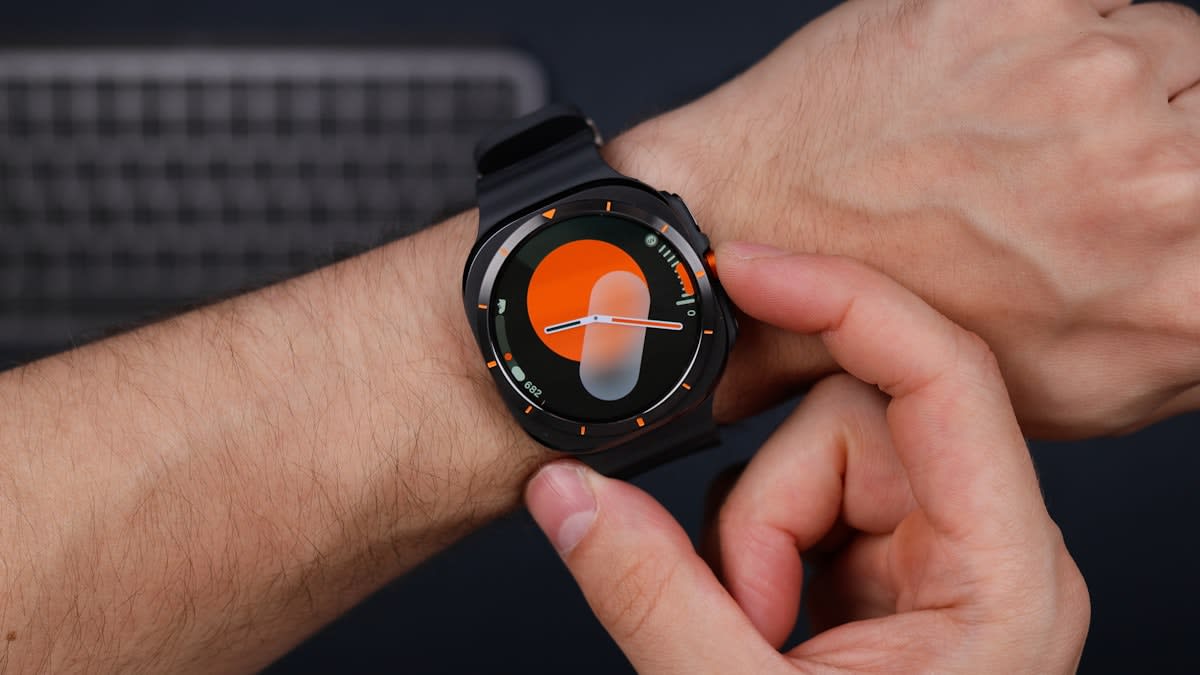
We have become obsessed with the quantification of existence. From Oura rings to Garmin watches, we outsource our internal awareness to a piece of plastic and glass strapped to our wrists. But here is the uncomfortable truth: your heart rate is a lagging indicator. It tells you what happened a few seconds ago, not how your central nervous system is actually coping with the load in real-time. Have you ever felt completely exhausted, yet your watch told you that you were still in Zone 2? That disconnect is where injuries happen and where burnout begins.
The solution isn't to throw away your tech, but to reintegrate a lost art: the Rate of Perceived Exertion (RPE). RPE is a subjective measure of how hard you feel your body is working. While it sounds simplistic, it is actually a sophisticated integration of cardiovascular strain, muscular fatigue, and psychological stress. By shifting the focus from external metrics to internal signals, you move from rigid adherence to a plan toward a dynamic system of autoregulation.
Understanding the RPE Framework
The most recognized version of this system is the Borg Scale, developed by Dr. Gunnar Borg. The original scale ranges from 6 to 20, designed to roughly correlate with heart rate (e.g., an RPE of 13 roughly equals 130 beats per minute). However, for daily energy optimization and strength training, most practitioners now use the Modified RPE scale of 1 to 10. This simplified version allows for faster decision-making during a workout or a high-stress workday in a fast-paced environment like Tokyo or New York.
"The perception of effort is a powerful tool for regulating intensity, as it integrates multiple physiological markers that a single heart rate monitor cannot capture."— Gunnar Borg, PhD in Psychology and Physiology
According to the American College of Sports Medicine (ACSM, 2021), RPE is highly valid for prescribing exercise intensity, especially in populations where heart rate might be skewed by medications like beta-blockers or caffeine. In a study on training load, it was found that the correlation between RPE and heart rate often exceeds 0.80, meaning your brain is remarkably accurate at sensing your cardiac output (Source: Journal of Strength and Conditioning Research, 2018).
Prerequisites for Autoregulation
Before you can trust your RPE, you need a few foundational tools. You cannot calibrate a scale if you have no baseline. Most beginners struggle because they confuse 'discomfort' with 'effort'. Muscle burn during a high-rep set is discomfort; the feeling of your nervous system shutting down is effort. Distinguishing between these two is the first step toward mastery.
- A training log or digital app to track perceived effort vs. actual load.
- A baseline 'calibration period' of 2-4 weeks where you use both RPE and a heart rate monitor.
- A commitment to radical honesty; ego is the primary enemy of accurate RPE.
- An understanding of your 'RPE 10'—the absolute limit of your current capacity.
How to Implement the RPE Scale: A Step-by-Step Guide
- Define Your Scale: Adopt the 1-10 Modified Borg Scale. 1 is total rest; 5-6 is a moderate pace where you can speak in full sentences; 8 is a hard effort where only short phrases are possible; 10 is maximal effort (all-out).
- Calibrate Your Baseline: For the next 14 days, perform your usual activities and assign an RPE score immediately upon completion. Compare this to your heart rate data. If your watch says 140bpm but you feel like an 8, trust the 8.
- The Mid-Session Check-In: Every 15 to 20 minutes during a task or workout, ask yourself: 'On a scale of 1-10, how hard is this right now?' This prevents the 'drift' where you unknowingly push into a red zone because of adrenaline.
- Apply Autoregulation: Adjust your load based on the day. If your program calls for an RPE 7 session but you hit that level of effort at 50% of your usual weight, your body is signaling systemic fatigue. Reduce the volume by 20-30% for that session.
- Review the Delta: At the end of the week, look at the gap between your planned RPE and actual RPE. Consistent over-performance suggests you are under-training; consistent under-performance suggests you are on the verge of overtraining.

The Practitioner's Perspective: The Ground-Level Friction
In my years of implementing these systems with elite athletes from Kenya to the UK, I have seen a recurring battle: the clash between the 'Data Fundamentalists' and the 'Intuitionists'. The fundamentalists want a spreadsheet that dictates every watt and beat per minute. The intuitionists often under-train because they mistake a bad mood for physical fatigue. The real magic happens in the middle. I often debate with colleagues about 'RPE drift'—the phenomenon where an athlete's perception of effort increases even when the external load remains constant. This is usually a sign of glycogen depletion or dehydration, something a heart rate monitor might miss until the heart rate actually spikes.
When you are on the ground, you realize that RPE is as much about psychology as it is about physiology. A client who just had a grueling board meeting in Singapore will report an RPE of 8 for a workout that usually feels like a 5. The physiological load is the same, but the total systemic load is higher. If we only followed the heart rate, we would push them into a crash. By using RPE, we pivot the session to a recovery flow, preserving their long-term health.
Common Pitfalls and How to Avoid Them
The most common failure point is the 'Ego Inflation'. This happens when an individual refuses to admit they are struggling and marks an RPE 6 when they are clearly at a 9. This is dangerous because it masks the signs of overtraining. To combat this, I recommend the 'Repetitions in Reserve' (RIR) method. Instead of asking how hard it was, ask: 'How many more could you have done with perfect form?' If the answer is zero, it is a 10, regardless of how 'easy' they claim it felt.
Another pitfall is 'Context Blindness'. This is the tendency to ignore external stressors. RPE should be viewed as a total energy cost. If you are sleep-deprived or under extreme emotional stress, your RPE for any given task will rise. Do not fight this. The goal of using RPE is not to push through the pain, but to intelligently navigate around it to ensure consistent progress (Source: National Strength and Conditioning Association, 2020).
Fact-Check & Accuracy Note
Key claims regarding the correlation between RPE and heart rate (0.80+) are sourced from the Journal of Strength and Conditioning Research (2018) and the American College of Sports Medicine (2021). The 1-10 Modified Borg Scale is a standard industry adaptation used globally in strength and conditioning. There is ongoing debate in the field regarding the subjective nature of RPE in novice athletes versus experienced practitioners, with research suggesting that calibration time increases with training age.