'No Water Even For Drinking': DK Shivakumar After Top Court Relief On Cauvery
Source Entity
NDTV News Search Records Found 1000
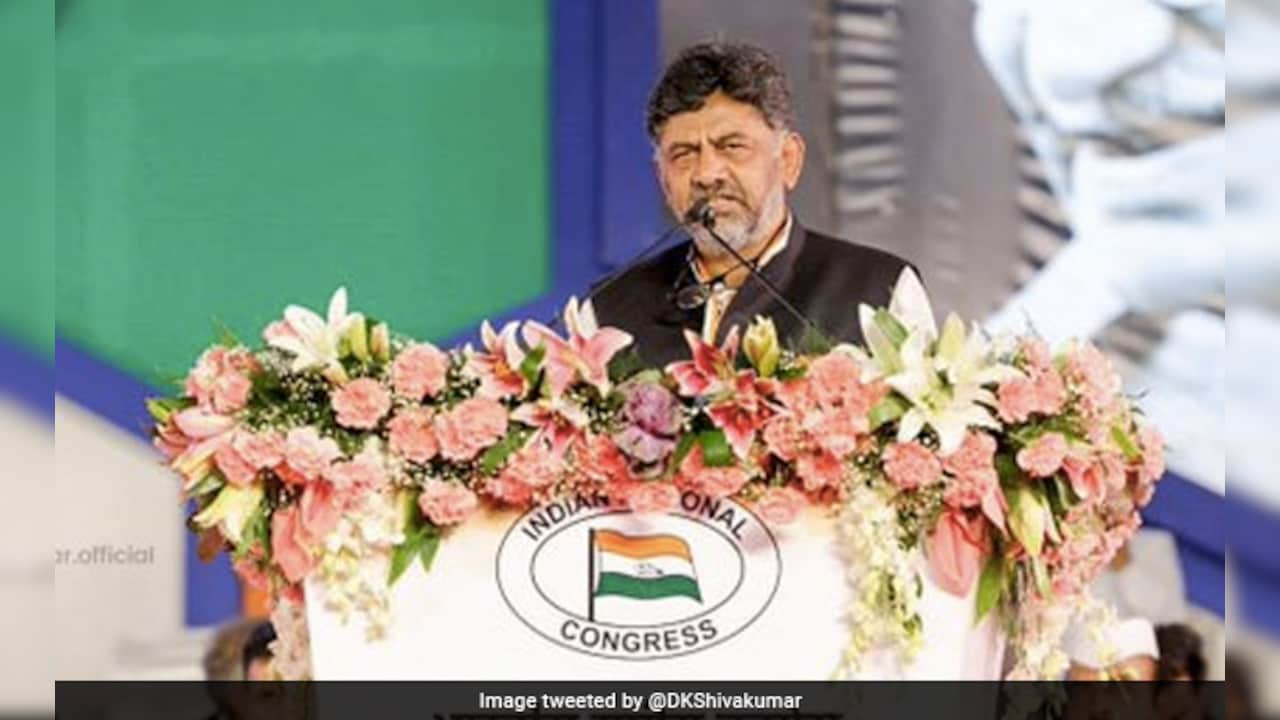
The Supreme Court has dismissed Tamil Nadu's plea seeking an additional 11 TMC of Cauvery water from Karnataka. The court rejected claims that Karnataka was deliberately withholding water despite having sufficient reserves.
The Cauvery Dispute: A Judicial Resolution
The long-standing Cauvery water-sharing dispute between Tamil Nadu and Karnataka has reached a critical legal juncture. On November 20, 2026, the Supreme Court of India delivered a definitive verdict, dismissing two applications filed by the state of Tamil Nadu. These petitions sought judicial intervention to compel Karnataka to release an additional 11.719 thousand million cubic feet (tmcft) of water, which Tamil Nadu claimed was a shortfall in the mandated flows at the Billigundulu inter-state border measuring point up to October 6.
The Core Contentions
Tamil Nadu’s argument rested on the premise that Karnataka maintained sufficient reservoir reserves—totaling approximately 49 tmcft—to meet its obligations under the Cauvery Water Disputes Tribunal award. Tamil Nadu asserted that while it was entitled to 64 tmcft during the specified period, the actual inflow received was inadequate. The state contended that Karnataka was consciously withholding this share, thereby impacting the lower riparian state's agricultural and drinking water needs.
The Supreme Court's Ruling
A bench comprising Justices Vikram Nath and Aparesh Singh presided over the matter. After reviewing the filings and the arguments presented by both states, the Court opted to reject the applications. By dismissing the plea, the judiciary has effectively upheld the status quo, declining to issue a mandatory directive for the additional release of 11 tmcft of water at this time.
Historical Context and Legal Framework
The Cauvery dispute is one of India's most complex inter-state water conflicts, rooted in agreements dating back to the colonial era. The current legal framework, governed by the Cauvery Water Disputes Tribunal award, serves as the primary mechanism for managing water distribution. Disputes often escalate during monsoon fluctuations, where states must balance reservoir management with downstream commitments, leading to recurring litigation before the Supreme Court.
Broader Implications for Inter-State Relations
This ruling highlights the difficulty of reconciling state-level water management with federal distribution mandates. While the Supreme Court's decision provides short-term legal finality to this specific application, the underlying challenge of water scarcity remains. As climate patterns become increasingly unpredictable, both states face the ongoing difficulty of managing limited water resources. The dismissal of the plea suggests that the court remains cautious about intervening in the technical operational decisions of reservoir management unless a clear violation of existing tribunal awards is established.
Future Trends and Outlook
Looking ahead, the reliance on judicial arbitration to resolve water-sharing disputes is likely to continue unless a more robust, technology-driven, and automated water-sharing mechanism is adopted. Future trends will likely involve greater emphasis on data-driven monitoring at the Billigundulu border to ensure transparency in inflow measurements. For now, the legal battle concludes with the court prioritizing existing allocations over the emergency demands for additional supply.
Multiple Citing Sources
Verification Required?