Supreme Court Allows One-Time Lighting Of Deepam At Thiruparankundram Hill
Source Entity
NDTV News Search Records Found 1000
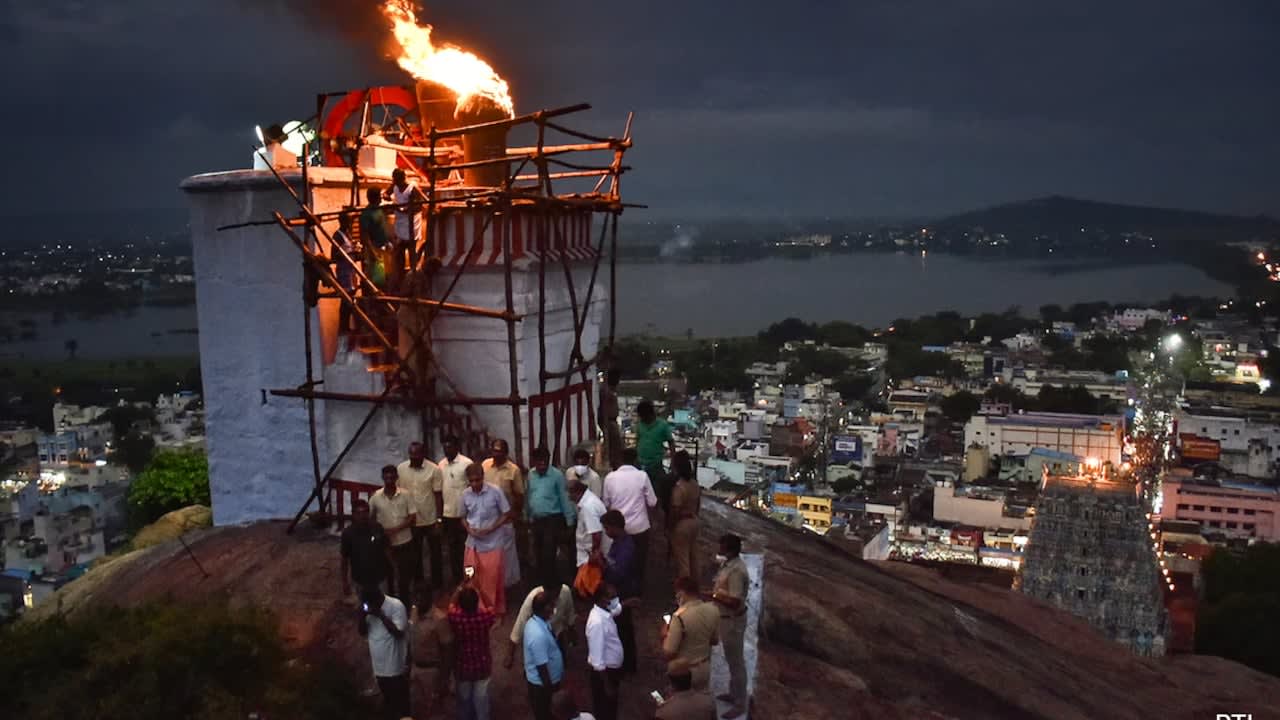
The Supreme Court has permitted a one-time lighting of the lamp at the 'Deepathoon' on Thirupparankundram Hill for the Karthigai Deepam festival. The court stayed the Madras High Court's previous ruling while addressing a century-old property dispute between a temple and a neighboring dargah.
Supreme Court Intervenes in Century-Old Thirupparankundram Hill Dispute
On November 20, 2026, the Supreme Court of India issued a significant interim order regarding the long-standing religious and property dispute at Thirupparankundram Hill in the Madurai district of Tamil Nadu. The Bench, headed by Justice Aravind Kumar, granted permission for a "limited one-time arrangement" to light a ceremonial lamp at the 'Deepathoon' for the upcoming Karthigai Deepam festival, scheduled for November 24, 2026. This order serves as a temporary measure to manage the religious observance while the broader legal conflict remains under judicial review.
Legal Context and the Madras High Court Ruling
The Supreme Court’s decision comes in response to appeals filed by the State of Tamil Nadu, which sought a stay on a January 6 judgment from the Madras High Court. That lower court ruling had previously affirmed the right to light the lamp at the ‘Deepathoon’ as an "essential practice." By staying the conclusive findings of that judgment, the Supreme Court has effectively paused the legal precedent set by the High Court, signaling that the matter requires a more comprehensive examination of the competing claims before a final determination on the "essential nature" of the practice can be established.
Historical Tensions and Site Significance
For decades, the Karthigai Deepam ritual was traditionally performed at the Deepa Mandapam, located near the Uchipillaiyar temple on the lower slopes of the hill. The current controversy centers on a disputed stone pillar situated on the hill, which is a site of shared historical and religious significance. The location is home to both the Subramanian Swamy temple and the Sulthan Sikkandar Avulia Dargah, leading to a complex, century-old property disagreement that has frequently necessitated government and judicial oversight to prevent communal friction.
Managing Religious Sentiments and Public Order
To ensure the festival proceeds peacefully, the Supreme Court has strictly limited the authorization for the ceremony. Only individuals specifically authorized by the Subramanian Swamy temple, in coordination with government officials, are permitted to perform the ritual at the disputed site. This cautious approach reflects the court's commitment to balancing the preservation of religious traditions with the necessity of maintaining public order in an area that has historically seen competing claims of ownership and worship rights.
Future Legal Implications
While the current order provides a roadmap for the 2026 festival, the underlying legal battle regarding land rights and religious usage remains unresolved. The Supreme Court's decision to stay the High Court's findings suggests that the judiciary is taking a measured approach to avoid setting a permanent precedent until all evidence regarding the historical usage of the site is fully vetted. The court’s future rulings will be critical in determining whether the ‘Deepathoon’ site can be permanently utilized for the festival or if the practice must revert to the traditional Deepa Mandapam.
Conclusion
The intervention by the Supreme Court serves as a vital bridge, allowing for the continuation of a cultural tradition while preventing the escalation of a deep-seated property dispute. By framing the order as a "one-time measure," the court has managed to respect the immediate needs of the devotees while keeping the door open for a more definitive resolution of the century-old conflict between the temple and the adjoining dargah.
Multiple Citing Sources
Verification Required?