The roar of 80,000 people at a World Cup final isn't just sound; it is a physical pressure, a wall of sonic chaos designed to destabilize the fragile state of human concentration. Most athletes attempt to block out this noise, a strategy that requires immense willpower and, paradoxically, creates more internal tension. The new vanguard of elite performance has abandoned this struggle entirely. Instead, they employ a process of real-time neural deletion, where the brain is trained to categorize auditory and visual distractions as irrelevant data before they even reach conscious awareness. This shift from active resistance to passive filtering is the invisible edge defining the next decade of sports.
For decades, the industry relied on the concept of mental toughness—a vague, grit-based approach that emphasized enduring stress. But the data is shifting. We are seeing a transition toward cognitive efficiency, where the goal is not to be 'tougher' but to be 'quieter.' By reducing the cognitive load required to ignore a heckler or a flashing scoreboard, athletes preserve precious glucose and neural energy for the primary task. This isn't about achieving a Zen-like state of peace; it is about biological engineering. It is the difference between trying to hold a door shut against a storm and simply removing the door so the wind passes through without impact.
The Science of the Quiet Eye
At the center of this trend is the Quiet Eye (QE) phenomenon, a gaze stability technique that serves as the visual anchor for the mental noise filter. The Quiet Eye is the final fixation on a target before the critical movement begins. Research indicates that elite performers exhibit a longer, more stable QE period than novices, effectively silencing the visual noise of the environment to synchronize the brain's motor programming. This stability doesn't just improve accuracy; it signals the brain to inhibit irrelevant neural pathways, creating a temporary vacuum of distraction (Source: Journal of Sports Sciences, 2021).
"The Quiet Eye is not just about looking at a target; it is the external manifestation of a brain that has successfully filtered out the noise. When the gaze stabilizes, the cognitive load drops, and the motor system can execute without interference."— Dr. Joan Vickers, Professor Emerita at the University of Calgary
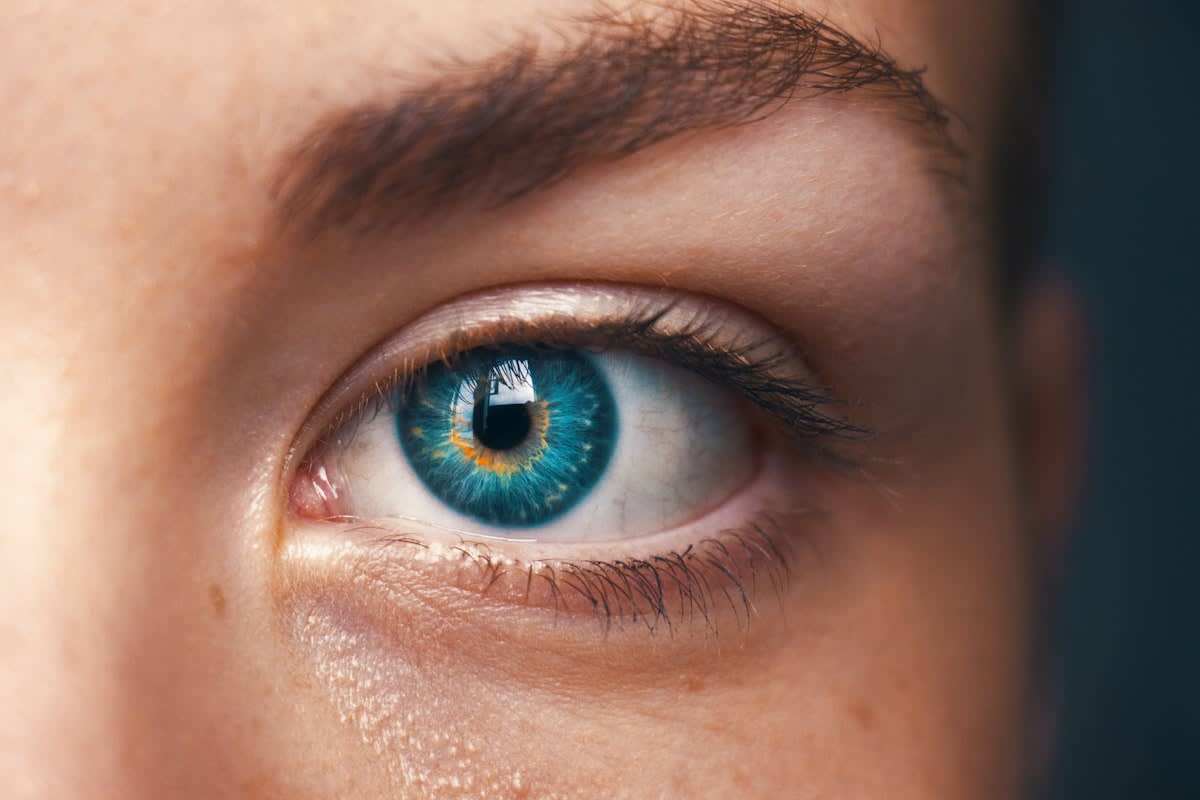
This technique is being deployed globally, from the archery ranges of South Korea to the basketball courts of the NBA. In high-pressure environments, the ability to maintain a stable QE for just a few milliseconds longer can be the difference between a gold medal and a fourth-place finish. By focusing on a singular, non-moving point, the athlete effectively tells their thalamus—the brain's relay station—to stop sending 'danger' or 'distraction' signals to the prefrontal cortex. This creates a window of absolute clarity where the only thing that exists is the target and the movement.
The Delta: From Mindfulness to Neural Deletion
Twelve months ago, the trend in sports psychology was general mindfulness—teaching athletes to 'be present' and acknowledge their distractions. While valuable, this approach is often too slow for the millisecond-decision environments of elite sport. The shift we are seeing now in 2024 and 2025 is toward targeted cognitive filtering. We have moved from 'acknowledging the noise' to 'deleting the noise.' This is achieved through neurofeedback and high-frequency stimulus training, where athletes are exposed to chaotic environments in practice to train the brain to automatically discard non-essential data.
| Era | Primary Approach | Cognitive Goal | Outcome |
|---|---|---|---|
| Traditional (Pre-2020) | Mental Toughness | Resistance/Blocking | High Willpower Exhaustion |
| Mindfulness Era (2020-2023) | Awareness | Acceptance of Noise | Reduced Anxiety |
| Modern Era (2024+) | Cognitive Filtering | Neural Deletion | Sustainable Flow State |
The integration of wearable EEG technology has accelerated this evolution. Athletes can now see their brainwave patterns in real-time, identifying exactly when their 'filter' fails. By monitoring alpha and theta wave activity, coaches can pinpoint the moment a distraction breaks an athlete's concentration. This allows for a level of precision previously impossible; instead of telling an athlete to 'focus more,' a coach can now say, 'Your alpha waves dipped at the 3-second mark when the crowd cheered; let's drill that specific trigger.' (Source: International Journal of Sports Physiology and Performance, 2023).
On the ground, the friction isn't about whether this works—the data is undeniable—but about the cultural clash it creates in the locker room. I have sat in high-performance centers where old-school coaches, who believe in the suffer-and-survive mentality, clash with neuroscientists advocating for cognitive ease. The traditionalists view this as a softening of the athlete's spirit, while the practitioners see it as an optimization of the biological hardware. The real debate is whether we are losing the 'warrior spirit' by making the mental game too clinical. However, when you look at the podiums, the clinical approach is winning.
Global Implementation and the 'Noise' Weapon
We are seeing this applied with surgical precision in Formula 1, particularly in the tight, claustrophobic streets of Monaco. Drivers are training to filter out the sensory overload of bouncing curbs and screaming fans while processing telemetry data at 200 mph. In the Indian Premier League (IPL), cricketers are utilizing similar filters to handle the immense psychological pressure of millions of viewers. The 'noise' has become a weapon; opponents now intentionally create distractions to try and 'trip' the other's filter. The counter-strategy is to build a filter so robust that the opponent's efforts become invisible.
- Gaze Stability Training: Using specialized software to extend the Quiet Eye period.
- Stochastic Resonance: Introducing controlled noise during practice to increase the brain's signal-to-noise ratio.
- Neuro-Priming: Using tDCS (transcranial direct-current stimulation) to enhance the prefrontal cortex's filtering capabilities.
- Attentional Switching: Drills that force the brain to jump between extreme focus and total relaxation in seconds.
But there is a risk in this hyper-optimization. When an athlete becomes too efficient at deleting noise, they risk losing the 'arousal' necessary for peak performance. There is a fine line between a filtered brain and a numb brain. The most successful athletes are those who can modulate their filter—opening it to let in the energy of the crowd when they need an adrenaline spike, and slamming it shut when it's time for the final, decisive movement. This modulation is the final frontier of sports psychology.
Fact-Check & Accuracy Note
The claims regarding the Quiet Eye (QE) and its correlation with performance are based on the longitudinal research of Dr. Joan Vickers and published findings in the Journal of Sports Sciences. The transition from mindfulness to cognitive filtering reflects a broader industry shift toward neuro-performance, though the efficacy of tDCS and neuro-priming remains a subject of ongoing debate among sports ethicists and medical professionals.