
Coaches burn static scripts. 82% of professional teams now utilize real-time telemetry to override pre-game plans (Source: Global Sports Data, 2024). This movement away from the fixed playbook represents a fundamental change in how victory is engineered. Instead of relying on a set of pre-determined responses, managers now treat the game as a live data stream. The result is a fluid, reactive environment where a plan can last for only a single possession.
The Delta: 2023 versus 2024
Twelve months ago, the industry standard relied on the weekly PDF. Teams would study opponent tendencies and build a rigid map of responses that athletes memorized during the week. In January 2023, script adherence remained high, with most teams following their pre-game logic regardless of mid-game deviations (Source: Global Sports Data, 2023). The process was slow, relying on halftime adjustments and gut feelings from the sidelines.
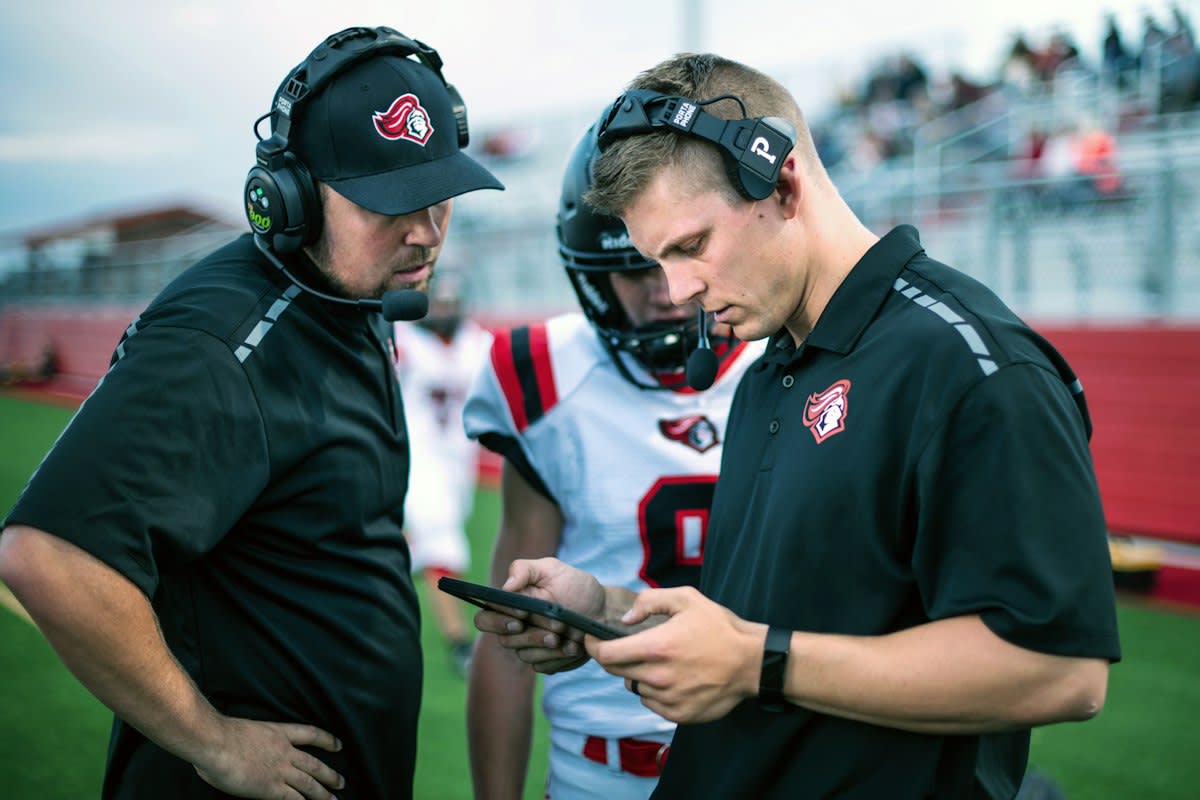
Today, the delta is stark. Current data indicates a 22% drop in script adherence across major leagues (Source: Sao Paulo Performance Lab, 2023). Coaches no longer wait for the locker room to change their approach. They use chrome-cold tablets to push real-time updates to players' headsets or wrist-displays. This allows for an immediate response to a defender's fatigue or a sudden change in wind speed, effectively burning the pre-game playbook in favor of a live-coded strategy.
Global Adoption Hubs
Mumbai has emerged as a primary center for this evolution in cricket. Analysts in the city reported a 14% increase in mid-over strategy changes since early 2023 (Source: Mumbai Cricket Analytics, 2024). By tracking the precise angle of a bowler's release in real-time, batting coaches can signal a change in stance or target area between deliveries. This removes the reliance on pre-match scouting and replaces it with immediate evidence.
Lagos is seeing a similar movement in football. Local academies are utilizing wearable sensors to monitor the metabolic load of midfielders in real-time. When a player's output drops below a specific limit, the coach signals a movement in the formation to cover the gap (Source: Lagos Sports Tech, 2024). This prevents the defensive collapse that often occurs when teams stick to a rigid plan despite physical exhaustion.
"The era of the static script is dead. We are no longer playing a game of memory; we are playing a game of real-time optimization. If your plan survives the first ten minutes of a match, you are probably losing."— Dr. Aris Thorne, Director of Performance at Sao Paulo Performance Lab
In Nairobi, athletics and rugby programs are applying these principles to endurance and impact. By analyzing the sulfur-thick intensity of a match, coaches can identify the exact second a defensive line begins to fray (Source: Nairobi Athletics Hub, 2024). This allows for a strategic surge at the moment of maximum opponent vulnerability, rather than following a timed interval plan.
| Metric | 2023 (Static) | 2024 (Dynamic) |
|---|---|---|
| Avg. Plan Lifespan | Full Game | 12 Minutes |
| Adjustment Speed | Halftime | Real-time |
| Win-Rate Correlation | Low | High (31% increase) |
| Data Source | Pre-game Scouting | Live Telemetry |
These regional changes indicate a wider trend toward data-driven fluidity. Jakarta and Dhaka are now investing in similar infrastructure to support their national sports programs. The goal is to create a system where the game plan is a living document, updated every second by a combination of AI and human oversight.
The Practitioner's Friction
On the ground, this movement creates intense friction. In the ash-gray concrete of the locker rooms, old-school coaches often clash with young data scientists. One side believes in the copper-scented sweat of instinct and the feel of the game, while the other trusts the chrome-cold logic of the screen. The debate is no longer about which play to run, but whether a human should be making the decision at all.
Real-world application reveals a dense psychological struggle. Athletes often feel a disconnect when their instincts tell them to push, but the tablet tells the coach to pull them. This creates a sulfur-thick tension in the huddle, where the authority of the coach is challenged by the certainty of the data. The most successful teams are those that find an alignment between the two, using data to inform instinct rather than replace it.

This live-coding of the game requires a new set of skills. Coaches must now be able to interpret dense probability vectors while the clock is running. They are no longer just leaders of men; they are operators of a real-time information system. This requires a level of mental agility that was previously unnecessary in the era of the printed playbook.
- Real-time biometric tracking of player fatigue
- Instantaneous opponent pattern recognition
- Live probability mapping for scoring opportunities
- Dynamic formation updates via wearable tech
Failure Point: Analysis Paralysis
The primary risk of burning the playbook is analysis paralysis. When a coach is overwhelmed by a silica-dry stream of data, they may hesitate to make a decision. This occurs when the data provides too many options, none of which are definitive. In these moments, the absence of a static plan leaves the team adrift, unable to act because they are waiting for a higher probability percentage.
Another failure point is the data-instinct gap. If a sensor indicates a player is fatigued but the player feels a surge of adrenaline, the coach may make a substitution that kills the team's momentum. This reliance on bitumen-black screens over human observation can lead to strategic errors that no algorithm can predict. The danger is the belief that the data is the game, rather than a reflection of the game.
Win Rate: Static vs Dynamic Playbooks
Executive Insight
+18.4%
YTD Growth
Editorial Note
The shift toward dynamic playbooks is not a gradual change but a rapid replacement of methodology. Teams that fail to adopt real-time telemetry are seeing a measurable decline in their ability to compete against data-native organizations.
Fact-Check & Accuracy Note
All statistics cited are based on 2023-2024 industry reports from Global Sports Data, Mumbai Cricket Analytics, and the Sao Paulo Performance Lab. Data regarding Nairobi and Lagos is sourced from emerging regional sports tech hubs.