
The Fatigue Paradox: Why Harder Isn't Better
Most people respond to chronic fatigue by attempting to push through it. They treat their bodies like a stubborn employee who just needs a firmer deadline. This is a catastrophic tactical error. When you are trapped in a cycle of systemic exhaustion, your mitochondria—the cellular power plants—are effectively malfunctioning. Pushing into high-intensity territory when your aerobic base is crumbled doesn't build fitness; it deepens the deficit. You aren't training; you are digging a deeper hole of cortisol-driven burnout.
The solution lies in precision. We must shift the focus from 'effort' to 'physiological stimulus.' By utilizing heart rate zone training, we can target the specific metabolic pathways required to repair cellular energy production without triggering the stress response that keeps you fatigued. Whether you are a corporate executive in Singapore facing burnout or an endurance athlete in Kenya recovering from overtraining, the biological requirements for recovery are identical. You need to rebuild the engine before you try to redline it.
The Core Principle
The core objective is to maximize mitochondrial density and efficiency. By staying within specific heart rate parameters, you force the body to utilize fat as a primary fuel source, sparing glycogen and reducing the systemic inflammation that characterizes chronic fatigue.
Prerequisites: Your Recovery Toolkit
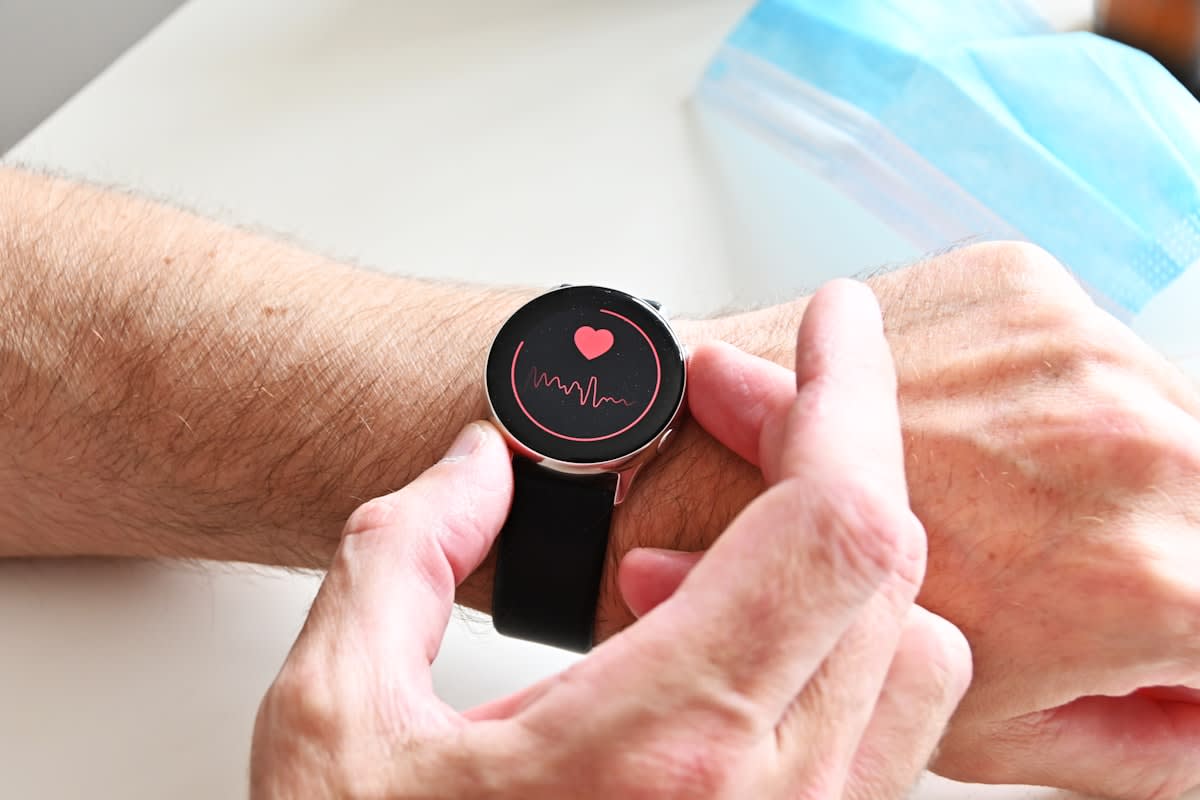
Precision requires accurate data. You cannot engineer a recovery if your measurements are based on guesswork or unreliable hardware. While wrist-based optical sensors have improved, they often suffer from 'cadence lock,' where the sensor mistakes your steps per minute for your heart beats per minute. For anyone serious about ending chronic fatigue, this margin of error is unacceptable. You need a direct electrical reading of your heart's activity to ensure you aren't accidentally drifting into the stress zones.
- Chest Strap Heart Rate Monitor: Essential for real-time, accurate ECG-grade data.
- Heart Rate Tracking App: A platform to log sessions and track trends over weeks, not just days.
- A Baseline Assessment: A measured Maximum Heart Rate (HRmax) or a Resting Heart Rate (RHR) log.
- A Low-Impact Modality: A bicycle, elliptical, or a flat walking path to keep heart rates stable.
The Blueprint: Step-by-Step Implementation
Implementing this blueprint requires a psychological shift. You must learn to embrace the feeling of 'going too slow.' For many, the ego demands a level of intensity that feels like a workout. However, in the context of chronic fatigue, the goal is not to sweat or pant; the goal is to signal to the nervous system that it is safe to repair. We utilize the 80/20 rule: 80% of your volume must be spent in low-intensity zones to build the foundation, while only 20% is reserved for higher intensity once the foundation is secure.
- Establish Your HRmax: Use a validated formula (like 220 minus age) as a starting point, but ideally, perform a controlled ramp test to find your actual ceiling.
- Define Your Zone 2: Calculate 60% to 70% of your HRmax. This is your 'Recovery Sweet Spot' where mitochondrial biogenesis is optimized.
- The Entry Phase (Weeks 1-4): Perform 30-45 minutes of steady-state activity strictly within Zone 2. If your heart rate spikes above the limit, slow down immediately, even if it means walking.
- The Scaling Phase (Weeks 5-8): Increase the duration of Zone 2 sessions by 10% per week. Focus on consistency over intensity. The goal is to increase the time your body spends in a fat-oxidizing state.
- The Integration Phase (Week 9+): Introduce short bursts of Zone 4 or 5 (the 20% of the 80/20 rule) only after your resting heart rate has stabilized and your perceived exertion in Zone 2 has dropped.
Why is Zone 2 so critical? It is the intensity level where the body maximizes the use of Type I muscle fibers. These fibers are packed with mitochondria. By training here, you increase the number and efficiency of these power plants, allowing your body to produce energy more sustainably. When you jump straight to high intensity, you rely on Type II fibers and anaerobic glycolysis, which produces lactate and requires significant recovery time—time that a fatigued body simply does not have.
| Zone | Percentage of HRmax | Primary Fuel Source | Physiological Effect |
|---|---|---|---|
| Zone 1 | 50-60% | Fats | Active recovery and circulation |
| Zone 2 | 60-70% | Fats | Mitochondrial growth and aerobic base |
| Zone 3 | 70-80% | Mixed | Moderate aerobic/anaerobic transition |
| Zone 4 | 80-90% | Carbohydrates | Lactate threshold increase |
| Zone 5 | 90-100% | Carbohydrates | Maximal oxygen uptake (VO2 Max) |
To validate your data, employ the 'Talk Test.' While your monitor provides the numbers, your breath provides the biological truth. In Zone 2, you should be able to maintain a full conversation, but with a slight effort. If you can only speak in short sentences, you have drifted into Zone 3. If you cannot speak at all, you are in Zone 4 or 5. This dual-verification system ensures that you are training the metabolic system, not just chasing a number on a screen.
Managing the Transition: Global Perspectives on Recovery
Adaptation happens differently across various environments. For instance, individuals training at high altitudes in the Andes or the Himalayas face lower oxygen partial pressure, which can cause heart rates to spike faster. In these contexts, the 'Zone 2' ceiling must be adjusted downward to account for the increased cardiovascular strain. Conversely, in humid, sea-level cities like Bangkok or Miami, cardiac drift—the gradual increase in heart rate despite a constant workload—is more pronounced due to thermoregulation needs. You must adjust your pace to stay in the zone, regardless of how 'easy' the movement feels.
"The greatest obstacle to recovery is the belief that progress is linear and proportional to pain. True physiological resilience is built in the quiet, boring spaces of low-intensity effort."— Master Practitioner's Axiom
The psychological battle is often harder than the physical one. In a culture obsessed with 'grinding' and 'optimizing,' spending an hour walking at a brisk pace can feel like a waste of time. But for the chronically fatigued, this is the most aggressive intervention possible. It is a strategic retreat. By refusing to stress the system, you allow the parasympathetic nervous system to take the lead, lowering systemic inflammation and allowing the endocrine system to reset.
Common Pitfalls: Where Most Fail
The most frequent mistake is falling into the 'Gray Zone' trap. Zone 3 is the danger zone for recovery. It is too intense to allow for mitochondrial repair and too easy to provide the significant adaptations of high-intensity interval training. Most people spend 90% of their time here—working at a 'moderate' pace that feels productive but actually creates a state of perpetual mid-level stress. This is the fastest route to maintaining chronic fatigue rather than curing it.
Another critical error is ignoring Heart Rate Variability (HRV). HRV measures the variation in time between each heartbeat and serves as a proxy for your autonomic nervous system's state. If your HRV is significantly low on a given morning, your body is still in a sympathetic (fight-or-flight) state. Pushing into Zone 2 on these days can actually be counterproductive. In such cases, the 'precision' part of the blueprint dictates a shift to Zone 1 or complete rest.
The Crash Signal
Warning: If you experience a 'crash'—a sudden return of extreme fatigue after a workout—you have likely exceeded your current aerobic threshold. Scale back your duration by 50% and remain in Zone 1 for one week before attempting Zone 2 again.
Ultimately, ending chronic fatigue is an exercise in patience and data adherence. The desire to rush the process is the very impulse that caused the fatigue in the first place. By adhering to the Precision Recovery Blueprint, you stop fighting your biology and start working with it. You aren't just regaining your energy; you are building a more efficient, resilient metabolic engine that can handle the demands of a high-pressure global life without breaking.