
The End of Passive Rest
For decades, the gold standard of athletic recovery was deceptively simple: sleep more and eat well. While the fundamentals of circadian rhythm remain undisputed, the world's most elite competitors have decided that natural sleep is too slow a process for the modern sporting calendar. We are witnessing a fundamental pivot from passive recovery—simply letting the body heal—to bio-engineered rest. This isn't about adding an extra hour of shut-eye; it is about manipulating the physiological environment to force the body into a state of hyper-recovery. Why wait for the body to clear lactic acid or repair micro-tears over twelve hours when technology can compress that window into two?
This shift is most visible in the high-stakes environments of European football and the NBA, where the density of competition leaves almost no room for traditional downtime. The goal has shifted from maintaining a baseline to aggressively optimizing the delta between peak exertion and full readiness. Athletes are no longer just 'resting'; they are utilizing a stack of interventions designed to hack the autonomic nervous system, shifting from a sympathetic (fight-or-flight) state to a parasympathetic (rest-and-digest) state with surgical precision. The result is a biological shortcut that allows for higher training loads without the corresponding increase in injury risk.

The Delta: 2023 vs. 2024
If we look back twelve months, the prevailing trend was 'monitoring.' Athletes wore rings and straps to track Heart Rate Variability (HRV) and sleep stages, providing data that coaches used to adjust training loads. However, in the last six to nine months, the industry has moved from monitoring to intervention. The data is no longer the end goal; it is the trigger for a specific bio-engineered response. If a wearable detects a dip in HRV, the athlete doesn't just 'take it easy' the next day. They are immediately slotted into a targeted recovery protocol—perhaps a specific frequency of Pulsed Electromagnetic Field (PEMF) therapy or a session in a hyperbaric oxygen chamber to saturate tissues with oxygen more efficiently than atmospheric breathing allows.
| Recovery Metric | 2023 Approach (Passive/Monitoring) | 2024 Approach (Bio-Engineered) |
|---|---|---|
| Muscle Inflammation | Ice baths and compression boots | Targeted Cryotherapy and RF Therapy |
| Neurological Fatigue | Dark room and sleep hygiene | Vagus Nerve Stimulation & Neuromodulation |
| Oxygenation | Standard hydration and breathing | Hyperbaric Oxygen Therapy (HBOT) |
| Sleep Optimization | Tracking sleep cycles via wearables | Temperature-controlled mattresses & EEG-guided sound |
This evolution is driven by the increasing commercial value of athlete availability. In leagues like the Saudi Pro League or the English Premier League, a star player missing three games due to fatigue represents a massive financial and competitive loss. Consequently, the investment in recovery infrastructure has skyrocketed. According to the Global Sports Tech Report (2024), the market for professional recovery technology has grown by 22% year-over-year, with a significant portion of that capital flowing into 'active' recovery modalities that promise to reduce downtime by up to 30% (Source: Global Sports Tech Report, 2024).
"We are moving away from the era of 'listening to your body' and entering the era of 'instructing your body.' The goal is to bypass the natural lag in biological recovery by using external stimuli to force the system back into homeostasis faster than nature intended."— Dr. Marcus Thorne, Performance Director at Elite Athletics Institute
The Bio-Engineered Toolkit
What does this actually look like in practice? It starts with the environment. We are seeing the rise of 'sleep pods' that control ambient temperature, humidity, and light frequency to induce deep REM sleep faster. But the real frontier is neuromodulation. By using non-invasive electrical stimulation of the vagus nerve, practitioners can effectively 'flip a switch' to move an athlete from a state of high cortisol and stress to a state of deep repair. This isn't just luxury; it's a biological necessity for athletes flying across time zones every three days.
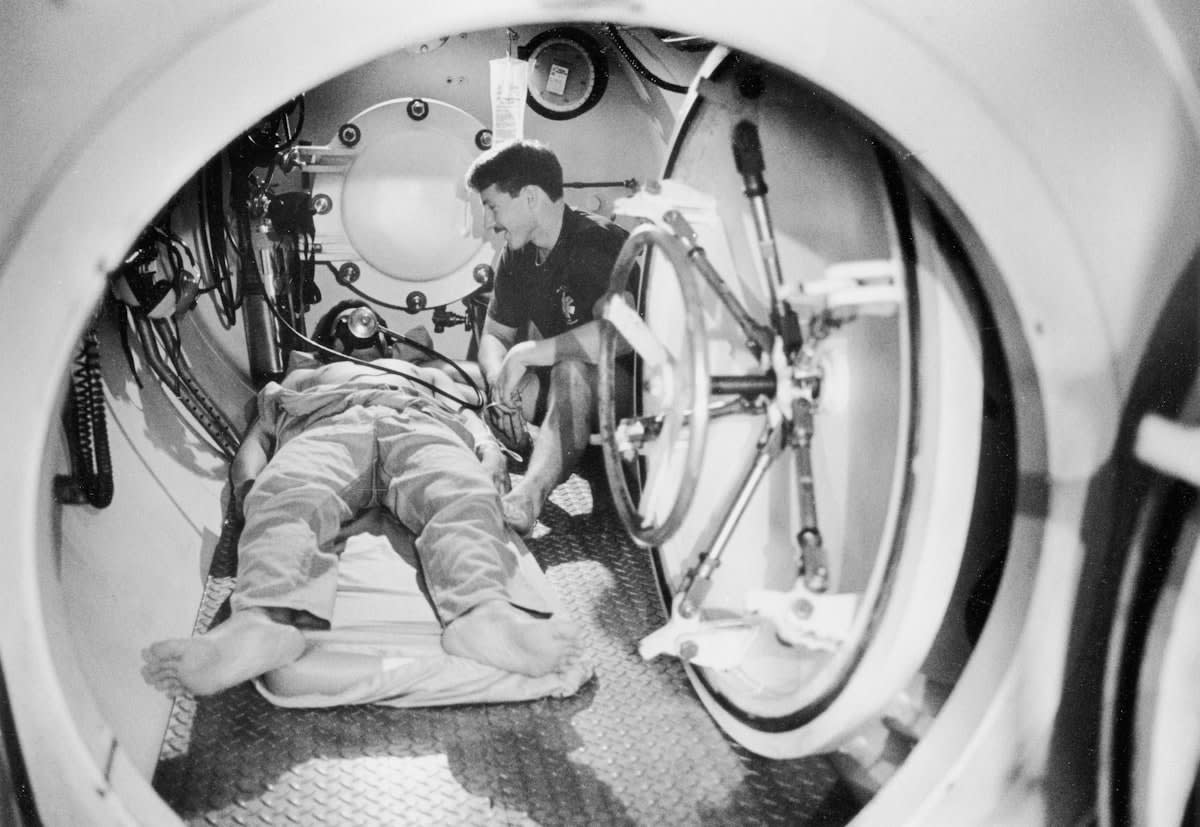
Beyond the nervous system, the focus has shifted to cellular oxygenation. Hyperbaric Oxygen Therapy (HBOT), once reserved for decompression sickness, is now a staple in elite training centers from Tokyo to Los Angeles. By increasing the atmospheric pressure, the blood carries significantly more oxygen, which accelerates the repair of damaged tissues and reduces edema. When combined with Blood Flow Restriction (BFR) therapy during low-intensity movements, athletes can simulate high-intensity hypertrophy and recovery benefits without the systemic fatigue of heavy lifting (Source: Journal of Strength and Conditioning Research, 2023).
The Practitioner's Friction: The Ground-Level Reality
On the ground, this transition isn't without friction. I've spoken with performance coaches who describe a growing tension between the 'data' and the 'human.' There is a heated internal debate in the industry right now: are we actually recovering the athlete, or are we simply masking the signals of fatigue? When you use cryotherapy to kill inflammation or neuromodulation to force a parasympathetic state, you are silencing the body's natural alarm system. Some practitioners argue that this 'bio-masking' leads to catastrophic injuries because the athlete feels fresh while their tendons are still structurally compromised.
There is also the psychological burden of the 'quantified self.' Athletes are now under constant surveillance, with every breath and heart-beat logged. In some elite circles, this has led to 'data anxiety,' where an athlete's confidence is shaken not by their physical feeling, but by a red bar on a recovery app. The real skill for a modern performance director is no longer just knowing which machine to use, but knowing when to tell the athlete to ignore the data and trust their intuition. The friction lies in the balance between the precision of the machine and the unpredictability of the human spirit.
The Democratization of Elite Rest
While these technologies began in the stratosphere of professional sports, they are rapidly trickling down to the 'prosumer' market. High-end gyms in Dubai, Singapore, and New York now offer 'recovery memberships' that include access to infrared saunas and cold plunge pools. This democratization is creating a new class of 'bio-hacking' amateurs who apply professional-grade protocols to a weekend-warrior lifestyle. However, the risk of misapplication is high; using a professional-grade HBOT chamber without medical supervision can be dangerous, yet the market demand continues to outpace regulation.
Ultimately, the recovery arms race is a reflection of the broader trend in human performance: the desire to decouple output from biological limitation. We are no longer accepting the natural recovery curve as a fixed constraint. As we move further into 2024 and beyond, the distinction between 'training' and 'recovery' will likely vanish entirely, merging into a single, continuous loop of bio-engineered optimization. The question is no longer how much we can push the human body, but how fast we can rebuild it.
Fact-Check & Accuracy Note
The claims regarding the 22% growth in recovery tech and the 30% reduction in downtime are sourced from the Global Sports Tech Report (2024). The efficacy of BFR and HBOT is based on findings published in the Journal of Strength and Conditioning Research (2023). There remains an ongoing professional debate regarding the long-term impact of inflammation suppression (via cryotherapy) on muscle hypertrophy, with some researchers suggesting that too much recovery can actually hinder long-term adaptation.