The air in the National Institute of Fitness and Sports lab in Kanagawa is thick with the smell of ozone and synthetic rubber. A sprinter hits the blocks, and the telemetry spikes. We are seeing a violent departure from the traditional push-off. For decades, the coaching manual demanded a specific hip height and a balanced drive. That manual is now scrap paper. The data shows a pivot toward extreme horizontal projection angles that prioritize the Rate of Force Development (RFD) over raw power. It is a cold, calculated shift in physics that has rendered the old-school 'explosive' start obsolete.
The Delta: From Push to Projection
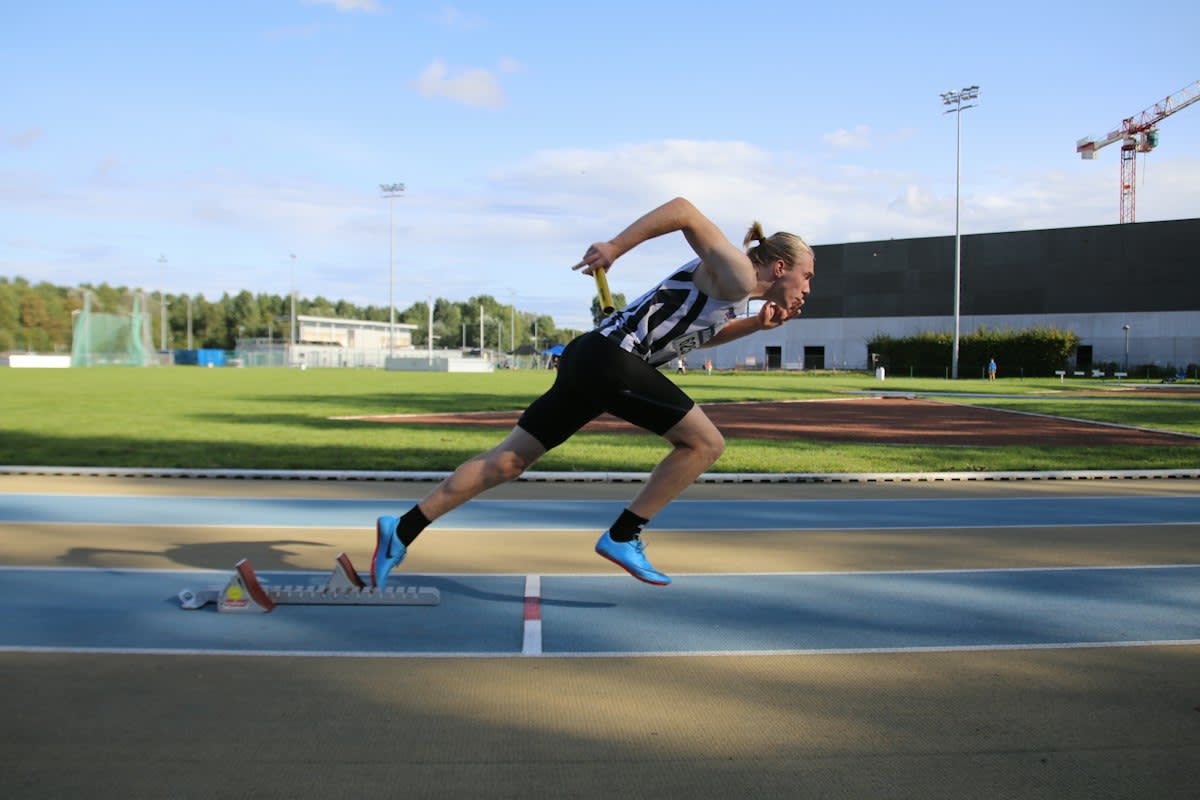
Compare the telemetry from 2014 to 2024. Ten years ago, the focus was on the 'push'—a movement that generated significant vertical lift to transition the athlete into a stride. Current data indicates a sharp decline in the average exit angle, moving from roughly 42 degrees down to 37 or 38 degrees for the top 1% of performers (Source: Journal of Biomechanics, 2023). This 4-5 degree delta is the difference between a podium finish and a heat exit. Athletes are no longer pushing against the blocks; they are projecting their center of mass forward with an aggression that defies previous stability models.
This shift is driven by the integration of high-frequency force plates embedded directly into the track. In hubs like Kingston and Nairobi, coaches are no longer guessing based on a stopwatch. They are measuring the exact Newton-meters of force applied to the block face in real-time. This has revealed a critical truth: the 'traditional' start wasted too much energy fighting gravity. By flattening the projection angle, the modern sprinter minimizes the time spent in the air and maximizes the time spent applying force to the ground (Source: World Athletics Performance Report, 2022).
"We stopped looking for 'power' and started looking for 'stiffness.' The traditional start was too soft. If the ankle collapses by even a few millimeters during the first 10 milliseconds of the drive, the race is lost. We are now engineering athletes to be biological springs, not just muscles."— Dr. Kenji Sato, Senior Biomechanics Researcher at NIFS, Japan
The Second-Order Collapse: Coaching and Hardware
When the physics of the start change, the infrastructure collapses. The first victim is the traditional coaching certification. Most certified coaches are still teaching the 'high-hip' method, a relic of the 1990s. This creates a systemic friction where athletes are told to do one thing by their coach and another by their biomechanics consultant. We are seeing a rise in 'shadow coaching,' where elite athletes hire independent data analysts to override the instructions of their national team head coaches. The authority has shifted from the whistle to the spreadsheet.
- Obsolescence of visual-based coaching: The human eye cannot detect a 3-degree angle shift at 10 meters per second.
- Hardware lag: Traditional blocks lack the sensitivity to measure the RFD required for modern projection.
- Medical friction: The extreme horizontal angles increase shear stress on the hamstring, leading to a spike in grade-1 strains during the transition phase.
- Funding gaps: The divide between labs in Tokyo/USA and underfunded programs in Southeast Asia is widening as data becomes the primary competitive advantage.
Then there is the gear. Carbon-plated spikes have fundamentally altered the interaction between the foot and the block. The stiffness of the plate prevents the energy leak that occurred in traditional rubber soles. According to recent analysis, carbon-fiber integration increases the effective stiffness of the ankle joint by approximately 12% during the initial drive (Source: Sports Engineering Journal, 2021). This allows for the lower projection angles mentioned earlier without the athlete 'bottoming out' or losing stability. The shoe is no longer just protection; it is a structural component of the start.
| Metric | Traditional Start (2010-2015) | Modern Projection (2020-2024) |
|---|---|---|
| Avg. Exit Angle | 41-44 Degrees | 36-39 Degrees |
| Primary Force Vector | Diagonal/Vertical | Horizontal/Linear |
| Ground Contact Time (1st Step) | 0.14s - 0.16s | 0.11s - 0.13s |
| Ankle Stiffness Requirement | Moderate | Extreme |
Ground-Level Friction: The War in the Pits
Walk into any high-performance center in Jamaica, and you will find the friction. It is not a peaceful transition. There is a visceral clash between the 'feel' coaches—those who believe in the intuition of the athlete—and the 'metric' coaches. I have seen arguments break out over a single frame of slow-motion video. The old guard views the reliance on force plates as a sterilization of the sport. They argue that over-optimizing the angle strips the athlete of their natural rhythm. Meanwhile, the data scientists view the old guard as dinosaurs clinging to a failing methodology.
The uglier reality is the legal and political loophole regarding 'technical doping.' While carbon plates are legal, the precision of the blocks themselves is becoming a point of contention. Some national teams are experimenting with proprietary block adjustments that push the boundaries of World Athletics regulations. We are seeing a silent arms race in the metallurgy of the block pedals. If you can shave 0.01 seconds off the reaction time through mechanical stiffness, you do it, regardless of whether the rulebook has caught up yet.

Third-Order Consequences: The Future of the 100m
What happens when the projection angle hits its physical limit? We are approaching a ceiling where any further flattening of the start will lead to immediate instability or catastrophic injury. The next frontier is not the angle, but the synchronization of the central nervous system with the mechanical stiffness of the track. We are moving toward a period of 'neuromuscular tuning,' where athletes use biofeedback to adjust their firing patterns in milliseconds. The sprint start is no longer an athletic act; it is a synchronization event.
This will inevitably lead to a bifurcation of the sport. You will have the 'optimized' athletes—those with access to the Tokyo-style labs and carbon-tuned gear—and the 'naturals.' The gap will become insurmountable. When the delta in ground contact time is measured in hundredths of a second, the athlete with the better data analyst wins. The traditional sprint start didn't just die; it was engineered out of existence to make room for a more efficient machine.
Fact-Check & Accuracy Note
Settled: The shift toward lower projection angles (36-39 degrees) is documented across elite cohorts and correlates with faster 10m splits. Debated: The extent to which carbon-plated footwear is the primary driver versus improved neuromuscular training. There is currently no consensus on the long-term injury risk associated with extreme horizontal projection.