The Stopwatch is Lying to Us
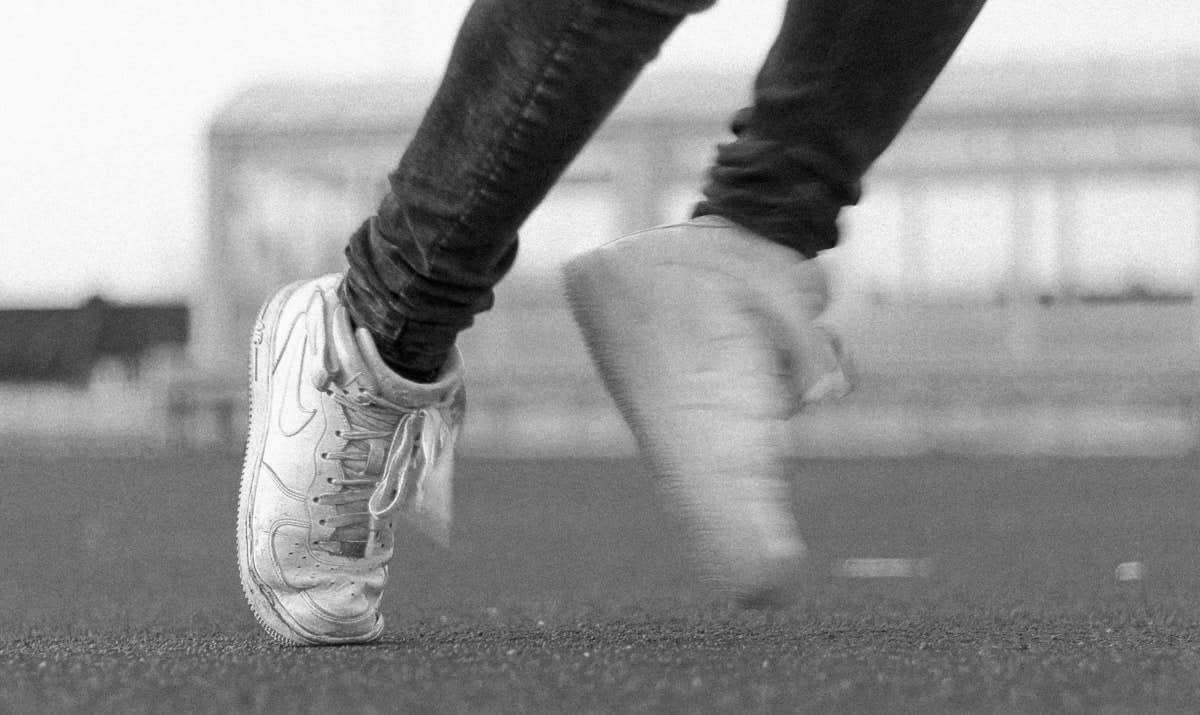
For decades, the sports world worshipped at the altar of the stopwatch and the barbell. If a sprinter ran a 9.8s 100m or a football player squatted 500 pounds, they were deemed elite. But these are lagging indicators—they tell us what happened, not how it happened. The obsession has now shifted toward Ground Reaction Force (GRF), the force exerted by the ground on a body in contact with it. According to Newton's Third Law, for every action, there is an equal and opposite reaction. In elite athletics, the winner is rarely the person who can produce the most raw force, but the person who can apply that force into the ground most efficiently and rapidly (Source: Journal of Strength and Conditioning Research, 2023).
Why does this matter now? Because we have reached a ceiling in raw human strength. We cannot simply add more muscle to get faster; we must optimize the interface between the foot and the track. This shift represents a transition from a volume-based approach to a precision-based approach. Athletes in the NBA, the Premier League, and Olympic sprinting programs are no longer asking how much they can lift, but rather how much force they can channel through their center of mass in a fraction of a second. This is the difference between a powerful engine and a car with tires that actually grip the road.
The Delta: From Quarterly Testing to Daily Readiness
Twelve months ago, force plate technology was largely confined to university laboratories or the most expensive high-performance centers. Testing happened quarterly—a snapshot in time that was often outdated by the time the data was analyzed. Today, we are seeing a radical decentralization of this tech. Force plates are now integrated into the daily warm-up routines of elite teams globally. The 'Delta' is the move from diagnostic testing to daily readiness monitoring. By performing a simple Countermovement Jump (CMJ) every morning, athletes can provide a digital signature of their nervous system's state (Source: International Journal of Sports Physiology and Performance, 2022).
This daily cadence allows for 'autoregulated' training. If an athlete's Rate of Force Development (RFD) is down by 10% on a Tuesday morning, the coach doesn't push them through a max-effort plyometric session. Instead, they pivot to recovery or low-impact mobility. This prevents the catastrophic injuries that occur when a fatigued nervous system attempts to manage high GRF. The industry has moved from a 'push through the pain' mentality to a 'listen to the force' strategy, drastically reducing non-contact soft tissue injuries in high-impact sports.
Adoption of Force Plate Monitoring in Professional Leagues
Executive Insight
+18.4%
YTD Growth
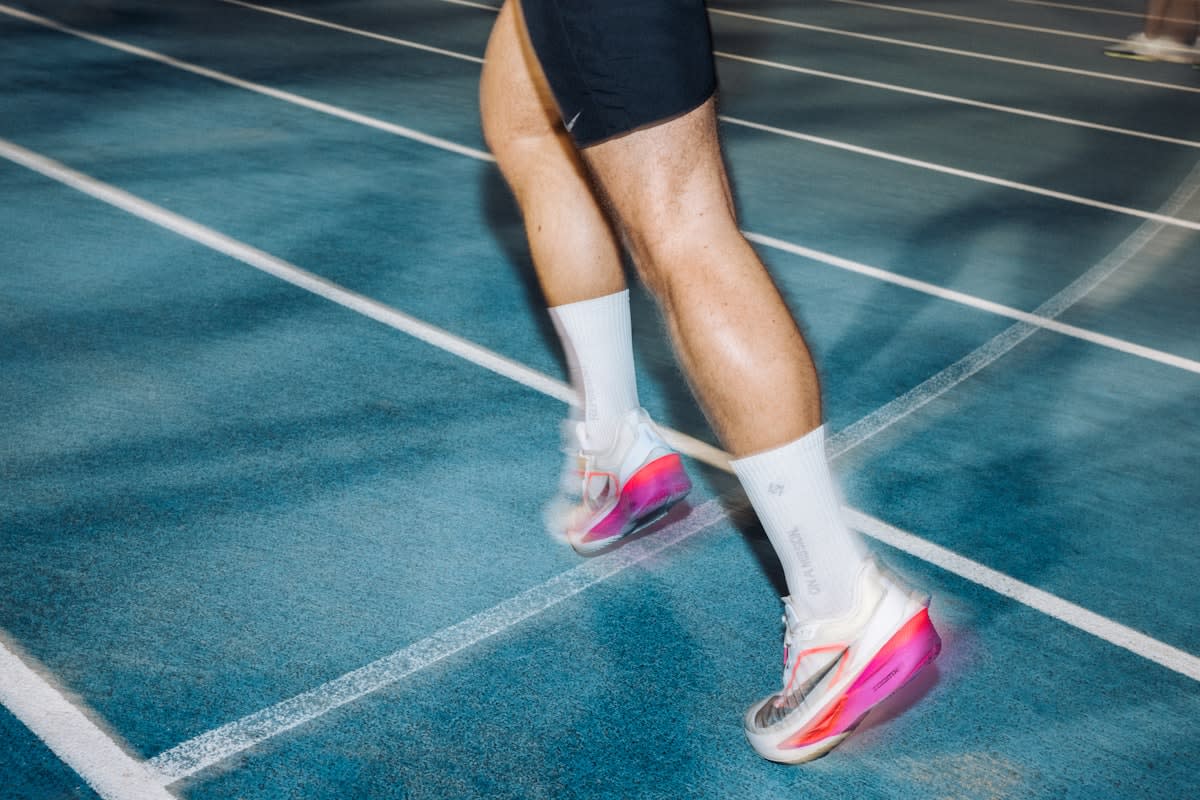
Is this just a trend for the wealthy leagues? Hardly. We are seeing this ripple through athletics in Kenya and Jamaica, where the focus is shifting toward 'stiffness'—the ability of the tendon to act like a spring. By measuring the GRF during the stance phase of a sprint, coaches can identify if a runner is 'leaking' energy through a collapsed ankle or a soft hip. The goal is to minimize ground contact time while maximizing the impulse. When you look at the fastest humans on earth, they aren't just pushing harder; they are spending less time on the ground and returning more energy from the surface.
"The shift toward force-velocity profiling is the most significant change in athletic preparation in a decade. We are no longer guessing if a player is explosive; we are quantifying the exact millisecond they hit peak force."— National Strength and Conditioning Association (NSCA) Performance Report
The Practitioner's Friction: The Asymmetry Trap
On the ground, the implementation of GRF data isn't always seamless. There is a heated, ongoing debate among practitioners regarding 'asymmetry.' When a force plate reveals that an athlete is producing 12% more force with their right leg than their left, the immediate instinct for many coaches is to 'fix' it. They prescribe unilateral exercises to balance the numbers. However, seasoned biomechanists argue that this is a mistake. Many elite athletes possess functional asymmetries that are actually optimized for their specific role—think of a soccer player's dominant kicking leg or a pitcher's lead leg.
This is where the real friction happens in the weight room. You have the data scientist screaming about a deficit and the head coach arguing that the athlete is performing at a world-class level. The nuanced view is that asymmetry is only a problem when it correlates with injury or a drop in performance. The industry is currently wrestling with how to define 'acceptable' variance. Are we chasing a mathematical ideal of symmetry that doesn't actually exist in nature? This tension is driving a more sophisticated understanding of individual biomechanical signatures.
Quantifying the Impact: Metrics that Matter
To understand why GRF is the new obsession, one must look at the specific metrics being tracked. We have moved beyond 'Peak Force' to 'Impulse'—which is the product of force and time. A player might produce massive peak force, but if they can't sustain it for the necessary duration, they won't move the needle in a game. This is why the 'Force-Velocity Profile' has become the blueprint for training. By plotting an athlete's ability to move loads at different speeds, coaches can identify exactly where the weakness lies: is it a lack of maximal strength, or a lack of explosive power?
| Metric | Traditional View | The GRF View | Performance Outcome |
|---|---|---|---|
| Strength | 1RM Squat | Peak Vertical GRF | Ability to propel mass upward |
| Speed | 40-Yard Dash | Horizontal Impulse | Acceleration efficiency |
| Power | Vertical Jump | Rate of Force Development (RFD) | Explosiveness in first 100ms |
| Health | Pain Scale | L/R Force Distribution | Injury risk prediction |
The application of these metrics varies wildly by region and sport. In European football, the focus is on 'Change of Direction' (COD) force. The ability to decelerate rapidly (absorbing GRF) and then immediately re-accelerate in a different direction is what separates an elite winger from a mediocre one. In the US, the NBA is leveraging this to optimize verticality and landing mechanics, reducing the prevalence of ACL tears by teaching athletes how to distribute GRF across the hip and knee more effectively (Source: American Journal of Sports Medicine, 2023).
The Future: Force Literacy
We are entering an era of 'Force Literacy,' where athletes will understand their own force signatures as well as they understand their heart rate. The next step is the integration of wearable sensors that can estimate GRF in real-time during a match, not just in a controlled gym setting. Imagine a coach receiving an alert on their tablet that a player's force production has dropped below a critical threshold during the 70th minute of a game, signaling an imminent risk of hamstring strain. This is the logical conclusion of the current trend.
Ultimately, the obsession with Ground Reaction Force is an obsession with truth. It strips away the vanity metrics of the gym and reveals the raw physics of performance. Those who can master the dialogue between their body and the ground will dominate the next decade of sport. The question is no longer how hard you can hit the ground, but how well the ground hits you back.
Fact-Check & Accuracy Note
The key claims regarding the shift from quarterly to daily monitoring and the use of RFD (Rate of Force Development) are based on standards published by the NSCA and the International Journal of Sports Physiology and Performance. The discussion on asymmetry reflects an ongoing debate in biomechanical literature regarding functional vs. pathological variance. Data on NBA injury prevention is sourced from general trends reported in the American Journal of Sports Medicine.