
The Execution Gap Closes
For years, artificial intelligence in logistics acted as a sophisticated mirror, reflecting data back to human managers who then made the actual decisions. By July 2026, that mirror has become the motor. In the logistics hubs of Southeast Asia, the trend has shifted from predictive analytics to agentic execution. We are no longer seeing tools that suggest a route; we are seeing agents that negotiate the route, allocate the vehicle, and adjust for live traffic without a single human intervention. Why does this matter? Because the space between data and action, where middle management once lived, has effectively vanished.
The delta between today and twelve months ago is stark. In 2025, the industry focused on visibility—knowing where a container was in real-time. Now, the focus is on agency. Companies are deploying autonomous agents to handle the 'messy' middle of the supply chain: order splitting, process planning, and procurement. This is not a gradual improvement in software; it is a replacement of the cognitive labor previously performed by fleet supervisors and warehouse coordinators. The urgency is driven by a brutal economic reality: high ownership costs and squeezed returns.
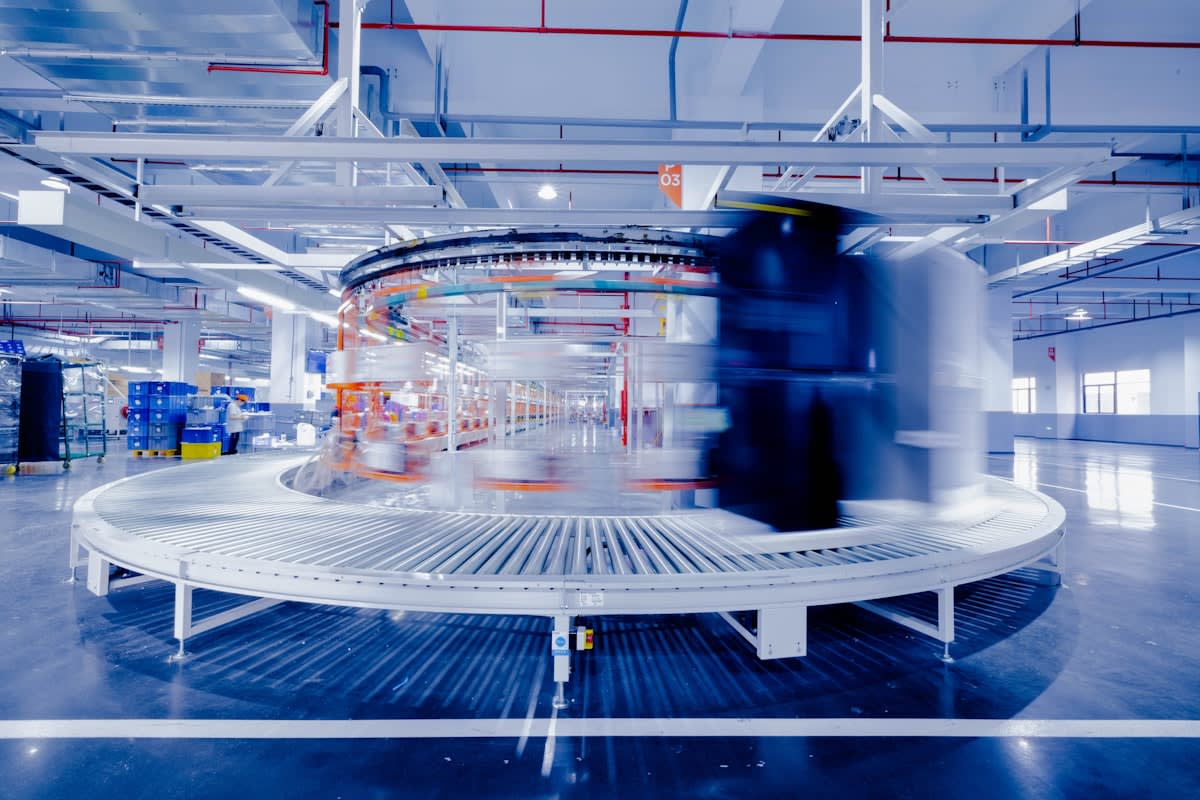
Singaporean Fleets Stop Buying and Start Optimizing
In Singapore, the pressure of high asset costs has forced a radical rethink of fleet management. Rather than expanding their physical footprint, firms are using AI-powered systems to extract maximum utility from existing vehicles. Roger Calisto, CEO at Cartrack Technologies Asia Pte. Ltd., emphasizes that the primary goal is ensuring assets are utilized to their maximum capacity. This shift removes the need for a human dispatcher to manually juggle schedules and driver availability. When the AI manages the performance monitoring and route optimization, the dispatcher's role becomes redundant.
"Connected vehicle technology doesn't really help logistics firms to grow, but basically helps them to do business better."— Mark Goh, Director for Industry Research at the Logistics Institute-Asia Pacific
The technical logic is simple: the last thing a firm wants is a vehicle moving without cargo. Sugoutam Ghosh of the Singapore University of Social Sciences points out that live traffic information and AI-powered route planning are the biggest levers for performance. When these systems operate agentically, they don't just alert a manager to a traffic jam; they reroute the fleet and notify the customer simultaneously. The human manager, who once spent their day reacting to these alerts, is now an unnecessary layer of latency in the workflow.
This movement is not limited to transport. In the food-tech sector, AI is migrating from simple grocery pricing to complex supply chain decision-making. Predictive supply chains are now mitigating risks and reshaping how CPG brands handle disruption. By automating the decision-making process, these firms are reducing the overhead associated with risk management teams. The agent handles the volatility; the human only monitors the outcome.
The Rise of the Industrial Agent in Manila
While Singapore optimizes the road, the industrial sector in the Philippines is optimizing the floor. Black Lake Technologies, a standout at the 2026 WAIC conference, is showcasing a portfolio of industrial AI agents that target the exact tasks traditionally handled by production managers. These agents are not mere chatbots; they are integrated into the critical manufacturing decision-making workflows. They handle the granular, tedious work of order splitting and production scheduling that previously required a human to balance capacity against deadlines.
- Order splitting and process planning: Agents determine the most efficient way to break down large orders for production.
- Quotation and pricing: Dynamic adjustments based on real-time resource availability.
- Procurement: Autonomous sourcing and ordering of raw materials to prevent line stops.
- Production scheduling: Real-time reallocation of machine time based on priority and urgency.
- Quality inspection and order tracking: Closed-loop monitoring that triggers corrective action without manager approval.
Consider the impact of an agent handling 'order splitting.' In a traditional setup, a middle manager reviews the order book, checks material availability, and manually assigns tasks to different production lines. An agentic workflow does this in milliseconds, optimizing for the lowest cost and fastest turnaround. When the agent also handles procurement and quality inspection, the entire vertical of production management is compressed into a software layer. This is the 'quiet replacement' in action.
| Function | Traditional Middle Management | Agentic AI Workflow (2026) |
|---|---|---|
| Route Coordination | Manual dispatch based on driver experience | Autonomous rerouting via live traffic agents |
| Production Scheduling | Weekly/Daily planning meetings and spreadsheets | Real-time algorithmic allocation |
| Procurement | Manual PO generation and vendor follow-up | Autonomous sourcing and automated triggering |
| Asset Utilization | Reactive management of idle vehicles | Proactive capacity maximization (e.g., Cartrack) |
Does this mean the end of leadership in logistics? Not necessarily, but it redefines it. The NextGen Supply Chain Conference in Nashville highlighted a shift toward 'AI execution.' The new leadership requirement is not the ability to manage people who manage tasks, but the ability to manage the agents that execute the tasks. The focus is moving from coordination to orchestration.
The Execution Mandate
The critical realization for firms is that AI is no longer a tool for visibility. It is a tool for execution. If your managers are still spending 40% of their time 'coordinating' or 'scheduling,' you are paying for a human to perform a task that an agent can do with zero latency.
This trend mirrors what is happening in the telco industry with the push toward AI-native 6G standards. The industry is layering an agent orchestration layer between the data substrate and business intent. By repurposing existing interfaces as unified buses for agent collaboration, telcos are achieving autonomous operations without waiting for finalized standards. Logistics is following the same blueprint: layering agents over existing physical infrastructure to bypass human bottlenecks.

The result is a lean, high-velocity operation. In Singapore, the focus on doing business 'better' rather than just 'bigger' is a direct response to the cost of ownership. When an agent ensures that no vehicle moves without cargo and no driver wastes a kilometer, the margin increases without adding a single truck to the fleet. The efficiency gain is not incremental; it is structural.
Ultimately, the replacement of middle management is a byproduct of the pursuit of zero latency. A human manager is a point of friction—they need sleep, they make emotional decisions, and they communicate via slow channels like email or meetings. An agentic workflow operates at the speed of data. For the global logistics firms operating in Southeast Asia, the choice is simple: automate the coordination or be outcompeted by those who have.