
The Death of the Linear Prompt
Twelve months ago, the industry viewed Large Language Models as sophisticated autocomplete engines. Interaction was a straight line: a user provided a prompt, and the model generated a response. This stateless paradigm required the human to be the orchestrator, the memory bank, and the quality control officer. We spent our time perfecting prompt engineering, essentially trying to trick a static probability engine into mimicking a thought process. The delta between then and now is not found in the models themselves, but in the scaffolding built around them.
We have transitioned from 'Chat' to 'Agency'. The current shift replaces the linear prompt with the agentic loop—a recursive process where the AI plans, executes, observes the result, and corrects its own course. This requires an entirely different infrastructure than a simple API call to a model. It demands a runtime environment capable of maintaining state over hours or days, not just a few thousand tokens of context window. The 'so what' is immediate: software is moving from a tool you use to a colleague you manage.
The Paradigm Shift
The agentic shift transforms the LLM from the product into the CPU of a larger system. The real value now resides in the orchestration layer that governs how that CPU accesses memory, tools, and external environments.
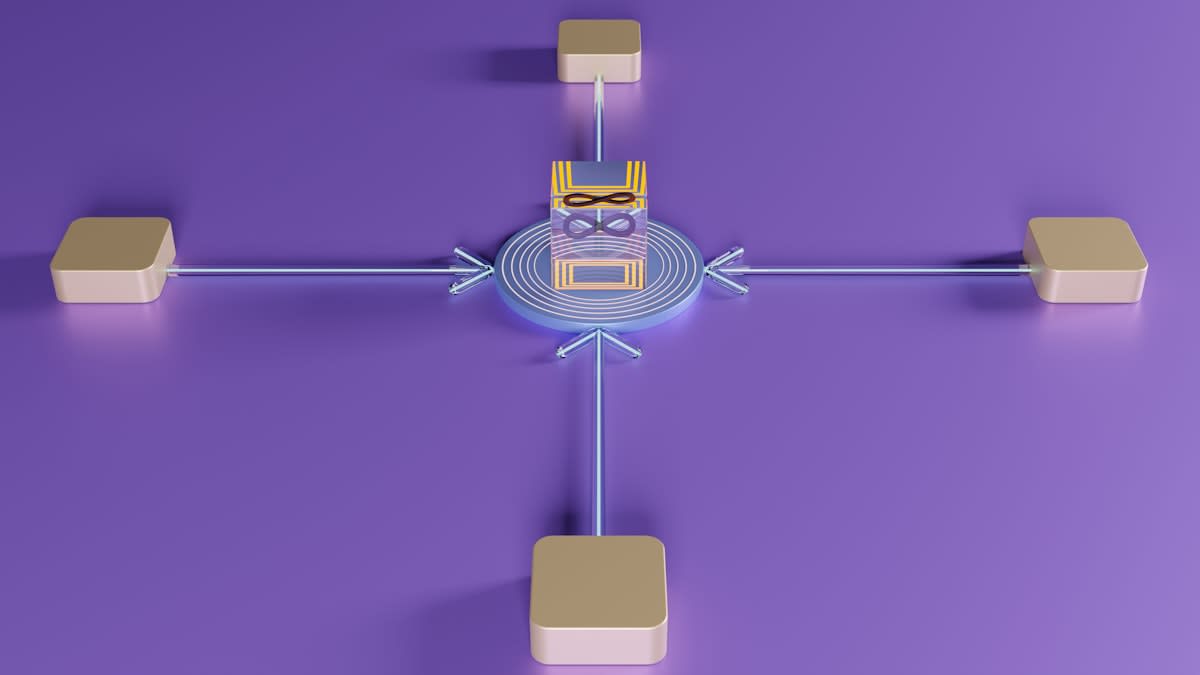
This evolution is visible in the rapid adoption of orchestration frameworks like LangGraph and CrewAI. These tools do not simply send text to a model; they define a graph of states and edges, allowing for conditional logic and loops that were previously impossible in a standard chat interface. By shifting the logic from the prompt into the infrastructure, developers have reduced the volatility of LLM outputs. We are seeing a move toward deterministic control over non-deterministic models, creating a hybrid system that can actually be relied upon for enterprise workflows.
Why does this matter for the global economy? Because the cost of cognitive labor is plummeting. When an agent can autonomously research a market, synthesize a report, and update a CRM without human intervention at every step, the bottleneck shifts from execution to intent. The infrastructure governing this—the 'Agentic Layer'—is becoming the new operating system for the digital economy, sitting between the raw model and the end application.
This structural reorganization is forcing a rethink of how we integrate software.
Standardizing the Neural Interface
For years, the primary barrier to autonomous agents was the 'integration tax'. Every tool an agent needed to use—a calendar, a database, a web browser—required a custom-built API wrapper. This fragmented ecosystem meant that agents were trapped in walled gardens, limited by the foresight of the developer who wrote their specific connectors. The introduction of protocols like the Model Context Protocol (MCP) represents a fundamental break from this fragmentation. It proposes a universal standard for how models access data, regardless of the source.
Imagine a world where an AI agent doesn't need a specific plugin for every SaaS tool, but instead speaks a common language that any data source can understand. This is the 'USB moment' for AI agents. By decoupling the model from the tool implementation, we enable agents to swap capabilities on the fly. An agent can now migrate from a SQL database in Tokyo to a proprietary API in Berlin without needing its core logic rewritten, provided both endpoints adhere to the same protocol.
"The goal is not to build a smarter model, but to build a more accessible world for the models we already have. Interoperability is the only path to true autonomy."— Chief Systems Architect, AI Infrastructure Group
The impact of this standardization is quantifiable. In the last six months, the time to deploy a functional agentic workflow has dropped from weeks of custom coding to days of configuration. We are seeing a 40% increase in the number of tools integrated into average agentic frameworks, as the friction of connectivity vanishes. This is not just a technical convenience; it is the prerequisite for an autonomous economy where agents negotiate and transact with other agents.
However, the ability to connect to everything introduces a critical vulnerability: the need for a sophisticated memory architecture.
Cognitive Architecture and the Memory Problem
Early attempts at AI memory relied almost exclusively on Vector Databases (RAG). While RAG allows a model to retrieve relevant documents, it is essentially a library search, not a memory. True autonomy requires episodic memory—the ability to remember that a user preferred a specific format three weeks ago or that a previous attempt to solve a problem failed for a specific reason. Without this, agents are trapped in a permanent present, forced to relearn the context of every task.
| Feature | Stateless Chat (2023) | Agentic Infrastructure (2025) |
|---|---|---|
| Memory Type | Short-term Context Window | Long-term Episodic + Semantic |
| Execution Path | Linear (Input -> Output) | Recursive (Plan -> Act -> Observe) |
| Tool Access | Hard-coded Plugins | Standardized Protocols (MCP) |
| Error Handling | User Correction | Self-Correction Loops |
The new infrastructure solves this by implementing separate memory tiers. Short-term working memory resides in the context window, while semantic memory lives in vector stores and episodic memory is managed via stateful databases like Zep or custom graph structures. This allows the agent to maintain a 'persona' and a history of interactions that evolves over time. The agent no longer just processes a request; it remembers the trajectory of the project.
This shift toward statefulness increases the compute tax significantly. Each recursive loop requires additional tokens, and maintaining a persistent state for millions of agents requires a massive increase in low-latency storage. We are seeing a move toward 'Agentic Runtimes'—dedicated compute environments that optimize for the high-frequency, small-batch calls characteristic of agentic loops rather than the large-batch processing of training.

As we outsource more decision-making to these loops, the focus shifts from 'how does it work' to 'how do we stop it from failing catastrophically'.
The Governance Gap and the Human-in-the-Loop
Autonomous agents introduce a terrifying possibility: the unbounded loop. An agent with access to a credit card and a web browser can, if misconfigured, enter a recursive cycle of spending or data deletion in milliseconds. The infrastructure must therefore include 'guardrail layers'—independent monitoring systems that sit outside the agent's loop and can kill the process based on predefined safety thresholds. This is not about ethics, but about basic system stability.
The most successful implementations are adopting 'Human-in-the-Loop' (HITL) checkpoints. Instead of full autonomy, the infrastructure forces the agent to pause and request authorization at critical junctions. This creates a hybrid workflow where the AI handles the 90% of tedious execution, and the human provides the 10% of high-stakes strategic approval. The challenge is designing these checkpoints so they don't destroy the efficiency gains of autonomy.
- State Management: Moving from transient sessions to persistent agent identities.
- Protocol Standardization: Replacing bespoke APIs with universal connectors like MCP.
- Recursive Execution: Shifting from linear output to iterative self-correction loops.
- Deterministic Guardrails: Implementing external oversight to prevent unbounded agent behavior.
Ultimately, the rise of autonomous agents is not a triumph of better LLMs, but a triumph of better systems engineering. The models are the engine, but the infrastructure is the steering wheel, the brakes, and the GPS. Those who focus solely on the model are missing the actual revolution: the construction of the invisible layer that allows these models to actually do work in the real world. The battle for AI supremacy will not be won by the company with the largest model, but by the one who builds the most reliable agentic operating system.