
Prerequisites for High-Density Orchestration
Before deploying multi-agent systems (MAS), engineers must establish a robust infrastructure capable of handling asynchronous state management. High-density workflows differ from simple chains by their requirement for persistent memory and the ability to handle non-linear execution paths. You will need a runtime environment supporting Python 3.10+ and an orchestration framework such as LangGraph, AutoGen, or CrewAI. A high-performance vector database like Pinecone or Milvus is essential for maintaining shared long-term memory across agents, ensuring that context is not lost during hand-offs. Finally, access to frontier models with high tool-calling accuracy—specifically those with a minimum 90% success rate in JSON formatting—is non-negotiable to prevent system collapse during agent-to-agent communication.
The Efficiency Gain
Agentic workflows can reduce hallucination rates by up to 35% compared to zero-shot prompting, provided the orchestration pattern matches the task complexity.
The primary challenge in high-density architecture is the trade-off between reasoning depth and latency. Every agent hand-off introduces a minimum of 120ms to 500ms of overhead, depending on the model's token generation speed and the complexity of the state transfer. In large-scale implementations, such as the automated logistics systems currently being piloted in Rotterdam's port operations, this latency accumulates. Engineers must decide whether a task requires the exhaustive precision of a multi-agent loop or the speed of a linear sequence. Failure to optimize this balance leads to 'token bloat,' where the system spends more resources managing its own internal dialogue than solving the actual problem.
Pattern 1: The Sequential Pipeline
The Sequential Pipeline is the most fundamental pattern, where the output of Agent A becomes the direct input for Agent B. While simplistic, this pattern is highly effective for deterministic workflows where the process can be decomposed into discrete, non-overlapping stages. For instance, a content pipeline might move from a Researcher Agent to a Writer Agent and finally to a Fact-Checker Agent. The critical vulnerability here is error propagation; if the Researcher Agent introduces a hallucination, every subsequent agent builds upon that falsehood. To mitigate this, high-density architectures insert a 'Gatekeeper' agent between each stage to validate the output against a set of hard constraints before allowing the workflow to proceed.
- Define a strict schema for the hand-off object to ensure data integrity between agents.
- Implement a validation agent (Gatekeeper) to check for missing required fields or hallucinations.
- Establish a retry mechanism that sends the output back to the previous agent if validation fails.
- Log the state transition at each step to enable precise debugging of the failure point.
def sequentialworkflow(inputdata):
    research = researcheragent.run(inputdata)
    if not gatekeeper.validate(research):
        research = researcher_agent.retry(research)

    draft = writer_agent.run(research)
    if not gatekeeper.validate(draft):
        draft = writer_agent.retry(draft)

    return final_editor.run(draft)
Despite its simplicity, the sequential pattern is the backbone of most enterprise AI deployments in the Baltic region, particularly within Estonia's e-governance frameworks. By isolating responsibilities, these systems ensure that a failure in a specific module does not crash the entire service. However, as the number of agents increases, the pipeline becomes brittle. When a workflow exceeds five sequential steps, the probability of a total system failure increases exponentially, necessitating a shift toward more flexible orchestration patterns.
Pattern 2: Hierarchical Supervision
Hierarchical Supervision introduces a Manager Agent that acts as the central orchestrator, delegating tasks to subordinate worker agents. This pattern is essential for complex, multi-domain requests where the path to a solution is not known in advance. The Manager Agent does not perform the work but instead decomposes the primary goal into sub-tasks, assigns them to the most capable worker, and synthesizes the final answer. This architecture significantly improves task completion rates for complex queries, often showing a 22% improvement over sequential patterns. The Manager Agent maintains the global state, preventing the worker agents from needing to know the full context, which reduces the token load on individual worker prompts.
- Design a Manager Agent with a comprehensive directory of worker agent capabilities.
- Implement a decomposition loop where the Manager breaks the goal into a task list.
- Create a synthesis phase where the Manager reviews all worker outputs for consistency.
- Define a termination condition to prevent the Manager from looping indefinitely on a single sub-task.
Context Optimization
Hierarchical patterns reduce the context window pressure on worker agents by filtering only the relevant sub-task data, effectively increasing the 'perceived' intelligence of smaller models.
The risk in hierarchical systems is the 'Manager Bottleneck.' If the Manager Agent fails to decompose a task correctly or misinterprets a worker's output, the entire system fails regardless of the workers' competence. To avoid this, advanced implementations use a 'Council of Managers' or a peer-review step where a second Manager Agent audits the delegation plan. This adds latency but is critical for high-stakes environments, such as algorithmic trading or medical diagnostic assistants, where a single misrouted instruction can lead to catastrophic outcomes.
Pattern 3: Joint Collaboration (The Blackboard)
Joint Collaboration utilizes a shared memory space, often called a 'Blackboard,' where agents post their findings and react to the updates of others. Unlike the hierarchical pattern, there is no single boss; instead, agents operate in a peer-to-peer fashion, triggered by changes in the shared state. For example, in a software development workflow, a Coder Agent might post a snippet of code to the blackboard, which immediately triggers a Security Agent to analyze it for vulnerabilities and a QA Agent to write a test case. This creates a highly dynamic environment where the order of operations is emergent rather than prescribed.
| Pattern | Latency | Complexity | Reliability | Token Cost |
|---|---|---|---|---|
| Sequential | Low | Low | Medium | Low |
| Hierarchical | Medium | Medium | High | Medium |
| Joint | High | High | Very High | High |
| Router | Very Low | Low | Medium | Very Low |
The primary drawback of Joint Collaboration is the exponential increase in token consumption. Because agents are constantly monitoring the blackboard and responding to updates, the number of LLM calls spikes. In high-density clusters, token consumption can increase by 3x to 5x compared to sequential workflows. To manage this, engineers must implement 'event-driven triggers'—only waking up specific agents when a certain keyword or data type is posted to the blackboard—rather than having all agents poll the state continuously.
Pattern 4: Router-Based Dispatch
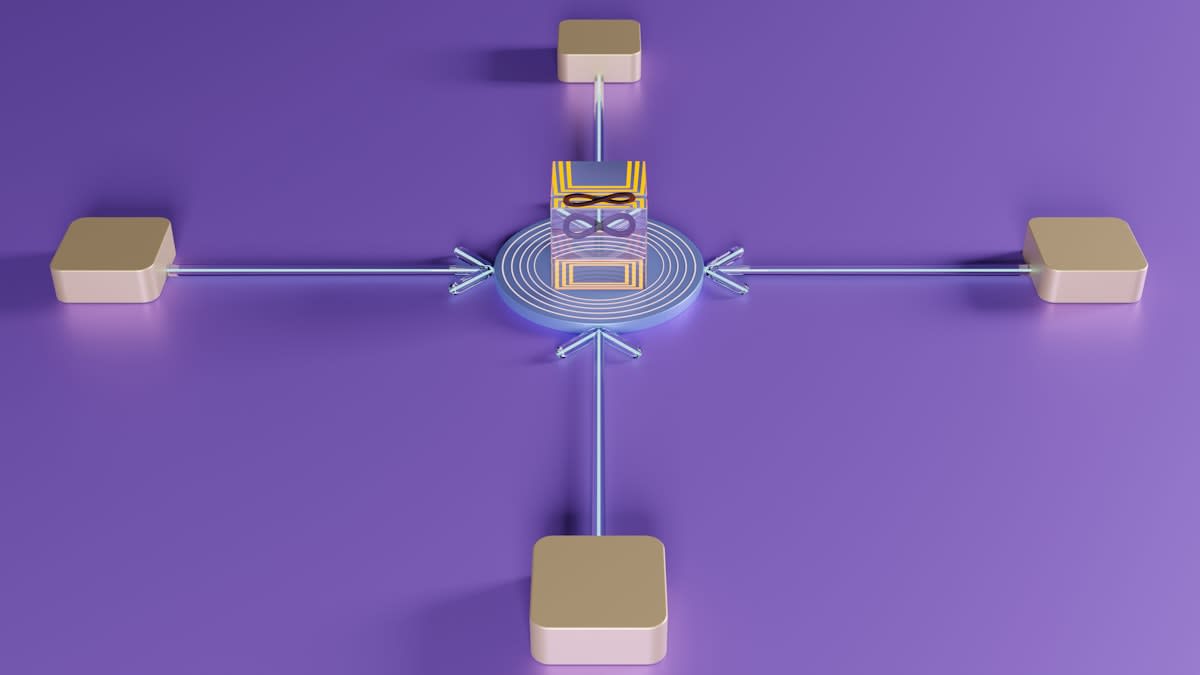
Router-Based Dispatch is designed for efficiency and scale. A lightweight Router Agent analyzes the incoming request and immediately dispatches it to the most appropriate specialized agent or a pre-defined workflow. This is essentially a classification problem: the Router doesn't reason about the solution but identifies the intent. In a customer support ecosystem, the Router might distinguish between a billing query, a technical bug, and a feature request, routing each to a specialized agent. This minimizes latency by bypassing the overhead of a Manager Agent and prevents irrelevant agents from consuming tokens.
- Build a high-precision intent classifier (using a small, fast model like GPT-4o-mini or Claude Haiku).
- Map each intent to a specific agent or sub-workflow.
- Implement a 'fallback' route for requests that the Router cannot confidently classify.
- Use a cache for common queries to bypass the Router entirely for repeat requests.
Router patterns are increasingly deployed in the fintech sectors of Singapore and Hong Kong, where millisecond-level response times are critical for user retention. By using a Router, companies can maintain a fleet of 50+ specialized agents without the system becoming sluggish. The key to success here is the 'Confidence Threshold'—if the Router is less than 85% sure of the destination, it should route the request to a human operator or a generalist agent to avoid the 'wrong turn' problem, where a user is trapped in a loop with an agent that cannot help them.
Pattern 5: Dynamic Swarming
Dynamic Swarming is the most advanced pattern, where agents are created and destroyed on the fly based on the needs of the task. Instead of a fixed set of agents, the system uses an 'Agent Factory' that instantiates agents with specific personas and tools as the problem evolves. This is particularly useful for open-ended research or complex software engineering tasks where the required skill set changes mid-workflow. For example, a swarm might start with two architects, but upon discovering a security flaw, the system automatically spawns three security auditors to swarm the specific piece of code.
"The shift from fixed agent roles to dynamic swarms represents the transition from AI as a tool to AI as an autonomous workforce capable of self-organizing around a problem."— Lead Architect, Agentic Systems Research
Implementing a swarm requires a sophisticated 'Orchestration Layer' that can manage the lifecycle of these ephemeral agents. The system must track which agents are active, what they have contributed, and when they are no longer needed to avoid memory leaks and token waste. The complexity of managing a swarm is significant, but it allows for a level of flexibility that fixed patterns cannot match. It enables the system to scale its reasoning capacity vertically (more agents on one task) or horizontally (more tasks handled by different swarms) in real-time.
Common Pitfalls in High-Density Architecture
- Infinite Loops: Agents A and B repeatedly correct each other without making progress. Implement a maximum turn limit (e.g., 10 iterations) to force termination.
- Context Dilution: Passing the entire conversation history to every agent. Use state pruning to only pass the last 3 turns and a summarized global state.
- Tool-Call Cascades: An agent calls a tool that triggers another agent, which calls another tool, leading to an uncontrolled chain of API costs.
- Over-Engineering: Using a Swarm pattern for a task that could be solved with a simple Sequential chain, leading to unnecessary complexity and latency.
The ultimate goal of agentic density is not to maximize the number of agents, but to maximize the utility per token. The most successful systems are those that blend these patterns—using a Router for the initial entry, a Hierarchical structure for decomposition, and a Sequential pipeline for the final execution. By treating agent orchestration as a precision engineering problem rather than a prompting exercise, developers can build systems that are not only autonomous but predictable and scalable across global infrastructures.