
The Silicon Ceiling and the Biological Breakthrough
For decades, the trajectory of human progress was measured in nanometers. We shrank transistors, packed them tighter, and prayed that Moore's Law would hold. But the industry is finally admitting a hard truth: pure silicon is hitting a thermal and physical wall. The answer is no longer found in better lithography, but in the wetware of the human brain. We are witnessing a violent pivot toward biohybrid computing, where the line between a microprocessor and a biological organoid is becoming dangerously thin.
Why now? Because the energy cost of simulating a single human neuron on a GPU is astronomical, while the biological original operates on a fraction of the power. The 'so what' is immediate: we are moving from an era of digital simulation to one of biological integration. This isn't just about making faster computers; it is about building systems that possess the inherent plasticity and efficiency of living tissue. The race has shifted from who can build the smallest chip to who can best integrate a living cell into a circuit board.
"The human brain has long served as a blueprint for computation, guiding evolution from early symbolic systems to modern deep learning models, but we are now moving beyond the blueprint to the actual building blocks."— Nature (July 3, 2026)
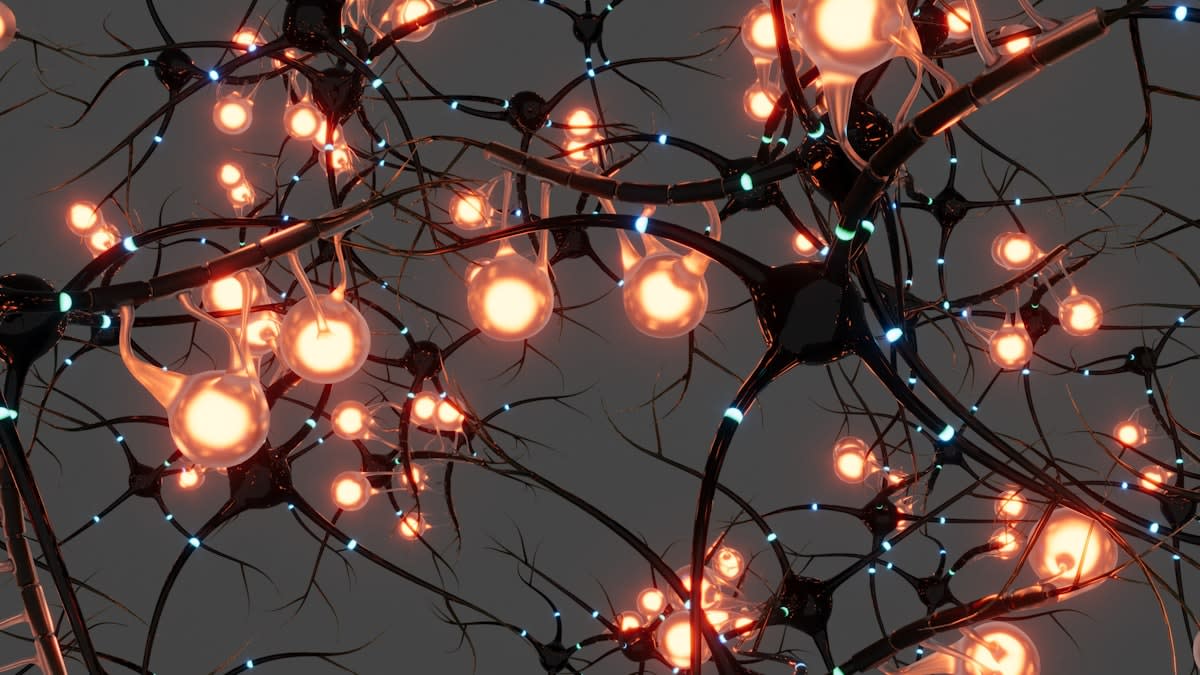
This shift is not theoretical. In April 2026, a research team at Princeton University fundamentally altered the landscape by building a three-dimensional bio-hybrid neural computing device. This wasn't a simulation; it was a physical marriage of electronic hardware and biological neural networks. By utilizing 3D structures, Princeton has moved beyond the flat, 2D constraints of traditional chip design, mirroring the volumetric complexity of the human cortex. This marks the first tangible step toward hardware that doesn't just mimic a brain but actually contains one.
The 2026 Shift
The Delta: Twelve months ago, 'brain-inspired computing' meant Neuromorphic chips—silicon that looked like neurons. Today, it means Biohybrid systems—actual neurons integrated into silicon. We have moved from mimicry to synthesis.
The Architecture of the Electrofluidic Brain
To understand the scale of this disruption, we must look at the basement layer of computation. On June 22, 2026, research emerged reappraising brain function through the lens of cerebral fluid dynamics. This 'electrofluidic brain' concept suggests that cognition isn't just about electrical spikes across synapses, but about the movement of fluids. If computation can be achieved through fluid dynamics, the entire architecture of the modern data center—which relies on cooling fluids to prevent overheating—could be reimagined. The cooling system becomes the computing system.
This realization is driving a journey from algorithms to organoids. While the previous decade focused on the software (deep learning), the current frontier is the hardware (organoids). By growing 3D human organoids, researchers are creating biological processors that can perform complex pattern recognition without the need for massive power grids. This is a fundamental departure from the Von Neumann architecture that has governed computing since the 1940s.
| Feature | Pure Silicon (Traditional) | Biohybrid (Current Trend) |
|---|---|---|
| Processing Logic | Binary/Linear | Plastic/Associative |
| Energy Profile | High Thermal Output | Low Metabolic Demand |
| Structure | 2D Planar Layers | 3D Volumetric Organoids |
| Learning Method | Backpropagation/Weights | Synaptic Plasticity |
But how does this scale from a lab in Princeton to a global industry? The answer lies in the rapid commercialization of organoid platforms. We are seeing a convergence where medical research into disease is providing the exact blueprints needed for the next generation of computers.
The Geopolitical Engine: Taiwan's Biotech Surge
Taiwan, the undisputed capital of silicon, is already hedging its bets. At the BIO International Convention 2026 in San Diego, a delegation of Taiwanese biomedical startups secured over 100 business meetings, signaling a strategic pivot toward bio-convergence. These aren't just healthcare companies; they are the architects of the new bio-computing stack. By integrating AI-powered precision health with organoid platforms, Taiwan is ensuring it remains the center of the computing world, regardless of whether the substrate is silicon or stem cells.
- CancerFree Biotech: Developing AI-enabled organoid technologies for drug development and platform scaling.
- AB DigiHealth: Expanding AI-powered reproductive health solutions into global markets.
- PlasmonicTron Co., Ltd.: Advancing biosensing technologies that bridge the gap between biological signals and digital data.
- Taiwan Universe BioMedicine: Focusing on the co-development of vaccines using advanced biological modeling.
The synergy here is critical. CancerFree Biotech, for instance, is not merely using organoids to test drugs; they are using AI to optimize those organoids. This creates a feedback loop: AI designs a better biological processor, and that biological processor, once integrated into a biohybrid system, performs AI tasks more efficiently than a GPU ever could. This is the 'bio-digital flywheel' that will drive the next decade of innovation.
From Neural Computation to Neurological Cure
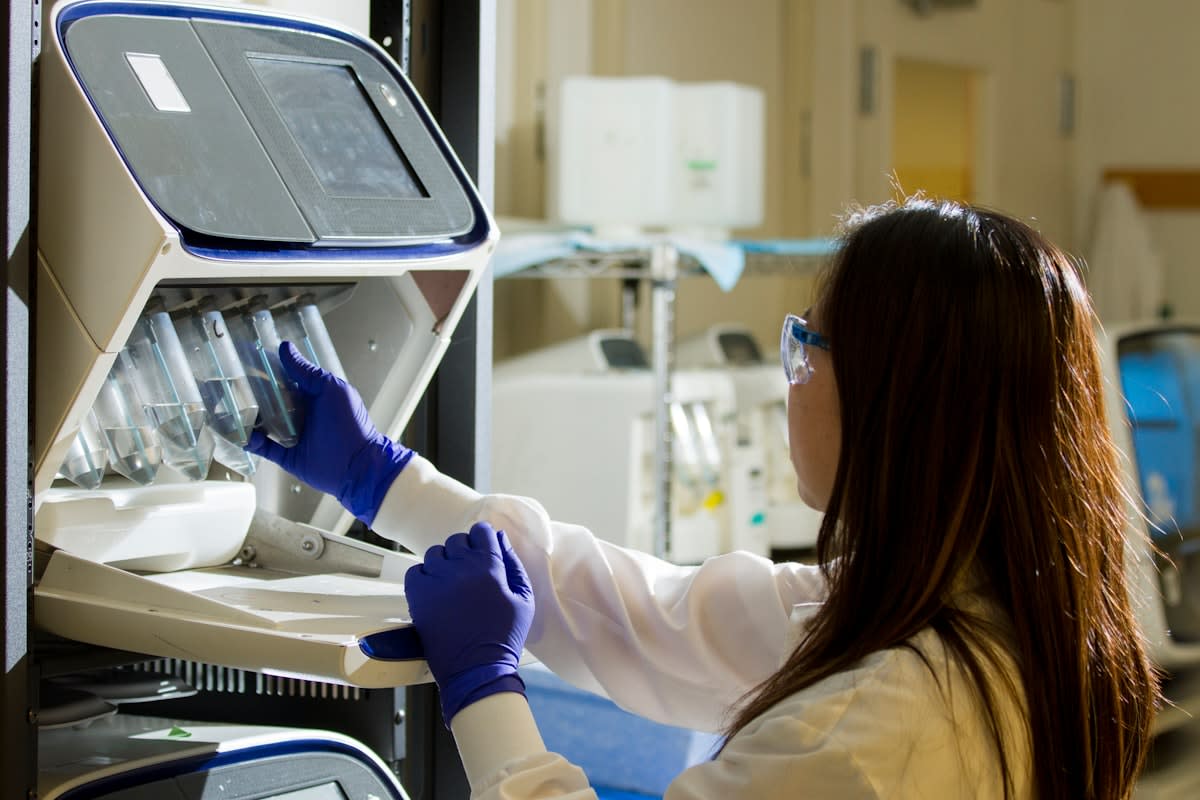
The most profound implication of biohybrid computing is the erasure of the boundary between the computer and the patient. On July 6, 2026, Nature highlighted the use of human 3D organoid models to gain mechanistic insight into motor neuron diseases (MNDs). By creating spinal cord organoids and combined neuromuscular models, researchers can now dissect the dismantling of the neuromuscular junction in real-time. When these organoids are coupled with machine learning, the system doesn't just observe the disease—it computes the solution.
Similarly, the discovery of KIT signaling in APC/TP53 double-knockout human colon organoids (July 4, 2026) demonstrates the precision of these biological systems. By using CRISPR-Cas9 to create specific mutations, scientists have built biological 'circuits' that mirror the exact progression of colorectal cancer. This is computation in its purest form: the biological system is processing genetic inputs to produce a phenotypic output, which is then read by AI to identify oncogenic drivers like the MAPK and Wnt signaling pathways.
Could this be the end of the traditional computer as we know it? Not entirely, but it is the end of the 'pure' silicon era. The future is a hybrid. We will likely see a tiered architecture: silicon for high-speed linear arithmetic, and biological organoids for complex, associative, and energy-efficient cognitive tasks. This is not a crisis for the semiconductor industry; it is an invitation to evolve.
The transition is already underway. From the academic halls of Princeton to the strategic boardrooms of Taipei, the mandate is clear: integrate or become obsolete. The biological pivot is not a trend; it is a fundamental restructuring of how humanity processes information. We are no longer just building tools; we are growing them.