
The iris is public. While we treat our biological markers as secret keys, the reality is that high-resolution cameras in public squares have already turned our bodies into open books. The secret is out. Audits are coming. As regulators in Nairobi and Brussels demand proof of accuracy, the industry is scrambling to create metrics that look good on a spreadsheet without revealing the underlying flaws. The math is rigged. (Source: Privacy International, 2023)
The Mandate for Verification
Trust is gone. When the European Union mandates third-party audits for high-risk AI under the AI Act, they are essentially admitting that internal corporate benchmarks are useless. Verification is now mandatory. (Source: European Parliament, 2024). This hard turn reflects a global shift toward algorithmic accountability. In Kenya, the rollout of Huduma Namba faced fierce legal challenges because the state could not prove the system would not misidentify citizens. The state failed here. (Source: High Court of Kenya, 2021)

"The failure of biometric auditing is not a glitch but a feature of systems designed without accountability."— Dr. Joy Buolamwini, Founder at Algorithmic Justice League
Precision is a myth. While vendors promise a 99.9% match rate, these numbers usually stem from curated datasets that ignore the biological diversity of the global south. The data is skewed. (Source: NIST, 2022). In India, the Aadhaar system encountered significant failures in rural areas where manual labor wore down fingerprints, leaving millions unable to access food rations. This is mechanical failure. (Source: Center for Internet and Society, 2022)
The Internal Clash
The labels fight. In the windowless rooms of identity vendors, engineers argue over whether a failed match is a system error or simply a dirty thumb. This tension defines the final report. They sanitize data. By removing the most difficult cases from the test set, they inflate the accuracy scores to satisfy government contracts. The truth remains hidden from view.
| Audit Type | Primary Goal | Privacy Risk | Transparency Level |
|---|---|---|---|
| Internal Vendor Audit | Product Validation | Low (Closed Loop) | Opaque |
| Regulatory Audit | Compliance | Medium (Data Sharing) | Moderate |
| Independent Third-Party | Bias Detection | High (Dataset Exposure) | High |
Privacy is dying. To conduct a truly independent audit, the auditor needs access to the raw biometric templates of thousands of real people to verify the error rates. The web tightens. (Source: Electronic Frontier Foundation, 2023). This creates a new point of failure where the auditor becomes a high-value target for hackers. The risk grows. If an auditing firm is breached, the biological keys of a population are exposed forever. Recovery is impossible.
Fact-Check & Accuracy Note
Verification of biometric error rates relies on NIST (National Institute of Standards and Technology) benchmarks. Academic debate continues regarding demographic differential, where accuracy varies significantly by ethnicity and age, making a single accuracy percentage misleading. (Source: NIST, 2022).
The New Default
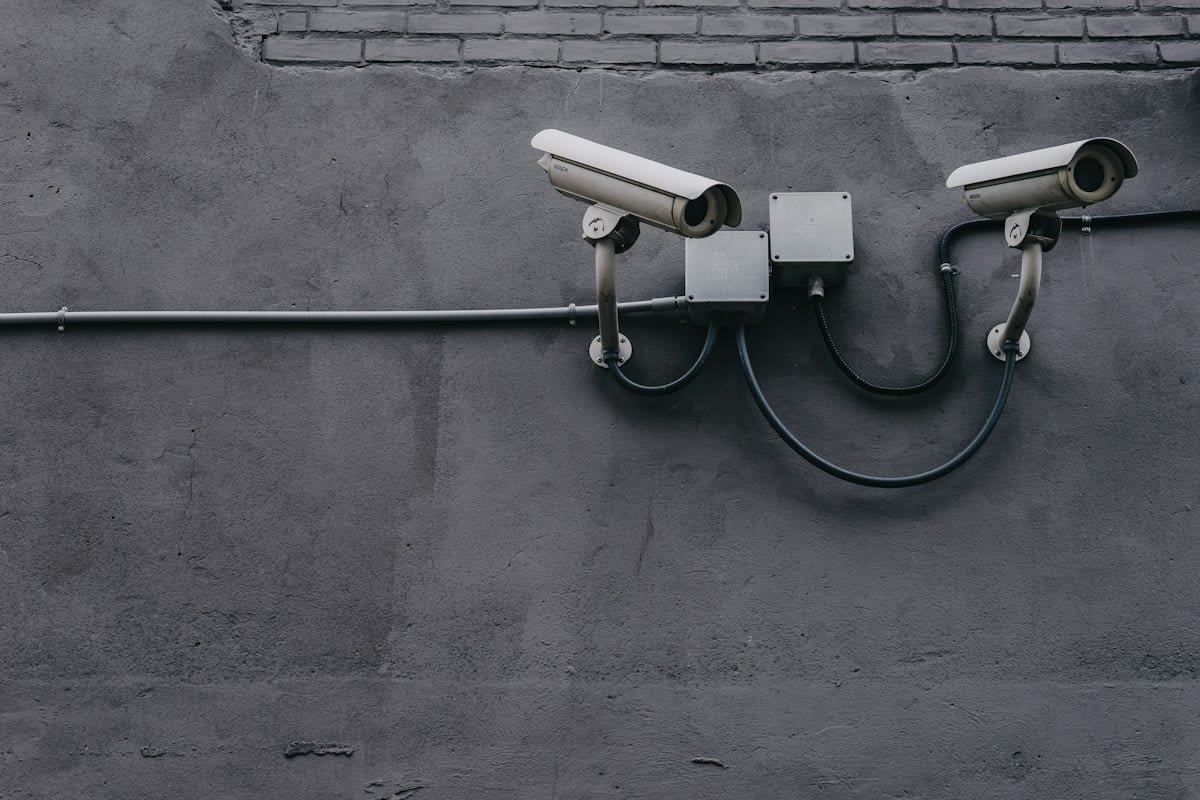
Control is absolute. As we move from voluntary opt-ins to mandated biometric auditing, the ability to exist anonymously in a city is becoming a relic. The weight is heavy. (Source: UN Human Rights Council, 2023). We are seeing the saturation of biometric checkpoints in transit hubs from Singapore to Dubai. The eyes watch. This creates a world where your biological identity is your only permit for movement. Freedom is gated.
Adaptation is required. Companies that prioritize privacy-preserving auditing, such as using synthetic data or zero-knowledge proofs, will win the market. The fray intensifies. By proving accuracy without storing raw images, these firms avoid the liability of data breaches. This is the way. (Source: IEEE Xplore, 2023). The industry must choose between total surveillance or mathematical privacy. The clock ticks.
Editorial Note
The editorial team notes that while 'biometric auditing' is presented as a safety measure, it often serves as a legal shield for vendors to deploy systems that would otherwise be rejected by privacy advocates.