The Latency Tax
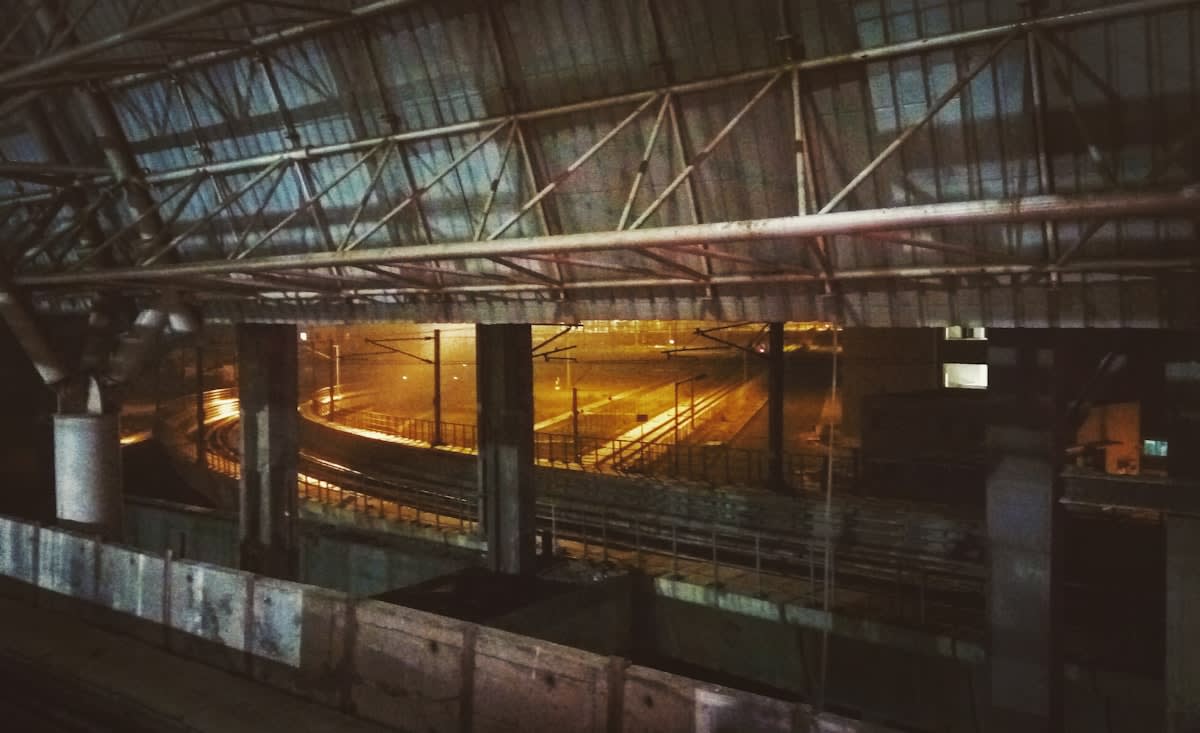
Dust settles on every surface. Heat waves shimmer off the concrete. Chennai's industrial corridors demand hardware that doesn't choke on humidity. Remote LLMs fail here because the round-trip time to a distant server creates a stutter in the robotic arm. A single lag spike turns a high-precision part into a piece of scrap metal. This physical delay is a profit killer that no software optimization can fix.
Subsea infrastructure is a slow promise. Lightstorm is building a 3,600km I-2SEA cable to connect Singapore and Malaysia to Chennai. This project won't be ready until Q4 2029. Five years of latency is an eternity in automotive manufacturing. On-site silicon is the only immediate answer for those who cannot afford to wait for a cable to be laid in the ocean floor.
Hardware Baseline
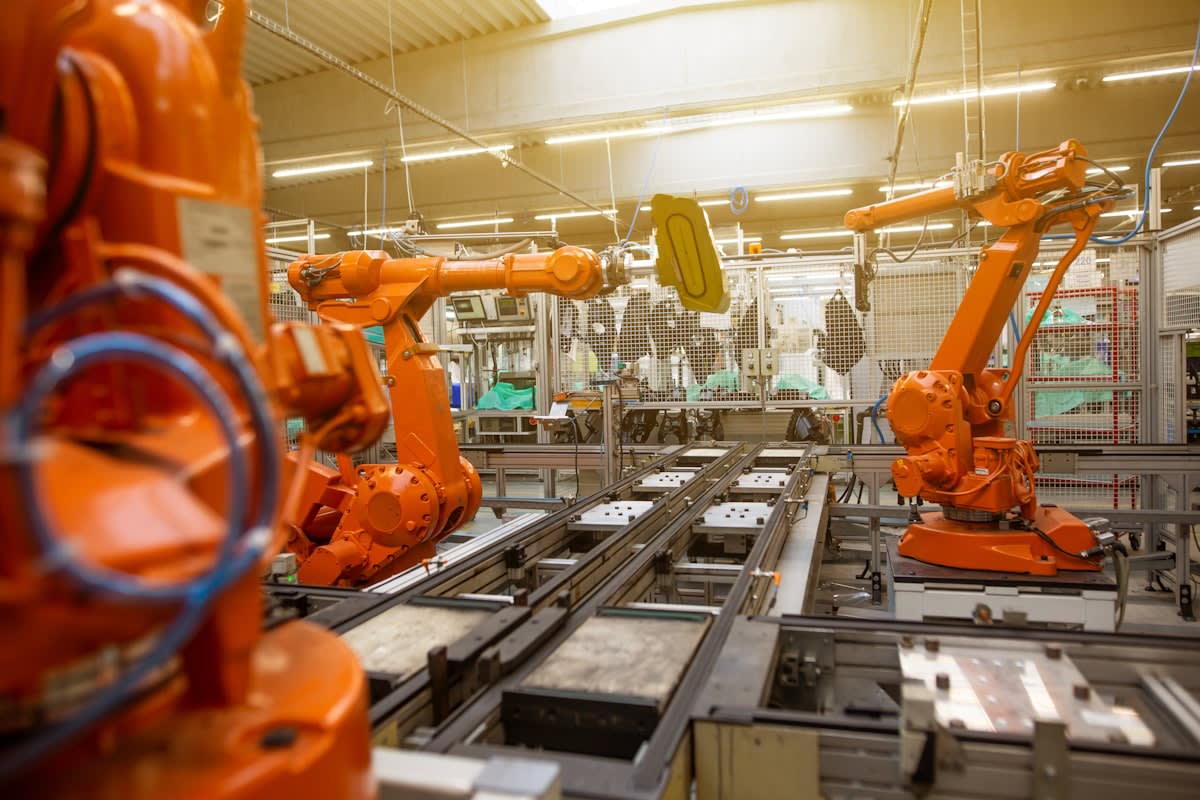
Clean rooms in Hsinchu can afford delicate chip architectures. Chennai's factory floors are a different beast entirely. You need gear that survives vibration and salt-heavy air. Standard servers will overheat and crash within a week in these conditions. The goal is to move the inference engine from a climate-controlled data center in Virginia to a ruggedized box ten feet from the assembly line.
- Industrial PCs with Intel Core Ultra or Panther Lake processors for local AI acceleration
- Fanless chassis to prevent dust intake and mechanical failure
- Quantized LLM weights optimized for edge TPU or NPU execution
- Local IoT gateway for real-time sensor data ingestion
- Uninterruptible Power Supply (UPS) to handle local grid instability
Avalue is pushing the envelope with their Edge AI platforms. They utilize Intel Panther Lake processors to handle the heavy lifting of LLM inference without needing a fiber optic line to another continent. These machines are built for sustainability and long-term reliability in harsh environments. Reliability comes from the hardware's ability to withstand temperature swings that would melt a consumer-grade GPU.
Deployment Steps
- Install ruggedized Industrial PCs at the cell level to eliminate network hops.
- Load domain-specific LLMs that have been pruned for low-latency inference on NPUs.
- Connect the local LLM to an AI agent platform like Plataine to analyze production conditions.
- Integrate the agent with real-time operational execution systems to automate decision-making.
- Establish a local air-gapped update cycle to prevent external network dependency.
Plataine and Sight Machine are changing the game for autonomous optimization. This platform doesn't just monitor; it recommends operational decisions across the factory floor. Such logic requires real-time data flow from IoT sensors to an LLM. If that data travels to the cloud and back, the recommendation is already obsolete. Local LLMs make the agent's response instantaneous, allowing the factory to self-correct in milliseconds.
"Our 11-month deployment of Figure 02 proved that humanoids are no longer lab experiments - they can be a valuable asset in establishing a flexible, reliable manufacturing workforce."— Brett Adcock, CEO of Figure AI
BMW showed the way in the US with Figure AI's humanoid robots. Their 11-month pilot of the Figure 02 robot proved humanoids can handle complex parts sorting. Figure 03 is now deploying to automate sequencing for vehicle production. Achieving this in Chennai requires a local brain. Latency kills the coordination needed for a humanoid to not drop a chassis component during a high-speed sequence.
Integrating these systems creates a new set of vulnerabilities. AI isn't just about speed; it's about trust. Palo Alto Networks' Unit 42 recently identified a threat called phantom squatting. LLMs hallucinate domains for real brands, and attackers register them to intercept traffic. In a local Chennai hub, an AI agent might try to call a hallucinated update server, opening a backdoor into the supply chain.
The Ugly Side of Local AI
Heat is the primary enemy. Even ruggedized PCs struggle when the ambient temperature hits 45 degrees Celsius. Thermal throttling kicks in, and your local LLM suddenly slows to a crawl. This creates a paradox where the solution to latency introduces its own lag. Liquid cooling in a dusty factory is a nightmare, but air cooling often isn't enough.
Power spikes are the second killer. Local grids in industrial hubs can be erratic. A sudden voltage drop can corrupt the weights of a locally hosted model. This leads to catastrophic hallucinations where the AI agent tells a robot to move a part into a wall. Recovering from a corrupted local model takes hours of downtime that a cloud-based system avoids.
| Metric | Cloud LLM (Current) | Local Edge LLM | I-2SEA Cable (2029) |
|---|---|---|---|
| Round Trip Latency | 150ms - 300ms | 2ms - 10ms | 40ms - 80ms |
| Reliability | Internet Dependent | Hardware Dependent | Cable Dependent |
| Data Privacy | External Exposure | Air-Gapped | Encrypted Transit |
Ultimately, the physical constraints of the earth dictate the speed of business. A 3,600km cable is an engineering marvel, but it is still a wire in the mud. Local silicon removes the wire from the equation. Manufacturers who master the grit of edge deployment will outpace those waiting for the signal to arrive from Singapore.