
The industry narrative is a curated lie. For three years, the priests of Silicon Valley preached the gospel of Scale. They told us that intelligence was a linear function of parameter count and that the only path to AGI was to build bigger, hotter, and more expensive clusters. They wanted us to believe that unless you owned a sovereign-state-sized data center, you were irrelevant. This was not a technical roadmap. It was a moat-building exercise designed to bankrupt the independent researcher and force the world into a subscription-based dependency on three or four corporate overlords.
The myth of the cluster collapses when you look at the actual weights. We are seeing a violent correction. Small Language Models (SLMs) are not just catching up; they are outperforming massive clusters on specific, high-value tasks. The brute-force approach—shoveling the entire internet into a transformer and hoping for emergence—is an inefficient relic. The real alpha is now found in data curation and architectural efficiency, not in how many megawatts you can pull from the grid.
The Chinchilla Correction and the Death of Bloat
The turning point came when the industry realized we were training models on starved diets. The Chinchilla study proved that most massive models were chronically undertrained relative to their size (Source: DeepMind, 2022). The obsession with parameter count was a vanity metric. By optimizing the ratio of training tokens to parameters, researchers discovered that a smaller model trained on more, higher-quality data could crush a larger model trained on garbage. This shifted the goalpost from quantity to quality. The 'more is more' era ended, replaced by the 'better is better' era.
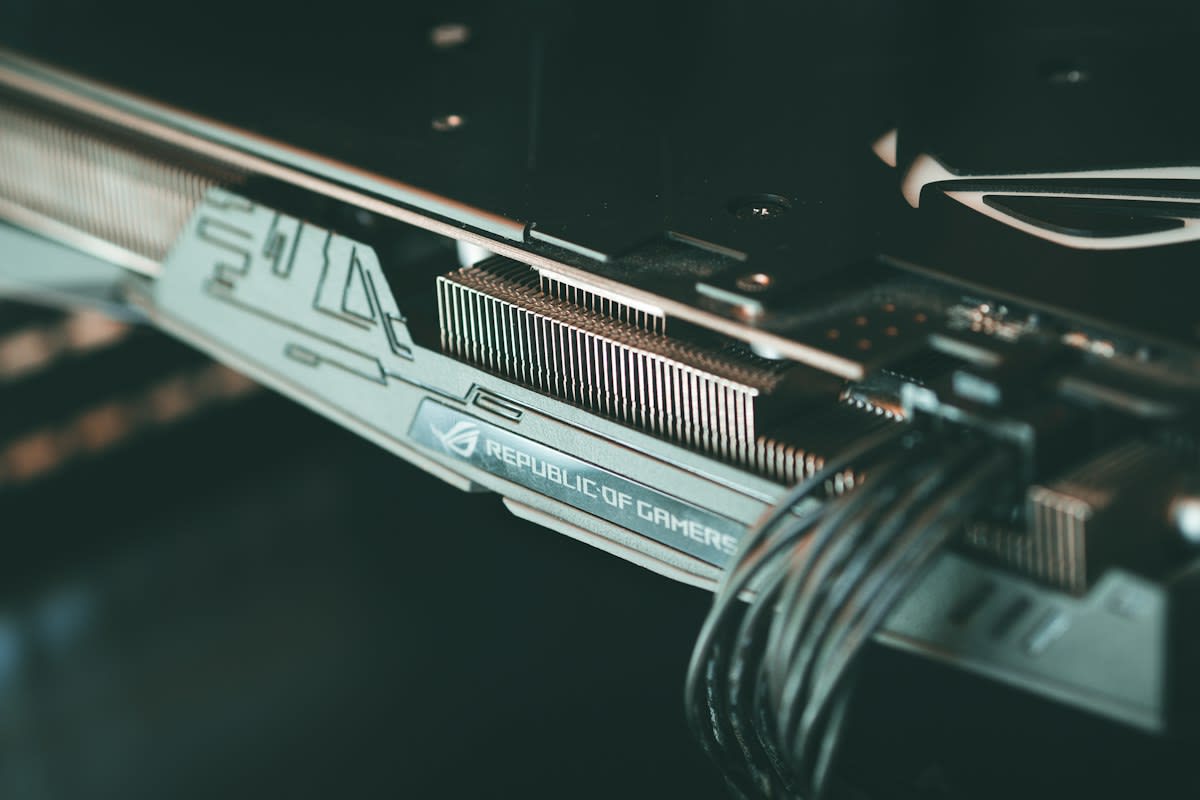
Look at the performance delta. We now have models under 10 billion parameters that rival the general capabilities of early 175B parameter giants. This is not a fluke. It is the result of aggressive pruning, knowledge distillation, and the use of synthetic data to fill the gaps. The corporate clusters are essentially bloated legacies. They carry the weight of a trillion tokens of Reddit arguments and low-quality SEO spam, which only adds noise and increases inference latency. The lean models are surgical.
| Model Class | Parameter Scale | Compute Cost | Primary Strength | Efficiency Ratio |
|---|---|---|---|---|
| Massive Cluster (GPT-4 class) | 1T+ (Estimated) | Extreme ($100M+) | Generalist Reasoning | Low |
| Mid-Tier (Llama-3 70B) | 70B | Moderate | Balanced Logic | Medium |
| Low-Resource (Phi-3 / Mistral 7B) | 3B - 7B | Low | Task-Specific Accuracy | High |
This efficiency is where the power shift happens. When you can run a SOTA model on a single consumer GPU, the moat evaporates. The gatekeepers lose their leverage. We are seeing this play out in real-time in hubs like Yaba, Lagos, where developers are bypassing expensive API calls in favor of quantized local models. They aren't building general-purpose chatbots; they are building lean, specialized tools for local finance and agriculture that don't require a fiber-optic umbilical cord to a server in Virginia.
"The focus is shifting from how many parameters you can fit in a cluster to how much intelligence you can squeeze into a single token. The era of brute-force scaling is over; we are now in the era of data alchemy."— Andrej Karpathy, Founding Member of OpenAI and Former Director of AI at Tesla
The secret weapon for these low-resource models is synthetic data. Instead of scraping the open web—which is increasingly polluted by AI-generated sludge—researchers are using frontier models to generate high-reasoning textbooks and clean code for smaller models to learn from. This is recursive improvement. The small models are being taught by the giants, then optimized to be faster and cheaper, eventually making the giants redundant for 90% of commercial use cases.
Ground-Level Friction: The Ugly Reality of Local AI
Don't mistake this for a clean transition. Running low-resource LLMs in the wild is a nightmare of friction. In the labs of Shenzhen, it's a constant battle against VRAM pressure. You spend four hours fighting a CUDA out-of-memory error only to find that a single outdated driver version is bricking your entire pipeline. There is no 'cloud console' to save you. You are dealing with the raw, jagged edge of the hardware. You're managing swap space and fighting thermal throttling in rooms that smell like ozone and stale coffee.
The friction is human, too. There is a massive ego clash between the 'Cluster Architects' and the 'Quantization Hackers.' The former view the latter as amateurs playing with toys. The latter view the former as wasteful bureaucrats who think throwing money at a problem is the same as solving it. The real work is happening in the fringes, where developers are stripping models down to 4-bit or even 2-bit precision just to see if they can make a model run on a smartphone without melting the battery.
The Edge Imperative
The final nail in the cluster's coffin is the demand for latency and privacy. No enterprise wants their proprietary data flowing through a third-party API. No surgeon wants a 2-second lag while an AI analyzes a live feed. The move toward the edge is inevitable. By shrinking the model, we move the intelligence to where the data lives. This eliminates the round-trip to the data center and removes the middleman. The value is shifting from the provider of the compute to the owner of the optimized weight.
We are witnessing the democratization of intelligence. When a developer in Chittagong can fine-tune a 7B model on a local dataset to outperform a trillion-parameter model in a specific dialect or technical domain, the power structure flips. The 'Massive Cluster' becomes a liability—a giant, expensive, energy-hungry dinosaur that is too slow to pivot and too costly to maintain.
Fact-Check & Accuracy Note
The claim that larger models possess 'emergent properties' that small models cannot replicate is increasingly viewed as a marketing narrative. Recent benchmarks show that with high-quality synthetic data, SLMs can replicate complex reasoning chains previously reserved for models 100x their size (Source: Microsoft Research, 2024).