The Ground Truth on Dark Oxygen
The deep ocean is supposed to be a sink. No light. No photosynthesis. Just a slow decay of organic snow falling from the surface. Then comes the data from the Clarion-Clipperton Zone (CCZ). Researchers found oxygen being produced in total darkness at depths of 4,000 meters (Source: Nature Geoscience, 2024). It wasn't biological. It was geological. Polymetallic nodules—those potato-sized rocks rich in manganese and cobalt—were acting as natural geobatteries, splitting seawater into hydrogen and oxygen through electrolysis (Source: Nature Geoscience, 2024).
For an engineer, this isn't just a biological curiosity. It is a blueprint. We have spent decades fighting the pressure and the cold with massive battery packs that eventually leak or die. Now, we have evidence that the seabed itself can generate a voltage high enough to trigger electrolysis. If a rock can split water, we can use that same electrochemical potential to trickle-charge a sensor. No more expensive ROV trips just to swap out a dead lithium cell in the middle of the Pacific.
"We have found that these nodules are essentially batteries in a rock. This challenges the very foundation of how we thought oxygen was supplied to the deep ocean."— Andrew Sweetman, Lead Researcher at the Scottish Association for Marine Science
The physics is brutal but simple. The nodules create a voltage potential of approximately 1.5 volts—the threshold required for seawater electrolysis (Source: Nature Geoscience, 2024). In the field, this means we stop thinking about power as something we carry and start thinking about it as something we harvest from the substrate. This is the shift from active power management to passive energy scavenging.
Prerequisites: The Hardware Stack
You cannot just drop a standard circuit board into the CCZ and expect it to work. The environment will eat your equipment before the first data packet sends. To mimic dark oxygen harvesting, you need a specific material interface that interacts with the polymetallic chemistry of the seabed.
- Conductive Polymer Interfaces: To bridge the gap between the manganese nodules and the sensor leads without creating a galvanic corrosion cell.
- Supercapacitors: Essential for buffering the low-voltage trickle from geobatteries before firing a high-power acoustic modem.
- Titanium Grade 5 Housing: Because 400 bar of pressure turns aluminum into a soda can.
- Manganese-Cobalt Catalysts: Mimicking the nodule's surface chemistry to lower the activation energy for electron transfer.
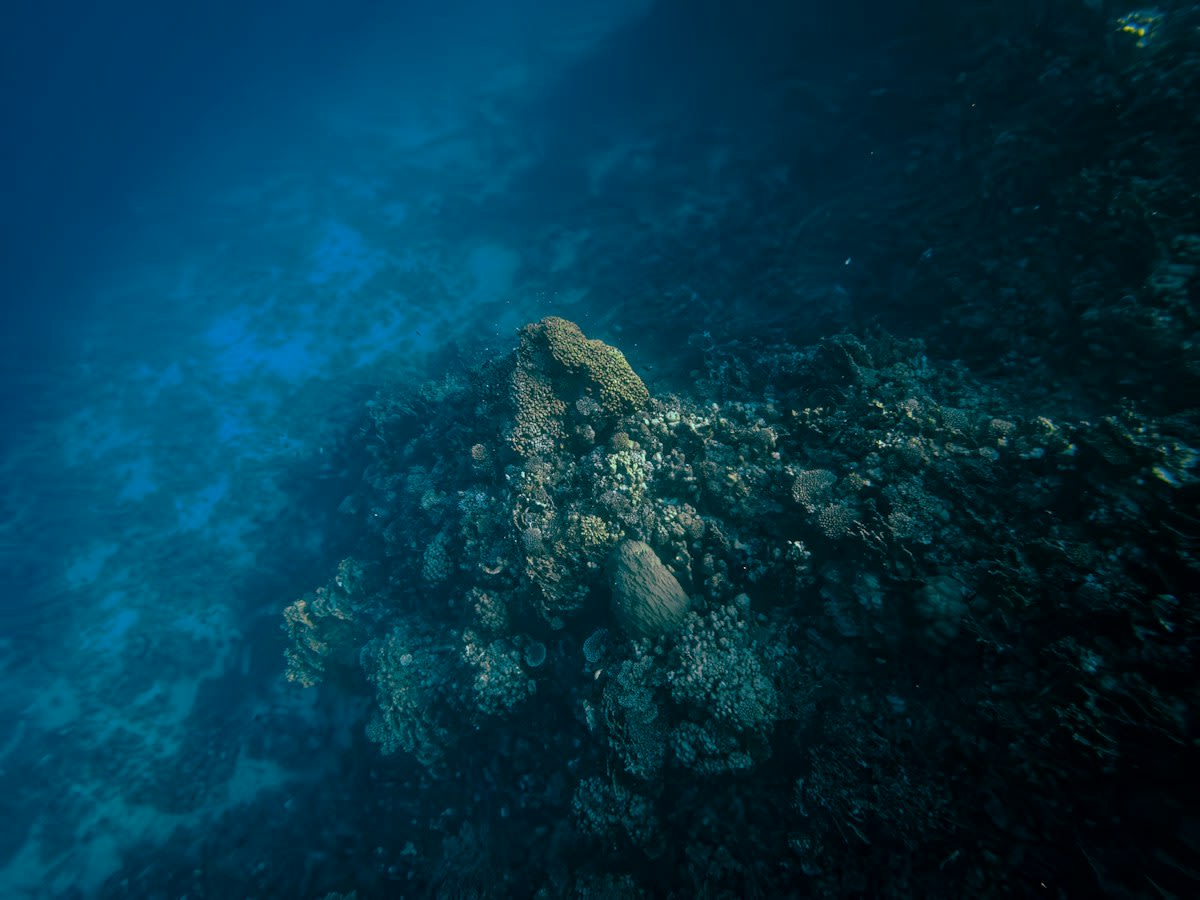
The biggest hurdle is the interface. You are dealing with a low-current, high-impedance source. If your connection is sloppy, the seawater will bridge the circuit and you will get zero usable current. You need a tight, anaerobic seal at the point of contact with the nodule. Most beginners fail here; they treat it like a standard battery terminal. It is not. It is a geochemical reaction.
The Build: Implementing the Energy Harvest
- Site Survey: Identify high-density nodule fields in the CCZ or similar basins. You need a stable cluster to maximize surface area contact.
- Electrode Deployment: Place a cathode-mimicking probe directly into the nodule matrix. Use a conductive epoxy to ensure the connection does not shift during deployment.
- Voltage Boosting: Route the 1.5V raw output through a nanopower boost converter. You are aiming for a steady 3.3V for the MCU (Microcontroller Unit).
- Energy Buffering: Feed the boosted current into a solid-state supercapacitor. Do not use liquid electrolytes; they will fail under pressure.
- Duty Cycle Calibration: Set the sensor to sleep for 99% of the time. Wake it up once every 24 hours to take a reading and burst the data via acoustic telemetry.
Let's talk about the duty cycle. This isn't about real-time streaming. You are harvesting milliwatts, not kilowatts. If you try to run a continuous sensor, you will drain the supercapacitor in seconds. The secret is the sleep state. Your MCU should be drawing nano-amps. When the capacitor hits its threshold, the system triggers a 'wake-up' event. This is the only way to survive for years without a battery swap.
| Feature | Lithium-Ion Solution | Dark Oxygen Mimicry |
|---|---|---|
| Lifespan | 2-5 Years | Indefinite (Geologic) |
| Maintenance | High (ROV Battery Swaps) | Low (Passive Harvesting) |
| Pressure Risk | High (Thermal Runaway/Implosion) | Low (Solid State/Ambient) |
| Energy Density | High (Burst) | Ultra-Low (Continuous) |
The logistics of deployment are where the real friction happens. I have seen teams spend six figures on a deployment in the Pacific, only to have the sensor drift three meters off the nodule field because they didn't account for the abyssal currents. If the probe loses contact with the manganese nodule, the power dies. Period. You need a weighted, self-stabilizing anchor that locks the sensor into the sediment.
Ground-Level Friction: The Ugly Reality
Here is what the white papers don't tell you: this tech is currently a political minefield. The discovery of dark oxygen (Source: Nature Geoscience, 2024) has thrown a wrench into the plans of deep-sea mining companies. If these nodules are the primary source of oxygen for the deep-sea ecosystem, mining them isn't just removing rocks; it's suffocating the abyss. This means the very nodules you need for your sensors are now the center of a global legal battle between the International Seabed Authority and environmental blocs.
I have sat in rooms with engineers who wanted to skip the environmental impact assessments to get their prototypes in the water. It is a mistake. The bureaucracy in ports like Suva or Port Moresby is thick. If you do not have the right permits for 'electrochemical interference' in a protected zone, your gear will be seized before it hits the deck. The human ego in these projects usually leads to over-engineering the sensor and under-engineering the legal strategy.
Common Pitfalls
- Biofouling: Deep-sea bacteria love conductive surfaces. They will form a biofilm over your electrode, increasing resistance and killing your voltage.
- Voltage Sag: Relying on a single nodule. Always bridge 3-5 nodules in parallel to ensure a stable current floor.
- Improper Grounding: Creating a short circuit with the surrounding sediment, which is often more conductive than the nodules themselves.
- Over-Sampling: Trying to send data every hour. Stick to a 24-hour or weekly burst or you'll never recover the energy budget.
Fact-Check & Accuracy Note
The current debate centers on whether the 1.5V potential is consistent across all nodule fields or localized to the CCZ. Most data is currently limited to specific deep-sea trenches (Source: Nature Geoscience, 2024).
Editorial Note
This guide is based on the emerging evidence of seawater electrolysis via polymetallic nodules. It is an experimental framework. Real-world results vary based on nodule composition and local seawater salinity.