
Prerequisites for Industrial AI Deployment
Deploying AI in a controlled office environment is trivial. Deploying it in a semiconductor fab in Tokyo or a rugged roadside unit in a variable climate is an entirely different engineering challenge. The bridge between digital intelligence and physical execution requires specialized hardware that can survive extreme thermal swings and AI models capable of addressing structures that traditional chemistry ignores.
- High-dynamic range (HDR) vision systems rated for temperature extremes (-30°C to 70°C).
- Domain-specific AI models for molecular target identification (e.g., Enchant or NeuralPLexer).
- Real-time liquid composition monitoring tools to prevent biological fouling in cooling systems.
- Governance frameworks aligned with regulated sector requirements for financial and energy clients.
Once these assets are secured, the focus must move from theoretical capability to operational execution.
Execution Protocol 1: Hardening the Vision Layer
Industrial AI is blind without reliable data. In outdoor and automotive vision systems, lighting variability and temperature fluctuations destroy standard sensors. The objective is to maintain a 120dB dynamic range to ensure the AI receives clean, usable imagery regardless of the environment.
- Select hardware with an Onsemi AR0821 image sensor to ensure 4K HDR capability.
- Deploy cameras with a multi-exposure HDR architecture to handle extreme lighting contrast.
- Verify thermal ratings; ensure the unit is rated for a range of -30°C to 70°C for rugged deployments.
- Integrate via USB 3.0 UVC compliance for low-power, high-bandwidth data transmission to the AI processing unit.

With the sensory layer stabilized, the operation moves into the production and design phase where AI optimizes the actual manufacturing process.
Execution Protocol 2: Optimizing Semiconductor Workflows
Tokyo Electron (TEL) has demonstrated that AI innovation starts at the equipment design level. The goal is not to simply add AI to a process, but to integrate it into the 3DI and semiconductor manufacturing workflow to reduce waste and increase precision.
- Implement a Digital Transformation (DX) solutions concept, such as Epsira, to unify AI-driven technologies.
- Apply AI across the entire workflow: from initial equipment design to process development.
- Establish a dedicated AI design hub (e.g., Silicon Valley) to bridge the gap between R&D and manufacturing optimization.
- Execute AI-driven production processes to identify bottlenecks in semiconductor equipment design.
While semiconductors focus on the silicon, pharmaceutical AI focuses on the molecule, and both face the same risk: the failure of the physical infrastructure supporting the compute.
Execution Protocol 3: Managing the Biological and Chemical Interface
In drug discovery, the priority is identifying novel targets that are otherwise difficult to address. Simultaneously, the data centers powering these discoveries face a paradoxical threat: bacteria.
- Leverage AI models like NeuralPLexer to identify differentiated small molecules for early-stage portfolios.
- Integrate miniature spectrometers into liquid cooling systems to analyze composition in real time.
- Monitor for bacterial growth within GPU cooling loops to prevent hardware failure in high-density AI clusters.
- Scale monitoring systems across regional IT infrastructures to ensure stability in emerging digitalization hubs, such as Uzbekistan.
Infrastructure Risk
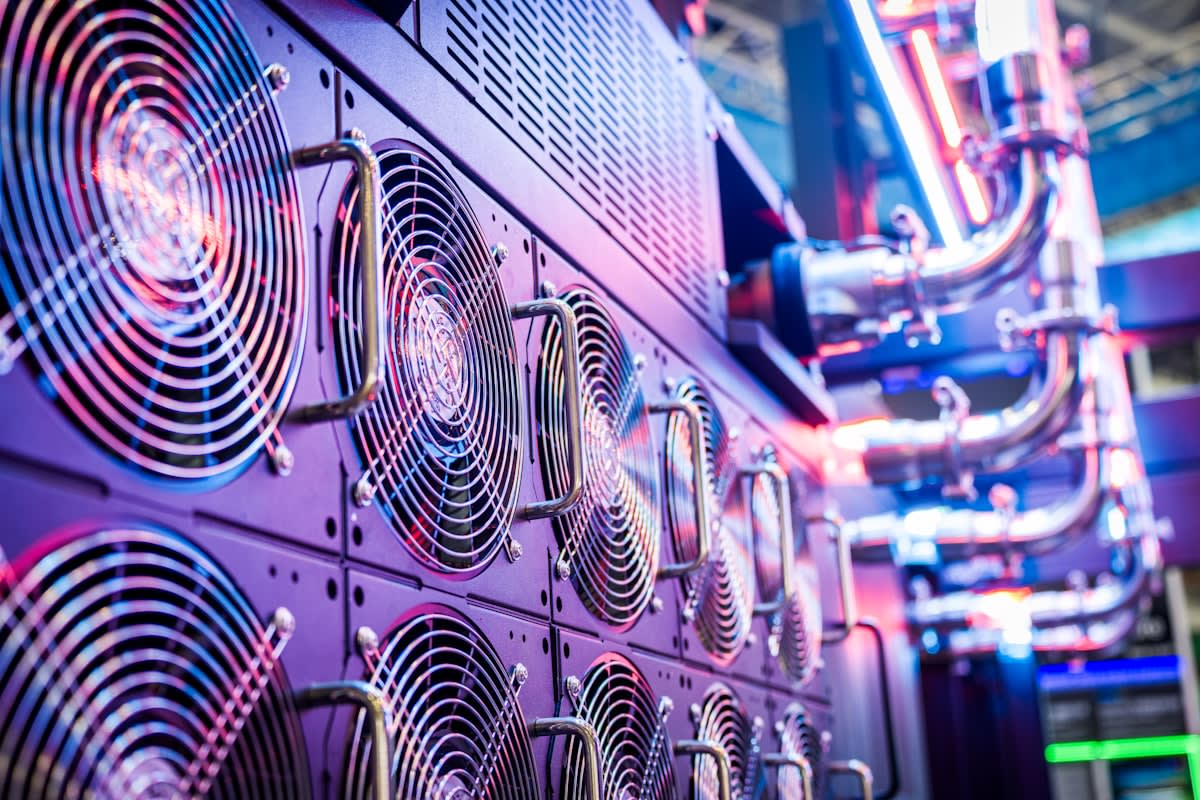
Omen AI raised $31 million to solve the specific problem of bacterial growth in liquid cooling systems, highlighting the critical need for real-time chemical analysis in AI data centers.
Technical execution is useless if it is shut down by a regulator. The final protocol involves wrapping these technical steps in a governance layer.
Execution Protocol 4: Governance in Regulated Ecosystems
Whether it is the Central Bank of Nigeria implementing responsible AI adoption for fintech or Capco managing AI for energy clients, governance is the final hurdle. You cannot deploy AI in regulated sectors without explicit compliance controls.
- Establish AI governance and risk excellence frameworks specifically for regulated sectors.
- Implement compliance controls that align with national central bank reforms (as seen in Nigeria's fintech ecosystem).
- Utilize beta partner programs with model providers (e.g., OpenAI) to test emerging products for business users before full-scale deployment.
- Conduct rigorous risk assessments on AI deployment within financial services and energy infrastructures.
| Sector | Primary AI Tool/Model | Critical Physical Constraint | Governance Focus |
|---|---|---|---|
| Pharmaceuticals | NeuralPLexer | Molecular Target Access | Patient Value/Safety |
| Semiconductors | Epsira DX | Equipment Design Precision | Manufacturing Optimization |
| Fintech | Responsible AI | Digital Banking Infrastructure | Central Bank Compliance |
| Data Centers | Miniature Spectrometers | Bacterial Growth in Cooling | Infrastructure Stability |
Common Pitfalls
- Ignoring the thermal limits of vision sensors, leading to failure in outdoor automotive systems.
- Overlooking biological contamination in liquid cooling, which can crash high-value GPU clusters.
- Deploying AI in financial sectors without the governance controls required by entities like the Central Bank of Nigeria.
- Treating AI as a software-only layer and failing to optimize the underlying equipment design (the TEL mistake).