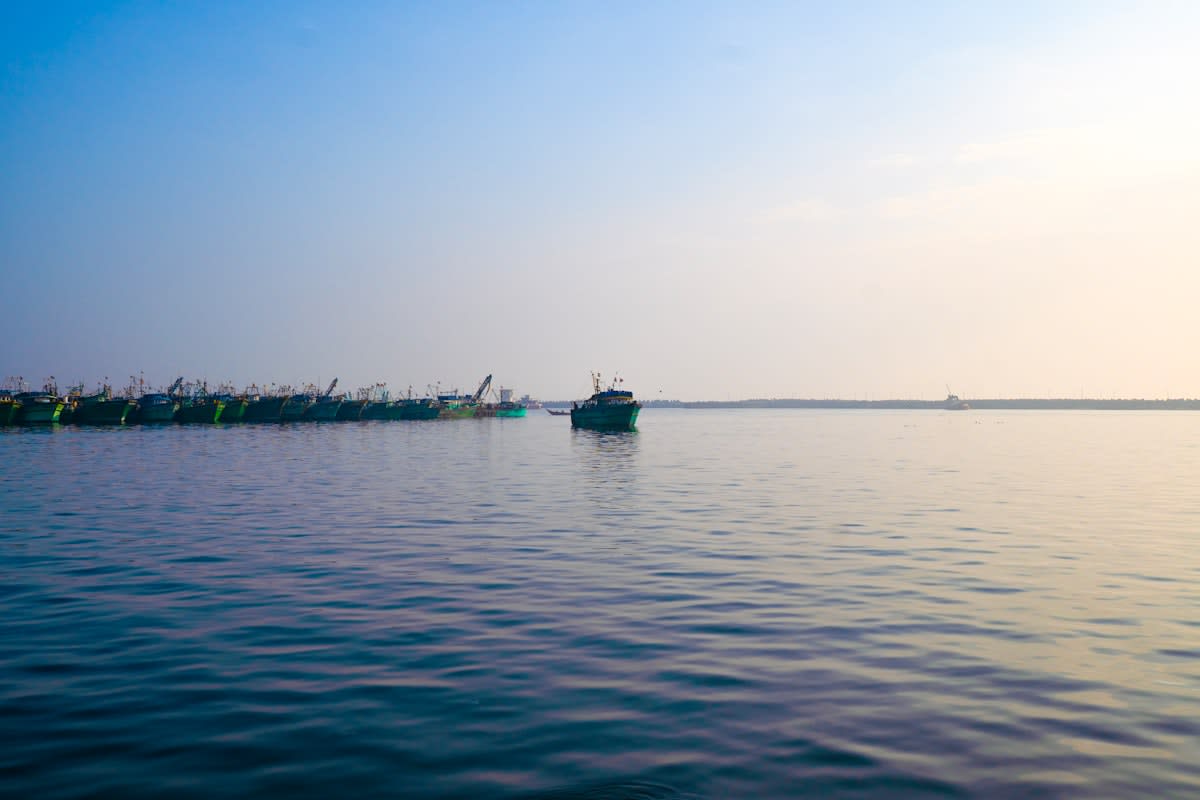
Chennai is a humid furnace. Salt air eats through standard server racks in months, turning expensive circuitry into oxidized scrap. Data packets sent to a remote cloud server in another region don't just lag; they vanish into the noise of a congested network. Contrast this with the sterile, climate-controlled fab labs of Hsinchu, where silicon is pampered. In a port, your hardware is fighting a war against moisture and heat while trying to process thousands of container movements per hour.
Latency kills throughput. When a crane operator waits three seconds for a cloud-based AI to confirm a container's position, the entire terminal slows to a crawl. This delay ripples backward, clogging the gates and idling trucks. Relying on a centralized brain for split-second decisions is a recipe for a logistical heart attack. You need intelligence at the edge, where the sensors actually touch the steel.
Hardware Prerequisites
Standard IT gear will fail here. You need ruggedized edge nodes capable of running Convolutional Neural Networks (CNNs) locally to automate classification without sending every frame of video to the cloud. Look at the BIOT-EMW framework used in medical waste; it proves that edge-level intelligence reduces bandwidth strain and slashes delay. Your nodes must be IP67-rated or housed in active-cooled, sealed enclosures that keep the salt out.
- Industrial Edge Gateways with integrated GPUs for real-time CNN processing
- IoT sensors for real-time telemetry (The eyes and ears of the pier)
- Renewable power arrays to prevent brownout-induced data corruption
- Local high-speed fiber backhaul to connect nodes before hitting the wider WAN
- Agentic AI software layers capable of autonomous inventory reallocation
Power stability is the hidden killer. A sudden voltage drop in a Chennai industrial zone can wipe a local cache and crash your AI models. Following the lead of APM Terminals Suez, which moved to 100% renewable electricity, you must decouple your edge nodes from the erratic local grid. Solar-plus-storage setups ensure that when the grid flickers, the AI doesn't blink.
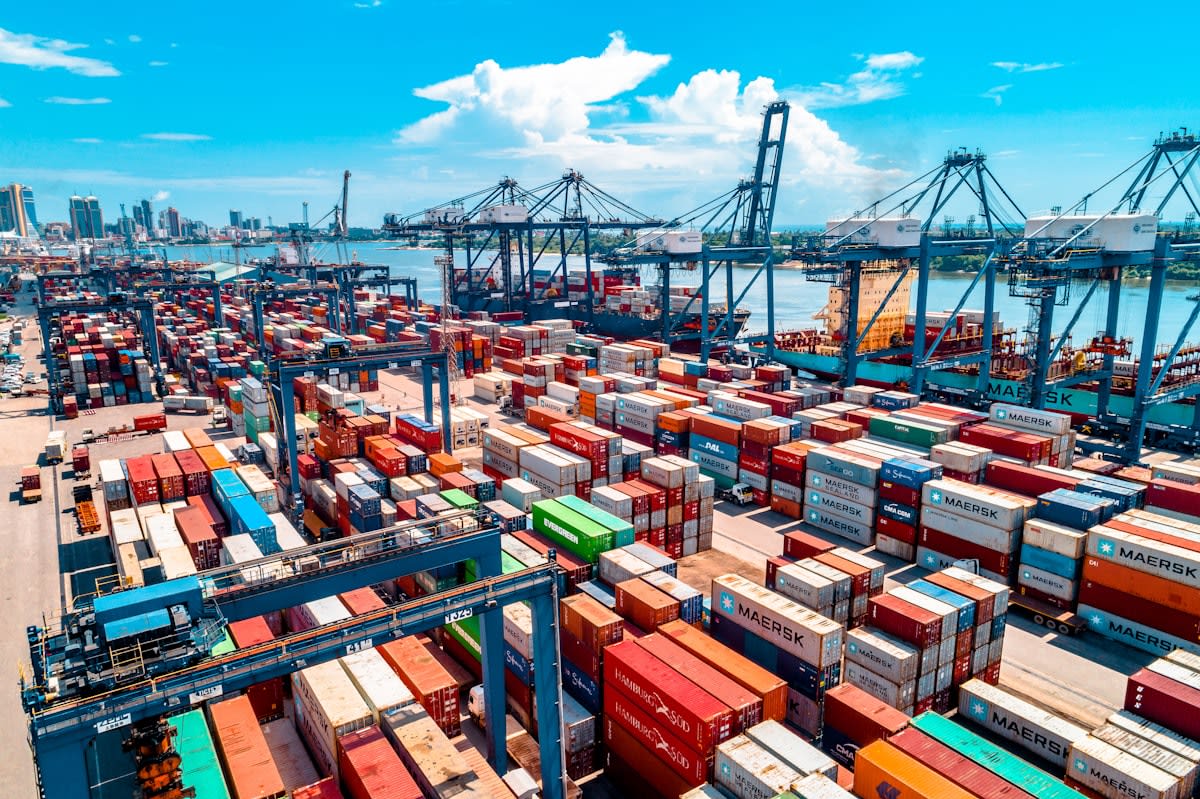
Connectivity is often a lie told by sales reps. They promise 5G coverage, but steel containers are effectively giant signal shields. Your architecture must assume the network is broken. Edge nodes must process data locally and only sync the results—not the raw telemetry—to the cloud ERP.
The Implementation Sequence
- Deploy IoT sensors across the inbound workflow to monitor ETAs against appointments. These sensors act as the primary data feed, feeding raw telemetry into the nearest edge node.
- Install the Edge AI nodes at the crane and gate levels. Deploy CNN-based computer vision modules here to automate container classification and damage detection, mirroring the latency-reduction techniques seen in BIOT-EMW frameworks.
- Layer in Agentic AI to handle the 'thinking' part of the logistics. This software must propose new ties and reallocate inventory autonomously when high-pressure inbounds are at risk, removing the human bottleneck from the loop.
- Connect the edge cluster to a cloud-native maritime ERP. Use the Fleetwork model where AI-assisted workflows synchronize fleet data, but only after the edge has scrubbed the noise and reduced the data volume.
- Stress-test the system by simulating a total WAN outage. If your cranes stop moving because they can't 'talk' to a server in another country, you have failed the implementation.
Agentic AI is the engine here. It is not a chatbot; it is a decision-maker. Inbound Logistics notes that this technology is critical for monitoring ETAs and reallocating inventory. When an edge node sees a ship arriving early, the Agentic AI should immediately shuffle the yard plan without waiting for a manager's approval. This is how you actually cut latency.
The Island Mode Rule
Do not mistake cloud-native for cloud-dependent. A system is only resilient if it can operate in 'island mode' for 24 hours without external connectivity.
Data volume is the enemy of speed. Sending 4K video feeds of every container to a central server is a waste of bandwidth. The edge node must run the CNN, identify the container ID and condition, and send a 1KB text string to the ERP. This is the difference between a system that scales and one that chokes on its own data.
Fleet management is the final piece. Posidonia 2026 data shows that 70% of industry conversations now center on AI and cloud migration. However, the winners aren't just moving to the cloud; they are using AI-powered assistants like FleetVision to streamline workflows. The edge nodes feed this assistant the clean, low-latency data it needs to be useful.
Common Pitfalls
Over-reliance on wireless backhaul is a common mistake. Steel is a wall. If you don't run physical fiber to your edge nodes, your 'real-time' AI will suffer from packet loss that makes the system jittery and unreliable.
Ignoring thermal throttling is the second mistake. An AI node running a heavy CNN model in 40-degree Celsius heat will throttle its CPU to avoid melting. When the clock speed drops, latency spikes. Without industrial-grade active cooling, your Edge AI is just a very expensive space heater.
Trusting the 'out of the box' cloud settings is a death sentence. Most cloud ERPs are designed for office environments, not ports. You must configure your synchronization intervals to be asynchronous, ensuring that a slow API response from the cloud doesn't freeze the local edge node's execution.
| Metric | Cloud-Centric Approach | Edge AI Approach |
|---|---|---|
| Decision Latency | 200ms - 2s | 5ms - 20ms |
| Bandwidth Usage | High (Raw Data) | Low (Processed Metadata) |
| Outage Resilience | Total Stop | Continued Local Operation |
| Hardware Lifespan | N/A (Remote) | Low (Requires Ruggedization) |
Volatility is now a permanent feature of the supply chain. The 37th State of Logistics report confirms that digital intelligence is the only way to maintain a competitive advantage. In Chennai, that intelligence cannot live in a data center in Virginia or Dublin. It must live on the pier, in the heat, and in the salt.