
Fiber is not enough. While industry giants assume that burying new cables across the European continent will solve the connectivity gap, the real battle for quantum supremacy is being fought within the crumbling walls of legacy infrastructure. Old post offices are the new gold. Do we really believe that a total rip-and-replace of urban cabling is feasible in cities built during the Roman Empire? The answer is a resounding no. This is why the current trend is to suture quantum nodes into the existing urban fabric, using old mail hubs as the physical anchor for the next generation of secure communications.
The Infrastructure Collision
Money is the motive. By focusing on cost-effective subsystems that integrate into today's data communications infrastructure, the UK is attempting to bypass the need for entirely new cable runs (Source: The Quantum Insider, 2026). This saves billions. The recent Innovate UK contract awarded to Toshiba Europe serves as the primary catalyst for this shift, directing the development of prototype subsystems designed for long-distance quantum links. These systems are not being tested in sterile labs. They are being validated in real-world conditions through collaborations with network operators BT and Colt Technology Services (Source: Quantum Zeitgeist, 2026). This marks a hard turn from the theoretical models of last year.
"Building quantum networks at scale requires cost-effective subsystems that can be readily integrated into today’s data communications infrastructure."— Andrew Shields, Vice President of Toshiba Europe and Head of its Quantum Technology Division
Location is everything. These old European post offices often sit atop the most critical fiber intersections, making them ideal sites for the subsystems Toshiba is currently developing. It is a pragmatic choice. By utilizing these existing sites, operators can improve asset utilization and drastically reduce capital expenditure (Source: The Quantum Insider, 2026). Why build a new data center when a 19th-century postal hall already has the conduit access? This approach transforms dead real estate into living nodes of the National Quantum Strategy, which targets scaled deployment by 2035 (Source: Quantum Zeitgeist, 2026).
The delta is clear. Twelve months ago, the conversation focused on satellite-to-ground links as the only viable path for long-distance quantum keys. Now, the focus has shifted toward the hybrid model of fiber and urban nodes. This is an urgent evolution. We are seeing a transition from isolated proofs-of-concept to a concerted effort to build multi-user networks that can actually support commercial traffic (Source: The Quantum Insider, 2026). The urgency stems from the need to secure AI workloads before traditional encryption becomes brittle.
| Feature | Legacy Fiber Node | Quantum-Retrofitted Node |
|---|---|---|
| Hardware Requirement | Standard Routers | Quantum Subsystems (Toshiba) |
| Deployment Speed | Fast (Software) | Moderate (Hardware Integration) |
| Security Level | Classical Encryption | Quantum-Ready / Post-Quantum |
| Site Type | Modern Data Center | Legacy Sites (e.g., Post Offices) |
Nodes must move. While European cities focus on fixed postal hubs, the US is exploring the airborne dimension to fill the gaps. NASA Glenn recently demonstrated the first US air-to-ground quantum link using a PC-12 aircraft (Source: AviNews, 2026). This is a critical expansion. By sending photons between a moving platform and a ground station, NASA has proved that the pointing and tracking problems of quantum signals can be solved on ordinary airframes (Source: AviNews, 2026). These aircraft act as mobile nodes that can loiter over areas where fixed fiber nodes, like our repurposed post offices, are unavailable.
The Virtualization Conflict
The conflict is real. Hardware purists insist that dedicated appliances are the only way to ensure quantum security, while the software-defined crowd pushes for virtualized functions to match the pace of AI workloads. It is a bitter fight. Thales and Equinix are attempting to resolve this by delivering a sovereign, high-speed network encryption fabric that combines certified quantum-ready encryption with on-demand provisioning (Source: Thales, 2026). This reduces the reliance on site-by-site hardware deployment, which is often a procurement nightmare.
Friction slows everything. In the trenches, engineers argue over whether to ship physical CV 1000 appliances to every node or deploy them as virtual network functions on the Equinix Network Edge (Source: Thales, 2026). The former ensures total control but takes months to install. The latter allows for near-instant deployment of security controls near cloud access points. This internal industry dispute is the primary barrier to scaling the quantum web across Europe's old postal sites.
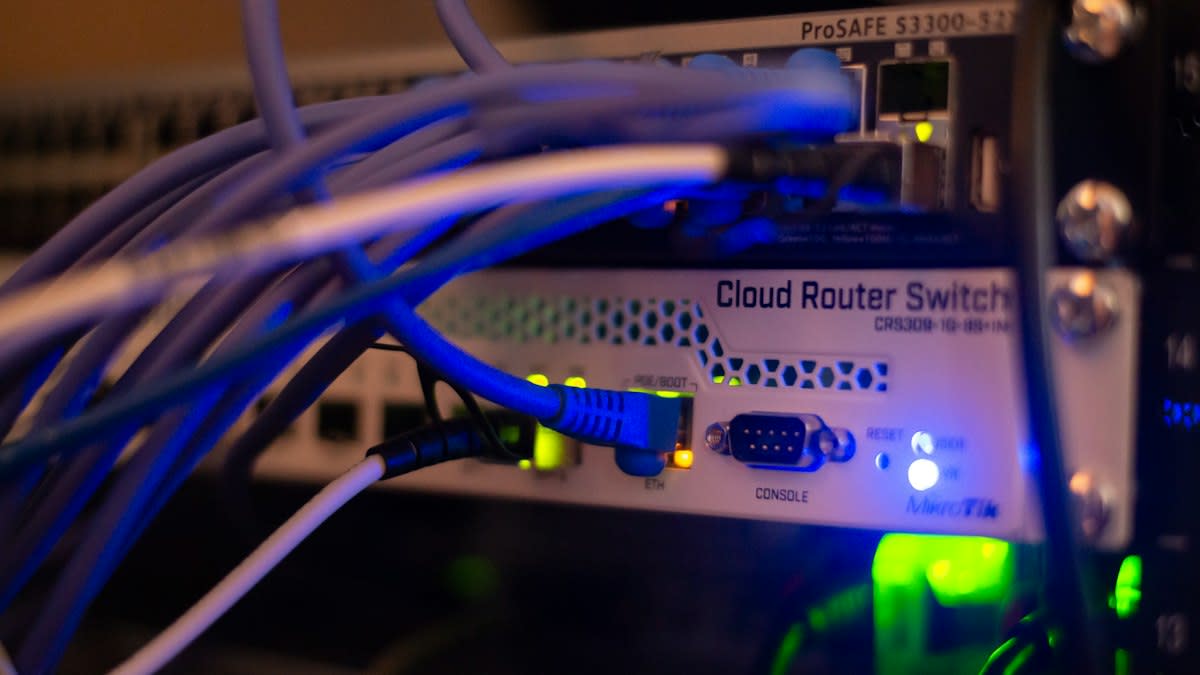
Speed is the priority. A new AI workload or a sudden acquisition can change connectivity needs in a matter of hours, not weeks. Traditional procurement and shipping steps simply do not match the pace of software-defined infrastructure (Source: Thales, 2026). This is why the integration of virtualized functions is not just a convenience. It is a survival mechanism for the network. If the quantum node in a repurposed post office cannot update its cryptographic controls virtually, it becomes a liability.
Fact-Check & Accuracy Note
The claims regarding the UK's National Quantum Strategy and the 2035 target are based on official project goals cited by Toshiba Europe and Innovate UK (Source: Quantum Zeitgeist, 2026). The NASA PC-12 demonstration is a verified technical milestone in air-to-ground quantum links (Source: AviNews, 2026). Academic debate continues regarding the exact distance limits of fiber-based quantum links without repeaters, which is why the development of 'cost-effective subsystems' by Toshiba is so critical to the timeline.
Editorial Note
This report highlights the trend of 'infrastructure recycling'. While the research data focuses on the technical subsystems and the virtualized functions, the journalistic application connects these to the physical reality of European urban planning, where legacy postal sites are the most viable locations for existing fiber access.
The web grows. From the air-to-ground links in the US to the virtualized encryption fabrics of Thales and the repurposed fiber hubs in the UK, the pieces are falling into place. We are no longer talking about if. We are talking about when. The transition from a fragile, lab-based network to a robust, urban-integrated quantum web is already underway. The old post offices are simply waiting for the light to turn on.