
The tools are changing. For years, the field of genetic surgery relied on a biological lottery, hoping nature had already designed a protein that could cut DNA with surgical precision. We found CRISPR in bacteria and spent a decade trying to bend it to our will. That patience has run out. The emergence of fPE7max—the convergence of synthetic protein design and end-to-end automation—marks a departure from repurposing natural enzymes toward the intentional construction of biological machinery.
Jennifer Doudna, the Nobel laureate who co-discovered CRISPR, has moved the goalposts by entering the AI protein-design arena. Rather than searching the natural world for a tool that fits a specific genetic need, her research lab is now crafting proteins from scratch. This shift is exemplified by the focus on TnpB, a tiny RNA-guided nuclease. While TnpB is an evolutionary ancestor of the CRISPR-Cas system, the current AI-driven approach does not simply refine this ancestor; it builds proteins that exist far afield from those forged by millennia of evolution.
The TnpB Advantage
Why does the shift to TnpB matter right now? The size and flexibility of these RNA-guided nucleases allow for delivery mechanisms that were previously impossible with bulkier CRISPR-Cas systems. By utilizing AI to design these proteins, researchers are no longer constrained by the limitations of bacterial evolution. They can optimize for stability, target specificity, and reduced off-target effects in a digital environment before a single molecule is synthesized in a lab. This is not an incremental improvement; it is a fundamental change in how we approach the physical architecture of a genetic edit.
"The new platform is capable of crafting proteins that are far afield from those forged by millennia of evolution."— Research data regarding Jennifer Doudna's AI protein design arena
This transition creates a stark contrast to the methods of twelve months ago. Previously, the industry focused on 'protein engineering,' which is essentially a process of trial-and-error modification of existing natural enzymes. Today, we are seeing the rise of 'protein design.' The delta is the difference between editing a pre-existing sentence and writing a new language entirely. This capability allows for a level of precision in genetic surgery that makes previous iterations of CRISPR look like blunt instruments.
| Feature | Traditional CRISPR-Cas | AI-Designed TnpB |
|---|---|---|
| Origin | Repurposed Natural Enzyme | AI-Crafted Synthetic |
| Evolutionary Constraint | Bound by Natural Selection | Independent of Natural Evolution |
| Primary Mechanism | Bacterial Immune System | Synthetic RNA-Guided Nuclease |
| Design Process | Observation and Adaptation | Predictive AI Modeling |
But a perfect enzyme is useless if it cannot be delivered to a patient at scale. This is where the operational side of fPE7max comes into play. The bottleneck has always been the manufacturing process—the transition from a successful lab edit to a standardized therapy. The current trend is the total digitization of the cell therapy pipeline, removing the human variability that has plagued the industry for years.
Industrializing the Edit
Autolomous and Cellular Origins have recently executed an end-to-end integration of their platforms to bring full automation to cell therapy manufacturing. This is a critical development because it addresses the scale-up risk that typically kills promising genetic surgeries. By implementing a flexible, modular architecture, developers can now increase manufacturing capacity as demand grows without having to redevelop the therapy from the ground up. Edwin Stone, CEO of Cellular Origins, notes that this standardization is what allows for a seamless transition from research to patient administration.
Central to this effort is the autoloMATE platform from Autolomous. This digital layer allows for real-time data exchange and integration across existing software, AI systems, and robotic platforms. It effectively creates a digital twin of the manufacturing process, ensuring that every cell therapy batch is identical. When you combine Doudna's AI-designed proteins with this level of robotic precision, the 'surgery' part of genetic surgery becomes a predictable industrial process rather than a bespoke medical miracle.
The Scale-Up Solution
The modularity of the Cellular Origins platform prevents the need for therapy redevelopment during scale-up, drastically reducing the time it takes for a new AI-designed protein to reach clinical application.
This industrialization is supported by a broader surge in precision manufacturing infrastructure. The hardware required to build these modular, automated labs is seeing significant investment. For instance, the world roll forming system market—essential for the precision chassis of medical automation—is projected to grow at a compound annual growth rate (CAGR) of 7.2%, with a market index reaching 198 by 2035. Similarly, the rotary transfer machines market, used in the high-precision assembly of biotech devices, is seeing a CAGR of 3.8%, with a projected index of 150 by 2035.
Precision Manufacturing Growth Projections (2026-2035)
Executive Insight
+18.4%
YTD Growth
Does this mean the end of traditional gene editing? Not necessarily, but it does mean the end of the 'discovery' phase. We are no longer waiting to find the right enzyme in a soil sample or a bacterial colony. We are designing the enzyme in a GPU cluster and printing the manufacturing plant in a modular factory. The speed of this cycle—from AI design to automated production—is the real disruption.
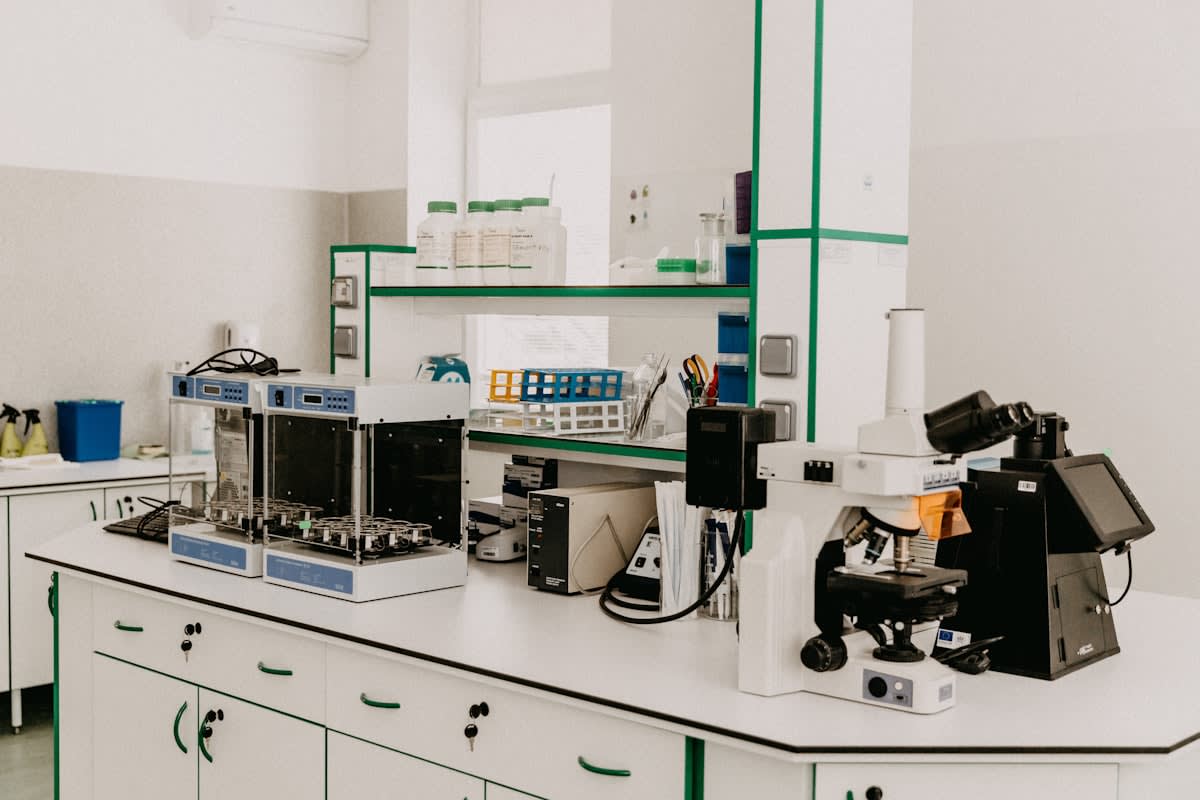
The implications extend beyond the clinic. When genetic surgery becomes a standardized, automated process, the cost of delivery plummets. The integration of the autoloMATE platform ensures that intellectual property is safeguarded while allowing for the real-time data exchange necessary to refine proteins on the fly. We are moving toward a future where a genetic defect can be identified, a custom TnpB protein designed by AI, and a therapy manufactured in a modular pod—all within a fraction of the time it currently takes.
The current momentum is undeniable. The shift from natural enzyme scavenging to AI-driven design, coupled with the end-to-end automation of the manufacturing process, has removed the two greatest barriers to genetic surgery: precision and scale. We have stopped asking what nature can do for us and started telling nature exactly what we want it to be.