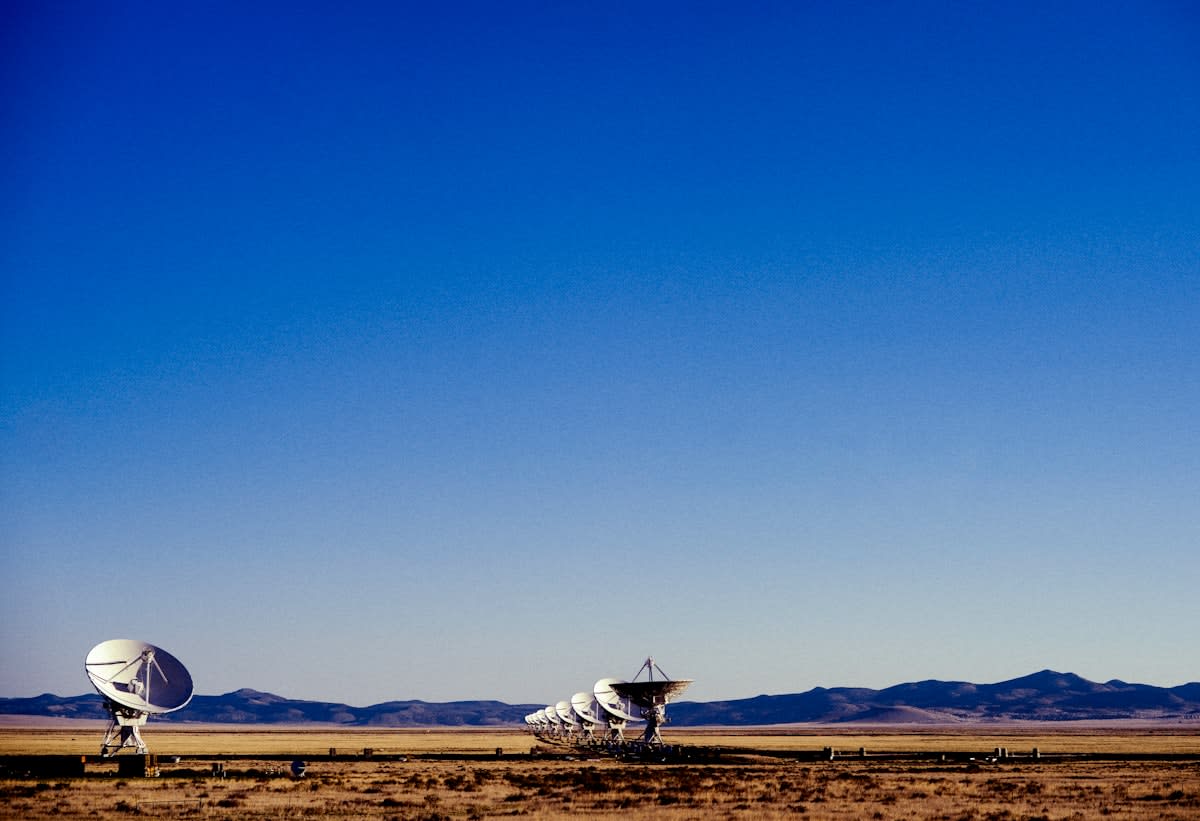
The financial velocity of the space sector has reached a fever pitch that the physical world is struggling to mirror. In the first half of 2026 alone, total investment across infrastructure, distribution, and applications surged to $67.7 billion, a figure that has already eclipsed the entirety of 2025. This is not a gradual climb but a vertical spike in capital allocation. When $8.1 billion flows into satellite companies in six months, the pressure shifts from the engineers designing the satellites to the logistics teams trying to find a place to plug them in. We are seeing a widening gap between the speed of capital and the speed of concrete.
H1 2026 Investment Surge by Category
Executive Insight
+18.4%
YTD Growth
The Optical Bottleneck
Radio frequency (RF) has hit a ceiling. To scale the orbital data economy, the industry is forced toward optical communications—lasers that can move data at volumes RF simply cannot touch. QOSMIC, a deep-tech firm backed by Accel and Prosus, recently raised $3.33 million specifically to build optical ground stations. They have field-validated their full optical stack at TRL6, signaling that the technology is ready for prime time. However, the transition to optical is not a simple software update; it requires a complete overhaul of the ground layer. If every orbital data center becomes a node, the ground stations become the only available highways for that data to reach the end-user.
"As computing moves into orbit, every satellite and every orbital data center becomes a node that needs a high-capacity link to Earth, and optical is the only technology that scales to what is coming."— Shreyaans Jain, Co-founder and CEO of QOSMIC
The friction of this transition is most evident in Europe. SES and Airbus have secured a site at the NL Space Campus in Noordwijk for the Eagle-1 optical ground station, strategically positioned near ESA’s ESTEC facility. On paper, the plan was aggressive, with flights expected as early as Q4 2024. In reality, the project has faced a series of setbacks. Alan Kurešević, managing director of SES Techcom, has been transparent about the fact that payload technology continues to pose challenges. These delays illustrate a critical point: you can launch a satellite in a few months, but building a secure, high-capacity optical ground station is a slog of municipal leases and hardware failures.
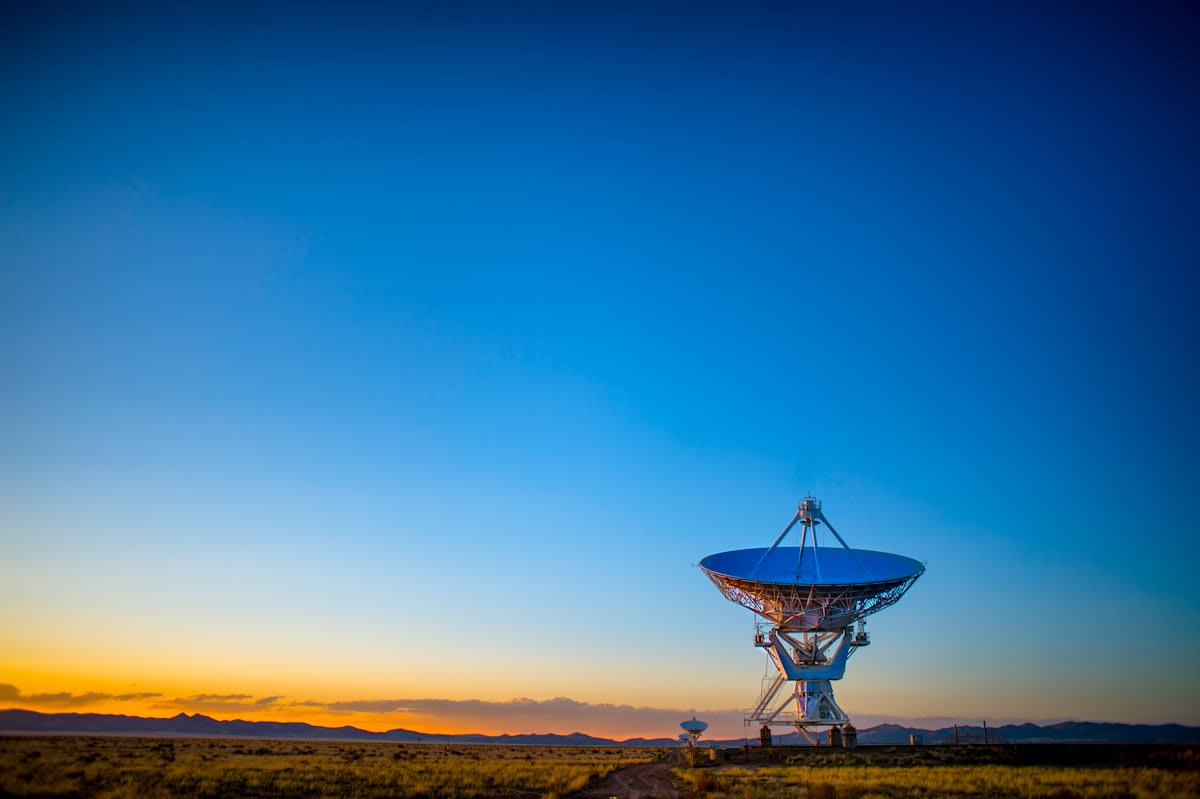
Does this mean the orbital economy is stalling? Not necessarily, but it means the geography of power is shifting. The focus is moving toward regions that can provide the necessary terrestrial anchors. In West Africa, the Senegalese telco Sonatel is positioning itself as a strategic hub. By deploying 16 Eutelsat OneWeb antennas at the Gandoul teleport, Sonatel is integrating its terrestrial networks with LEO satellite constellations. This move isn't just about local internet; it is about creating a regional anchor point for international digital exchanges, turning Senegal into a gateway for satellite connectivity across the subregion.
Solving the One Bar Problem
The Connectivity Gap
The 'one bar problem' occurs when a device shows a connection, but the experience has already degraded. For logistics and emergency services, this gap is the difference between operational resilience and total failure.
The ultimate goal for the industry is the total convergence of terrestrial and non-terrestrial networks. Parth Trivedi, CEO of Skylo, argues that direct-to-device satellite services are the only way to solve the one bar problem. As the world looks toward 6G, the distinction between a cell tower and a satellite must disappear. The user should not 'use satellite' as a separate experience; the network should simply exist. This requires a level of integration that makes current logistics look primitive. We are talking about a global mesh where the handoff between a ground tower and a LEO satellite is seamless and invisible.
| Investment Category | H1 2026 Value | Key Driver |
|---|---|---|
| Total Space Investment | $67.7 Billion | Record-breaking annual pace |
| Infrastructure | $20.7 Billion | Launch, design, and operation |
| Satellite Companies | $8.1 Billion | Early-stage growth |
| Prometheus AI | $12 Billion | Automated physical engineering |
The scale of this investment is further highlighted by the $12 billion Series B round for Jeff Bezos’ Prometheus. This venture is not just building satellites; it is developing AI models to automate physical engineering. This suggests that the industry knows the current manual approach to infrastructure is too slow. If we cannot automate the design and deployment of the ground layer, the $67.7 billion in capital will simply be idling in the atmosphere, waiting for a signal that never arrives because the ground station is still stuck in the permitting phase.
The Defense and Security Layer
While the commercial sector fights over bandwidth, the military is focused on survival. The U.S. Space Force recently awarded Slingshot Aerospace a $69.2 million contract to develop AI-enabled training environments. The goal is to allow operators to rehearse satellite defense missions and respond to simulated adversary actions in orbit. This 4.5-year contract under the Operational Test and Training Infrastructure (OTTI) program acknowledges a grim reality: the more we rely on these orbital nodes for global connectivity, the more attractive they become as targets. The logistics of connectivity now include the logistics of defense.
When we compare the data from H1 2026 to the previous year, the delta is staggering. We have moved from a period of speculative investment to a period of aggressive infrastructure build-out. However, the delays in the Netherlands and the reliance on a few strategic hubs like Senegal show that the 'ground layer' is the true bottleneck. The orbital data economy is only as strong as its weakest ground station. If the logistics of terrestrial deployment—permits, payload technology, and site security—cannot keep pace with the $67.7 billion investment wave, the dream of a seamless 6G global mesh will remain a theoretical exercise.