Sonam Wangchuk hunger strike LIVE: Delhi HC to hear plea on Wangchuk's health; Kejriwal to visit Jantar Mantar
Source Entity
Latest News: Today's Latest News Headlines from India & World | Hindustan Times | Hindustan Times
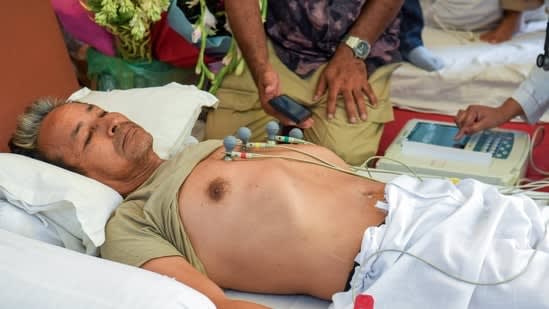
Sonam Wangchuk's 18-day hunger strike at Jantar Mantar has raised significant health concerns, with reports indicating a weight loss of 8.9 kg. The Delhi High Court is set to hear a plea regarding his medical condition, while political figures like Arvind Kejriwal plan to visit the protest site.
Critical Health Concerns Amidst Sonam Wangchuk's Fast
The ongoing hunger strike by Sonam Wangchuk at Jantar Mantar has reached a critical juncture. As of the 18th day of his fast, updates from the CJP indicate a worrying decline in his physical condition, specifically a weight loss of 8.9 kg and a blood pressure reading of 105/76. This physiological deterioration transforms the protest from a purely political demonstration into a medical emergency, prompting urgent legal intervention. The Delhi High Court's decision to hear a plea regarding Wangchuk's health highlights the judicial system's role in balancing the fundamental right to protest with the state's obligation to prevent the loss of life.
The Legal and Political Intersection
The involvement of the Delhi High Court suggests that the health of the activist has become a matter of public interest and legal scrutiny. When a high-profile figure engages in a hunger strike, the court often steps in to ensure that medical protocols are followed and that the state is not negligent in providing necessary care. Simultaneously, the political landscape is shifting with Arvind Kejriwal's planned visit to Jantar Mantar. This move signals an attempt by the Aam Aadmi Party (AAP) to align itself with the Ladakhi cause, potentially amplifying the visibility of the protest and putting further pressure on the central government to engage in dialogue.
Background: The Struggle for the Sixth Schedule
To understand the depth of this hunger strike, it is essential to recognize the core demand: the inclusion of Ladakh in the Sixth Schedule of the Indian Constitution. Following the reorganization of Jammu and Kashmir and the revocation of Article 370 in 2019, Ladakh became a Union Territory without a legislature. This left the region's residents feeling politically marginalized and concerned about the ecological fragility of the Himalayas. The Sixth Schedule would provide Ladakh with constitutional safeguards, allowing for the creation of autonomous district councils to protect tribal lands, culture, and the environment from unchecked industrialization.
Environmental and Geopolitical Stakes
Sonam Wangchuk's protest is not merely about administrative autonomy but is deeply rooted in environmental preservation. Ladakh's high-altitude desert ecosystem is extremely vulnerable to climate change and unplanned urban expansion. By demanding local governance, Wangchuk and his supporters are arguing that the people who live on the land are the best stewards of its resources. Furthermore, given Ladakh's strategic location bordering China and Pakistan, the internal stability and satisfaction of the local population are of paramount importance for national security, making the government's response to this protest a matter of strategic significance.
Future Projections and Potential Outcomes
Looking forward, the trajectory of this event will likely depend on two factors: the medical reports presented to the Delhi High Court and the willingness of the central government to initiate a formal negotiation process. If Wangchuk's health continues to decline, there may be immense public pressure on the government to make a concession or offer a concrete roadmap toward autonomy to end the fast. Conversely, a deadlock could lead to increased unrest within Ladakh, potentially escalating the movement from a peaceful hunger strike to wider civil disobedience across the region.
Conclusion
The situation at Jantar Mantar represents a poignant collision of democratic resilience and physical fragility. Sonam Wangchuk's willingness to risk his health underscores the intensity of the grievances felt by the people of Ladakh. As the Delhi High Court weighs in on the medical necessity of intervention and political leaders mobilize, the event serves as a stark reminder of the ongoing tension between centralized governance and the aspirations of peripheral regions for self-determination and ecological protection.
Verification Required?