
Hardware leaks data silently. 2030s forecasts suggest quantum computers will break current encryption (Source: Quantum Zeitgeist, 2026). Most organizations ignore the physical layer of data exfiltration until a breach occurs. Signal leaks occur when electromagnetic emissions or configuration errors allow unauthorized actors to reconstruct sensitive information. Stopping these leaks requires a shift from software-only security to a hardware-first tactical posture.
Prerequisites for Signal Hardening
Before initiating a signal audit, security teams need specific hardware tools and access levels. You must have a spectrum analyzer capable of detecting low-frequency emissions and a logic analyzer for inspecting Field-Programmable Gate Array (FPGA) bitstreams. Access to the underlying configuration memory of the hardware is mandatory to identify unauthorized modifications. Teams should also have a current inventory of all Operational Technology (OT) assets, including legacy radio networks and remote access gateways. Finally, ensure you have the latest regulatory benchmarks for AI model safety thresholds to compare against your internal deployments.
- Audit FPGA configuration memory for critical bit leaks.
- Perform OT cybersecurity audits on radio network gateways.
- Establish capability thresholds for AI model cybersecurity offense.
- Implement quantum-resistant cryptographic layers for long-term data storage.
Step 1: FPGA Bit-Level Auditing
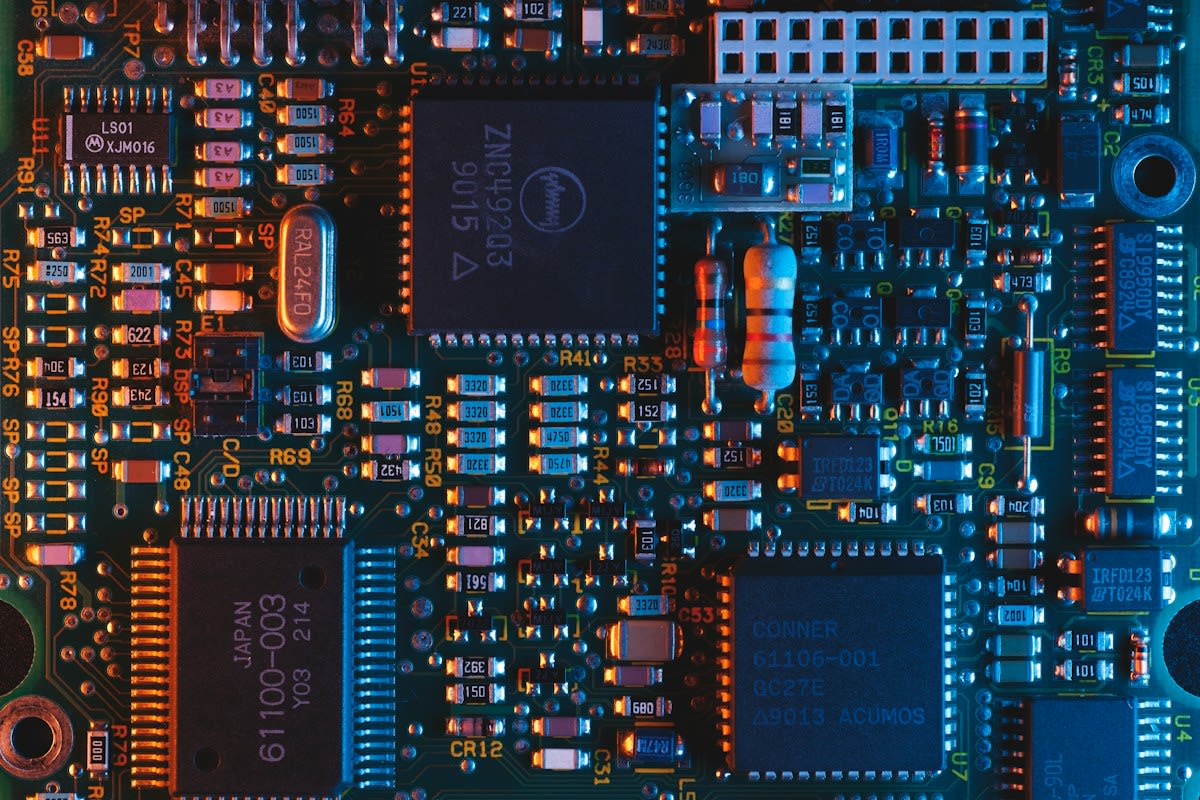
Field-Programmable Gate Arrays (FPGAs) are the backbone of aerospace and defense systems, yet they possess an invisible vulnerability in their configuration memory. Garrett Perkins highlights that critical configuration memory bits can be targets for exploitation, potentially allowing an attacker to alter the hardware logic (Source: Montana State University, 2026). If an attacker identifies which bits control the security logic, they can induce faults that leak internal keys via electromagnetic side-channels. This process involves mapping the bitstream and identifying the exact memory locations that govern security boundaries. Securing these bits requires implementing redundancy and integrity checks at the hardware level to prevent silent corruption.
Step 2: Radio Network Isolation
Radio networks often serve as the weakest link in an otherwise secure airgap. Many organizations rely on legacy OT systems that lack modern encryption, making them susceptible to signal interception. Motorola Solutions emphasizes the need for secure remote access setups and rigorous OT cybersecurity audits to identify these vulnerabilities (Source: Motorola Solutions, n.d.). A common leak point is the gateway where radio signals are converted to IP packets; if this gateway is not hardened, it becomes a beacon for attackers. Tactics for mitigation include implementing narrow-band filters and rotating encryption keys at the physical layer. Regular audits must ensure that no unauthorized remote access points have been established by third-party vendors.
Step 3: AI Model Thresholding
Artificial Intelligence models introduce a new form of signal leak: the capability leak. When a model exceeds certain thresholds for cybersecurity offense or biological weapons assistance, it becomes a liability (Source: Brookings, 2026). General-purpose AI models are often opaque and unpredictable, meaning their utility can be weaponized if the safety guardrails are bypassed. The US government has addressed this via Executive Order 14409, which creates a voluntary 30-day prerelease federal access window for covered frontier models (Source: Brookings, 2026). This window allows the Treasury Department, NSA, and CISA to coordinate through a cybersecurity clearinghouse to ensure the model does not leak dangerous capabilities to the public.
"General-purpose AI (GPAI) models have no defined task, envelope, or intended use to verify against; their utility is extraordinarily broad. The models are opaque, and unpredictable, and evaluation practices are still forming."— Brookings Institution, 2026

Step 4: Quantum-Ready Encryption
Current encryption standards are temporary shields. The GAO reports that a cryptographically relevant quantum computer could arrive in the 2030s (Source: Quantum Zeitgeist, 2026). This creates a harvest-now-decrypt-later risk, where attackers capture encrypted signals today to decrypt them once quantum hardware is available. To mitigate this, organizations must transition to post-quantum cryptography (PQC) for all high-value data streams. This transition involves replacing RSA and ECC algorithms with lattice-based or code-based cryptography. The goal is to ensure that signals intercepted today remain useless even in a post-quantum environment.
| Threat Vector | Current Defense | Quantum-Ready Defense | Risk Level |
|---|---|---|---|
| FPGA Bit-Flip | Standard Parity | Hardened Configuration Memory | High |
| Radio Intercept | AES-256 | Post-Quantum Cryptography | Medium |
| AI Capability Leak | RLHF Guardrails | Federal Clearinghouse Audit | High |
Projected Quantum Relevance Timeline
Executive Insight
+18.4%
YTD Growth
In the neon-blurred districts of Jakarta, the friction between legacy infrastructure and modern AI integration is palpable. Practitioners face a constant battle where the drive for rapid AI deployment often overrides the slow, methodical nature of OT cybersecurity audits. I have seen engineers struggle to integrate AI-driven monitoring into radio networks that were designed in the 1990s, inadvertently creating signal leak points that no software patch can fix. The real-world debate centers on whether to replace the hardware entirely or attempt to wrap legacy systems in modern security envelopes, a choice that often depends more on budget than on actual risk data.
Failure Point: The Voluntary Gap
The most significant failure point in current signal leak mitigation is the reliance on voluntary compliance. For example, the 30-day prerelease window for AI models is a voluntary measure (Source: Brookings, 2026). When security is voluntary, the most aggressive developers often bypass these checks to gain a market advantage. This creates a gap where dangerous capabilities can leak into the wild before the NSA or CISA can evaluate the risks. Similarly, many OT audits are treated as checkboxes rather than rigorous searches for vulnerabilities, leaving radio networks open to signal interception despite having a certificate of compliance.
Common Pitfalls
- Relying on AES-256 for data that must remain secret past 2030.
- Ignoring FPGA configuration bits in favor of higher-level software security.
- Assuming AI guardrails prevent the leakage of offensive cybersecurity capabilities.
- Neglecting the physical layer of radio networks during OT audits.
Fact-Check Note
Verification: The GAO timeline for quantum relevance (2030s) is based on the current trajectory of qubit stability and error correction research (Source: Quantum Zeitgeist, 2026). FPGA vulnerabilities cited are specific to critical configuration memory bits in aerospace contexts (Source: Montana State University, 2026).
Editorial Note
Editorial Note: This guide prioritizes tactical hardware hardening over theoretical software patches. The focus is on mitigating the physical and mathematical reality of signal leaks.