
The silicon is ready, but the rooms are too hot. For years, data center design relied on a simple, predictable physics model: blow cold air over a heat sink and exhaust the warmth. That model collapsed the moment High Bandwidth Memory (HBM) became the primary bottleneck for Large Language Models. We are seeing a collision between the extreme density of HBM3e and the physical limitations of air-cooled facilities. When you stack memory dies vertically and place them mere millimeters from a GPU, you create a thermal hotspot that no amount of high-RPM fans can mitigate. The result is a frantic, expensive overhaul of the very pipes and pumps that keep the internet alive.
The Thermal Wall of HBM3e
Twelve months ago, the industry was comfortably managing HBM3 in NVIDIA H100 clusters, where air cooling remained a viable, if strained, option for many. Today, the transition to HBM3e has pushed the thermal envelope into a danger zone. The bandwidth leaps—reaching 1.2 TB/s per stack—come with a brutal energy tax. As TDP (Thermal Design Power) for the latest AI accelerators climbs from 700W toward 1,200W, the heat density per square inch of silicon has surpassed the capacity of air to carry it away. Air is an insulator, not a coolant, and at these densities, it simply cannot move heat fast enough to prevent thermal throttling.
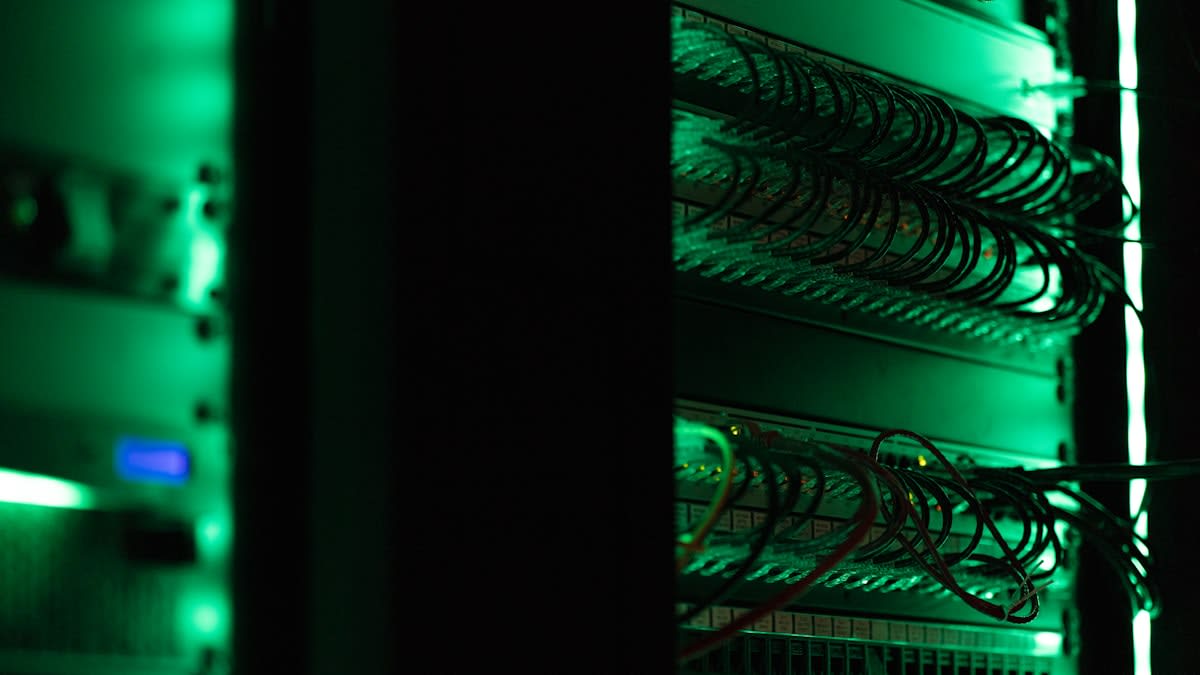
Why does HBM specifically trigger this? Because HBM is not a separate chip on a board; it is integrated via a silicon interposer. This proximity creates a concentrated heat zone. When the memory stacks work at full throttle to feed a GPU's tensor cores, they create a localized thermal spike. If that heat isn't stripped away instantly, the chip throttles, and the multi-billion dollar AI cluster becomes a very expensive space heater. The industry is now forced to move the coolant closer to the silicon than ever before.
| Metric | HBM2e (2021) | HBM3 (2023) | HBM3e (2024) |
|---|---|---|---|
| Max Bandwidth per Stack | 460 GB/s | 819 GB/s | 1.2 TB/s |
| Typical GPU TDP | 400W | 700W | 1,000W+ |
| Cooling Requirement | Forced Air | Air / Hybrid | Direct-to-Chip Liquid |
| Rack Power Density | 15-20 kW | 40-60 kW | 100-120 kW |
This jump in rack power density is the real story. A standard data center rack from three years ago was designed for 15kW. We are now seeing requests for 120kW per rack. This is not a marginal increase; it is an order of magnitude shift. It means the electrical panels, the floor loading, and the plumbing must be completely rewritten. You cannot simply add more fans when the air itself cannot carry the BTU load.
From Fans to Fluids
The solution is a move toward Direct-to-Chip (D2C) liquid cooling. This involves running a coolant—usually water or a dielectric fluid—through a cold plate that sits directly on the HBM and GPU. The fluid absorbs the heat and carries it away through a complex network of manifolds and hoses to a Coolant Distribution Unit (CDU). This is where the plumbing revolution happens. Data centers are essentially becoming industrial chemical plants, with pipes running under floors and overhead, managing flow rates and pressure to ensure no bubbles enter the loop.
"We are no longer building computer rooms; we are building high-pressure hydraulic systems that happen to run chips."— Lead Infrastructure Engineer, Hyperscale Facility
The risk profile has changed overnight. In an air-cooled world, a fan failure is a minor incident. In a liquid-cooled world, a leak is a catastrophic event. Engineers are now obsessing over dripless couplings and leak-detection sensors. The complexity of the plumbing is creating a new class of failure points. If a pump fails or a manifold clogs, a $40,000 HBM-equipped GPU can overheat and fail in seconds. The precision required for these installations is staggering.
The CapEx Drift
The financial burden is shifting. Historically, the GPU was the primary CapEx cost. Now, the cost of the facility—the pumps, the chilled water loops, and the reinforced flooring—is becoming a significant percentage of the total AI deployment cost.
This infrastructure lag is most evident in the Indian Subcontinent. In cities like Mumbai and Chennai, the ambient humidity and temperature are already extreme. Trying to run HBM3e clusters in these regions requires a brutal amount of energy just to chill the water used in the liquid loops. The PUE (Power Usage Effectiveness) in these regions is under immense pressure. Operators are experimenting with immersive cooling—submerging entire servers in non-conductive oil—to bypass the inefficiencies of traditional chilled water.
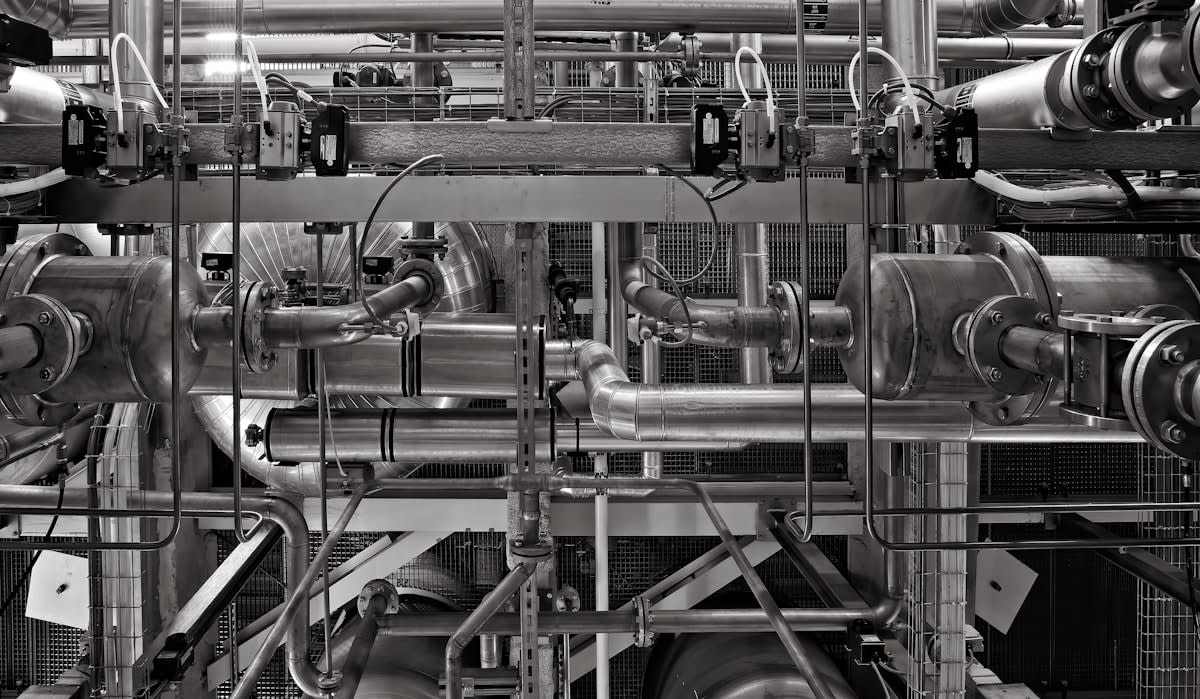
Does this mean air cooling is dead? Not for every workload. But for the training of frontier models, it is a relic. The delta between 2023 and 2024 is the realization that HBM density has outpaced air's thermal conductivity. We have hit a physical wall. The industry is now in a race to standardize the plumbing. Currently, there are too many proprietary connectors and manifold designs. Without a universal standard for liquid cooling, data center operators are locked into specific hardware vendors, creating a new kind of vendor lock-in that exists at the plumbing level.
The systemic pressure extends to the power grid. A 120kW rack requires massive amounts of electricity, and the cooling pumps themselves add to the load. In regions where the grid is unstable, the reliance on liquid cooling adds another layer of fragility. A power flicker that kills the pumps is far more dangerous than one that kills the fans, as the thermal mass of the liquid can only absorb so much heat before the silicon reaches critical temperatures.
Projected Rack Power Density Increase (kW)
Executive Insight
+18.4%
YTD Growth
Looking ahead, the move to HBM4 will only exacerbate this. The next generation of memory will likely integrate even more layers, further increasing the heat density. We are moving toward a future where the chip and the cooling system are designed as a single unit. The separation between 'the server' and 'the facility' is disappearing. The plumbing is no longer an accessory; it is a primary component of the compute architecture.
Ultimately, the HBM revolution is a lesson in unintended consequences. By solving the memory wall—the gap between processor speed and memory access—engineers created a thermal wall. The intelligence of the AI is now limited not by the logic of the code, but by the ability of a pump to move water through a pipe. The data center of 2025 will look less like a library of servers and more like a high-tech refinery.