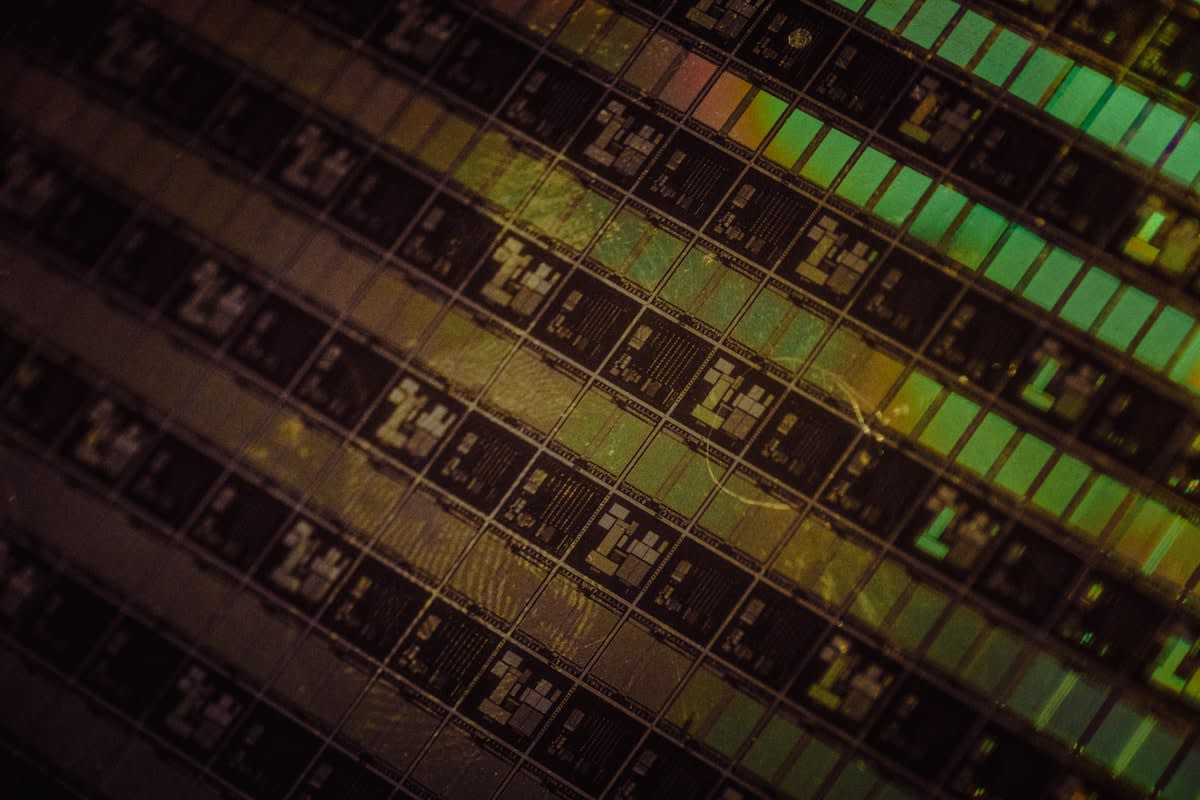
The tether is finally snapping. For the last few years, our interaction with artificial intelligence has been a long-distance relationship, defined by the API call. You send a prompt, it travels thousands of miles to a server farm in Virginia or Ireland, and a few seconds later, the answer returns. This centralized model worked for chatbots, but it fails the test of real-world utility. We are now entering the era of the Invisible Migration, where the brain is moving out of the cloud and into the silicon of your laptop, phone, and wearable.
Why this sudden pivot? The economics of the cloud are hitting a wall. Running massive Large Language Models (LLMs) in the cloud is an operational nightmare of energy costs and hardware depreciation. Companies are realizing that not every task requires a trillion-parameter model. Why waste a GPU cluster in a data center to summarize a local PDF when a dedicated chip in your device can do it in milliseconds? The shift is as much about the balance sheet as it is about the technology.
The Great Delta: From API Dependence to Local Autonomy
Twelve months ago, the industry conversation focused almost exclusively on scaling laws—the belief that bigger models always equal better intelligence. Today, the conversation has shifted toward efficiency and quantization. We have moved from asking how many parameters a model has to asking how many TOPS (Tera Operations Per Second) a chip can handle. This represents a fundamental change in the AI roadmap: we are no longer just building bigger brains; we are building smarter, smaller ones that can survive outside the data center.
Shift in AI Compute Distribution (Cloud vs. Edge)
Executive Insight
+18.4%
YTD Growth
This transition isn't happening in a vacuum. It is being driven by the rise of the NPU, or Neural Processing Unit. Unlike a CPU that handles general tasks or a GPU that renders graphics, the NPU is a specialist. It is designed for the specific matrix multiplication that AI requires. By offloading AI tasks to the NPU, devices reduce power consumption and eliminate the latency that makes cloud-based AI feel sluggish. Does a voice assistant need to check with a server in another time zone to turn off your lights? Of course not.
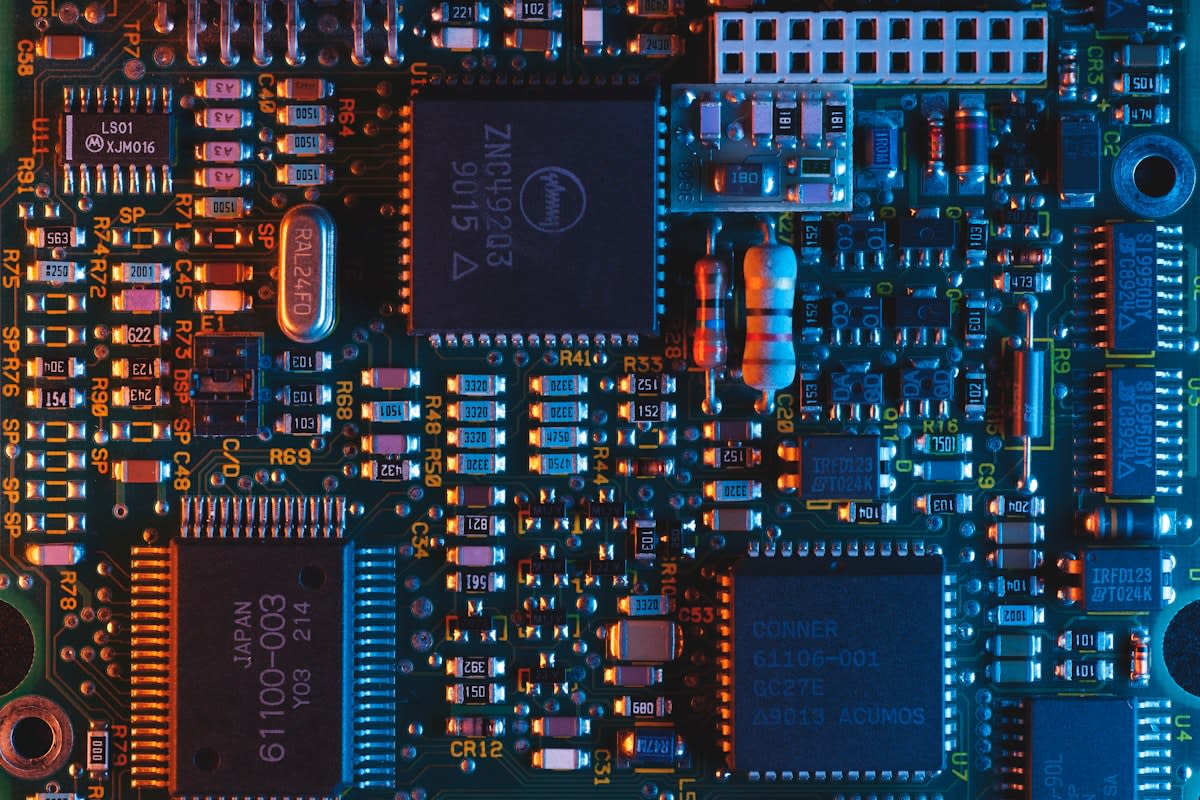
The global landscape of this migration is starkly divided by hardware capability. In Taiwan, TSMC is refining the nanometer processes that make these dense NPUs possible. In South Korea, Samsung is integrating AI acceleration directly into memory chips to solve the 'memory wall' problem. Meanwhile, in the US and China, a race is underway to define the 'AI PC' standard. The goal is no longer just connectivity; it is computational sovereignty.
The New Benchmark
The '40 TOPS' threshold has become the new gold standard for AI PCs. If a device cannot hit this mark of local compute power, it is essentially just a thin client for the cloud, unable to run sophisticated Small Language Models (SLMs) locally.
This shift brings a critical advantage: privacy. When your data stays on your device, the attack surface for hackers shrinks. You no longer have to trust a third-party provider with your most sensitive documents just to get a summary. Local AI transforms the device from a window into a cloud service into a private vault of intelligence. This is the only way high-security sectors, like healthcare in Germany or finance in Singapore, will ever fully adopt generative AI.
The Architecture of the Edge
| Feature | Cloud AI (The Old Way) | Edge AI (The Migration) |
|---|---|---|
| Latency | High (Network Dependent) | Ultra-Low (Instant) |
| Privacy | Third-Party Trust Required | Local Data Sovereignty |
| Cost Structure | Subscription/OpEx | Hardware Purchase/CapEx |
| Reliability | Requires Internet | Works Offline |
We must address the role of Small Language Models (SLMs). We are seeing a surge in models that are intentionally pruned and distilled to fit within 8GB or 16GB of RAM. These models don't try to know everything about the history of the Byzantine Empire; instead, they are fine-tuned for specific tasks like coding assistance or email drafting. By narrowing the scope, developers have unlocked performance that rivals the giants, but at a fraction of the energy cost.
"The future of AI isn't a single, omniscient god in the cloud; it's a billion specialized agents living in our pockets, acting on our behalf in real-time."— Industry Lead, Edge Computing Initiative
But is this migration seamless? Not exactly. The industry is currently grappling with a fragmentation of standards. Different chipmakers are using different frameworks to optimize their NPUs. This creates a headache for developers who want their AI apps to run identically on an ARM-based laptop and an x86-based desktop. We are in the 'Wild West' phase of local AI, where the hardware is ready, but the software ecosystem is still catching up.
Consider the impact on the global supply chain. The demand for high-bandwidth memory (HBM) is skyrocketing because local AI is hungry for fast data access. This puts immense pressure on the few companies capable of producing this memory. We are seeing a shift where the most valuable company in the AI stack isn't necessarily the one with the best algorithm, but the one with the most efficient way to move bits from memory to the processor.

The resilience factor cannot be overstated. In a world of increasing geopolitical instability and cyber warfare, relying on a handful of centralized cloud providers is a strategic risk. Local AI ensures that critical productivity tools remain functional even when the internet goes dark. This 'offline-first' mentality is becoming a requirement for government agencies and critical infrastructure operators worldwide.
What happens next? We will likely see a hybrid orchestration layer. Your device will decide in real-time: 'Is this task simple enough for my local NPU, or does it require the raw power of the cloud?' This intelligent routing will maximize battery life while ensuring the user gets the best possible answer. The invisible migration isn't about killing the cloud; it's about ending our total dependence on it.
The hardware is no longer just a vessel for software; it is becoming the intelligence itself. As we integrate these capabilities into everything from smart glasses to industrial sensors, the boundary between 'computer' and 'AI' will vanish. We are moving toward a world of ambient intelligence, where the compute is so distributed and so fast that we forget it's even there.