
The Physicality of Failure
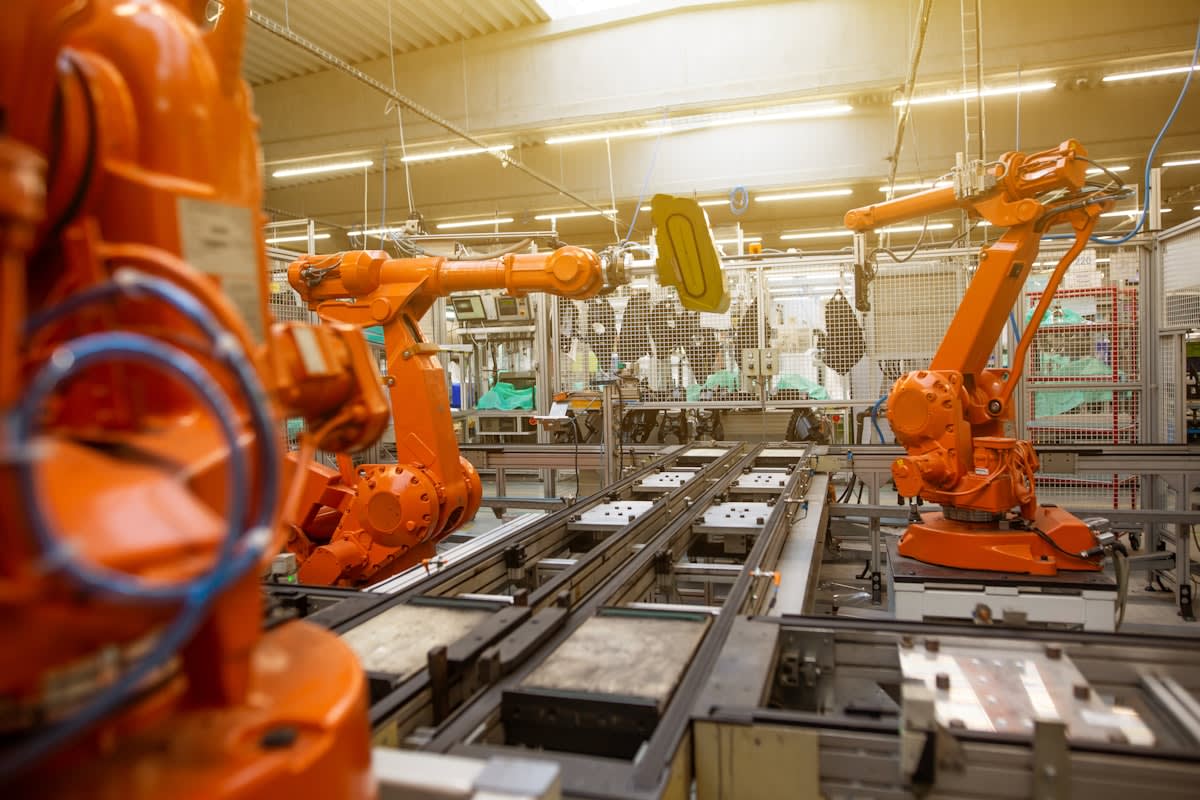
Latency is a physical wall. You cannot code your way through a copper wire that is too long or a processor that chokes on a data stream. In Pune's industrial belt, the heat and dust turn high-end servers into expensive bricks. Contrast this with Hsinchu's clean-room precision where cooling is a given. Here, we fight the environment as much as the milliseconds. Failure means a robotic arm misses its mark by three centimeters and ruins a batch of precision parts.
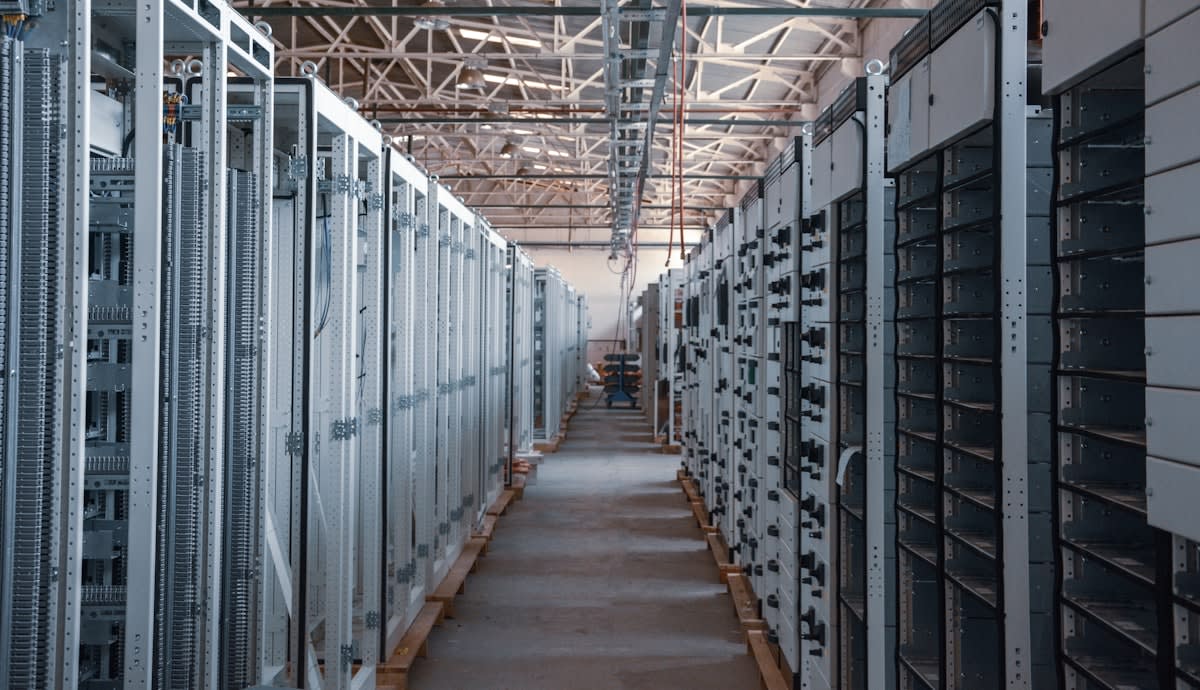
Heat kills performance. Dust clogs the fans. This environment demands hardware that does not blink when the temperature spikes. Most firms buy consumer-grade gear and wonder why their AI agents lag during the afternoon peak. Only industrial-grade silicon survives the grind of a 24/7 production line. Every millisecond of delay in a feedback loop is a potential disaster for the bottom line.
The Hard Truth
Cloud-first strategies are a fantasy in a factory. If the fiber line gets cut by a tractor, your entire production line becomes a museum exhibit. Compute must happen where the metal meets the motor.
Prerequisites for Latency Reduction
Hardware must be industrial-grade. You need Intel Core Ultra or Intel Panther Lake processors to handle the load without melting under pressure. Power must be stable and filtered. Network spectrum for private 5G needs to be secured before you buy a single antenna. Qualified engineers from specialized firms like IMARC Engineering are mandatory because a misconfigured switch is just a fancy paperweight.
- Intel Core Ultra or Panther Lake powered Edge AI platforms
- Private 5G spectrum allocation
- Industrial-grade embedded motherboards (e.g., Avalue)
- Dedicated technical staffing framework for deployment
- Unified manufacturing intelligence software (e.g., Sight Machine)
Getting these pieces in place is the hardest part. Logistics in Pune often mirror the chaos of Lagos power grids where the theoretical capacity rarely matches the actual delivery. You cannot assume the vendor's spec sheet reflects the reality of your shop floor. Testing must happen in the dirt, not in a lab. Only then can you begin the actual work of killing lag.
Five Steps to Kill Edge Latency
- Deploy High-Performance Edge AI Platforms: Stop sending data to a distant data center. Use Avalue's industrial PCs powered by Intel Core Ultra to process AI workloads locally. These platforms reduce the round-trip time to nearly zero by keeping the intelligence on the factory floor. Energy efficiency is a secondary benefit, but the primary win is the removal of the network hop.
- Establish Private 5G Foundations: Public networks are too noisy for industrial precision. Implement private 5G to create a controlled environment for device communication. Nokia has demonstrated that app stacking on these network foundations allows for 'physical AI' at the edge. This removes the congestion that typically plagues industrial Wi-Fi in metal-heavy environments.
- Integrate Autonomous AI Agents: Move from monitoring to execution. Deploy platforms like Plataine to analyze production conditions and recommend operational decisions in real-time. Isolated analytics are useless if the response takes ten seconds. Autonomous agents connect manufacturing intelligence directly to operational execution, slashing the time between detection and correction.
- Unify Production Data Across Lines: Fragmented data is the silent killer of speed. Use Sight Machine to unify production data across multiple factories and operational systems. When data is siloed, the latency isn't just in the wire; it is in the retrieval process. A unified data layer ensures the AI agent has the full context immediately.
- Secure Specialized Technical Staffing: Stop relying on ad-hoc hiring. Partner with frameworks like IMARC Engineering to deploy qualified technicians who understand plant-specific needs. A general IT person cannot tune a private 5G network for a robotic assembly line. You need engineers who know how to protect production continuity through precise hardware configuration.
Executing these steps requires a stomach for failure. You will see components fry. You will find that your 5G signal is blocked by a massive steel press. This is the nature of the work. Success is found in the iterative process of moving the compute closer to the sensor until the lag vanishes.
The Cost of Software-Only Thinking
Software cannot fix a slow processor. Many managers believe a better algorithm will solve the latency problem. This is a lie. If the hardware is throttled by heat, the fastest code in the world will still stutter. We see this constantly in the transition to Industry 4.0 where companies buy the AI license but keep the ten-year-old servers.
Data bottlenecks happen at the physical layer. When you stack apps on a weak network foundation, you create a queue. This queue is where latency lives. By using Intel Panther Lake processors, you increase the throughput at the edge. This ensures the hardware can keep up with the data generated by thousands of IoT sensors.
| Approach | Latency Source | Physical Solution | Outcome |
|---|---|---|---|
| Cloud AI | Network Round-trip | Avalue Edge PCs | Sub-millisecond response |
| Public Wi-Fi | Signal Interference | Private 5G Spectrum | Deterministic connectivity |
| Ad-hoc Staffing | Configuration Error | IMARC Framework | Production continuity |
| Isolated Analytics | Data Retrieval Lag | Sight Machine Unification | Real-time intelligence |
Looking at the data, the delta between a cloud-reliant plant and an edge-native plant is staggering. One operates on hope; the other operates on physics. The six-month silence previously observed in some telco PR engines suggests a gap between the hype of AI and the actual deployment of the hardware needed to run it.
Common Pitfalls
Over-reliance on the vendor is a common mistake. Salespeople will tell you their software optimizes everything. They ignore the fact that your factory floor is a Faraday cage. You must verify the signal strength in every corner of the plant. Do not trust the simulation.
Ignoring the human element is equally fatal. You can buy the best Avalue hardware and the most expensive Plataine license. Without a technician who knows how to troubleshoot a Panther Lake motherboard in a humid environment, you have nothing. Technical staffing is not an HR function; it is a production requirement.
Thermal throttling is the hidden enemy. Many firms install edge servers in cabinets without proper ventilation. The processor hits its thermal limit and clocks down. Your latency spikes, your AI agent lags, and your production line halts. Ventilation is as important as the CPU clock speed.
"The most advanced AI agent in the world is useless if it has to wait for a packet to travel 500 miles and back while a machine is crashing."— Industrial Edge Practitioner