
Prerequisites for the Transition
- A complete cryptographic inventory identifying every instance of public-key algorithms across the stack.
- Direct lines of communication with hyperscalers and hardware vendors regarding their PQC roadmaps.
- Board-level mandate that recognizes the 2030 and 2031 federal deadlines as hard compliance dates, not suggestions.
- A dedicated budget for 'cryptographic agility'—the ability to swap algorithms without rewriting core application logic.
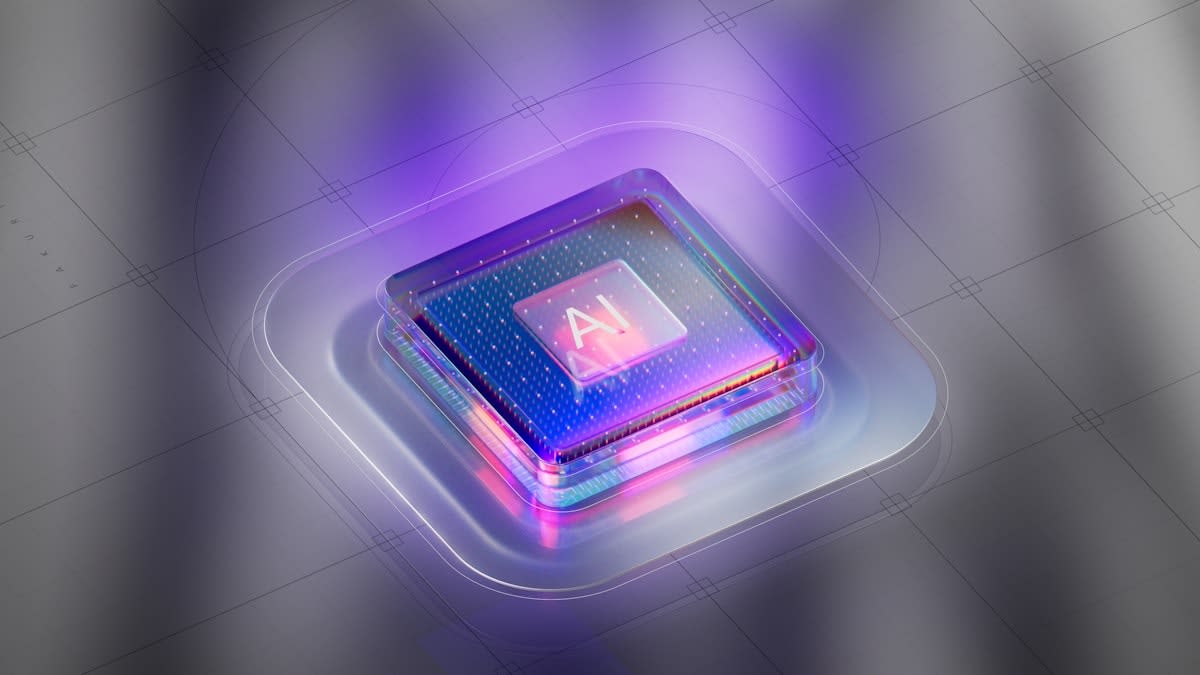
Quantum computers aren't just a theoretical threat for the next decade. They are being fast-tracked by executive orders. The U.S. administration recently signed mandates to accelerate the quantum ecosystem, specifically targeting the creation of scientifically relevant quantum computers and advanced sensors. For a CISO, this isn't a research project. It is a race against a clock that ends in 2030. If your current security architecture relies on the public-key algorithms that underpin almost all enterprise security, you are effectively operating on borrowed time.
The Operational Roadmap
- Map the Cryptographic Surface: Identify where RSA and ECC are used in your data-at-rest and data-in-transit protocols. You cannot protect what you cannot find.
- Audit Vendor Readiness: Demand PQC timelines from your stack providers. Look at the trajectory of leaders like Intel, who have seen market confidence surge with Bank of America raising price targets from $135 to $160 as they lean into quantum and AI.
- Deploy Quantum Simulation: Utilize digital twins to test the impact of new algorithms. Recent breakthroughs from USC and Quantum Elements using a new Quantum Monte Carlo (QMC) algorithm to suppress the sign problem now make these virtual replicas of quantum hardware more viable.
- Execute Phased Migration: Do not attempt a 'big bang' switch. Model your approach after the Rabobank wholesale transformation, which successfully migrated thousands of portfolios and accounts from over 35 legacy core banking systems into a single Oracle Flexcube platform.
Technical Edge
The USC and Quantum Elements breakthrough is a game-changer because it addresses the exponential scaling of computational requirements for error correction in fragile quantum systems. This allows for more accurate digital twins, meaning you can test your PQC readiness in a virtual environment before touching production traffic.
Why do so many organizations fail at this? They treat security as a static state rather than a continuous migration. Look at Westpac in Australia. Their new CIO, Richard Heeley, is tasked specifically with modernizing core systems and lifting resilience. This is the correct posture: treating infrastructure as a living organism that must evolve to survive the next computational epoch.
| Metric | Legacy State | Post-Quantum State |
|---|---|---|
| Algorithm Basis | Integer Factorization/Discrete Log | Lattice-based/Code-based |
| Compliance Window | Open-ended | Hard Deadlines (2030-2031) |
| System Architecture | Fragmented Legacy (e.g., 35+ systems) | Unified, Agile Platforms |
The gap between the board's question—'Are we ready?'—and a credible technical answer is currently a canyon. To bridge it, stop focusing on the hype of quantum supremacy and start focusing on the boredom of inventory management. The victory isn't in owning a quantum computer; it's in ensuring yours isn't the first network to be dismantled by one.
Common Pitfalls
- Assuming the 2030 deadline is for 'the government only'—contractors and critical infrastructure are explicitly included.
- Relying on a single vendor's proprietary 'quantum-safe' solution instead of adhering to open standards.
- Neglecting the 'Harvest Now, Decrypt Later' risk, where adversaries steal encrypted data today to decrypt it once a relevant quantum computer exists.
- Underestimating the complexity of core migration, ignoring the lesson that moving 35+ legacy systems requires a multi-partner ecosystem of consultants and integrators.