
Low Earth Orbit (LEO) has transitioned from a vast void into a crowded industrial zone. In the last twelve months, the volume of active satellites has accelerated at a rate that exceeds all previous historical projections. The deployment of mega-constellations has shifted the orbital environment from a place of strategic placement to one of mass production. We are seeing a transition where the sheer number of objects increases the probability of kinetic events regardless of operator skill. The space between 200 and 2,000 kilometers is now a high-traffic corridor with very few lanes.
Compare the launch cadence of 2023 to the first half of 2024, and the delta is stark. While the previous year focused on establishing the initial shells of connectivity, 2024 has seen a surge in replenishment and expansion launches. SpaceX has maintained a relentless pace, deploying dozens of Starlink satellites every few weeks, while Amazon's Project Kuiper has moved from theoretical prototypes to active orbital testing. This increase in launch frequency means that the window for coordinating orbital slots has shrunk from months to days. The speed of deployment is currently outstripping the speed of international regulatory consensus.
The Math of Orbital Congestion
Collision probability is no longer a theoretical exercise for academic papers. It is a daily operational reality for satellite controllers who must now perform thousands of avoidance maneuvers per year. A single collision between two large satellites would not just destroy those assets; it would create a cloud of thousands of pieces of untrackable shrapnel. Each piece of debris travels at speeds exceeding 28,000 kilometers per hour, meaning even a paint chip can carry the kinetic energy of a bowling ball. The density of objects in specific orbital shells is reaching a tipping point where the distance between assets is measured in mere kilometers.
Growth of Active Satellites in LEO (2020-2024)
Executive Insight
+18.4%
YTD Growth
One of the most pressing technical failures is the prevalence of dark satellites. These are assets that have suffered power failure or propulsion loss, leaving them as uncontrolled projectiles in high-traffic lanes. When a satellite goes dark, it can no longer perform the avoidance maneuvers required to stay clear of active constellations. Tracking these dead assets relies on ground-based radar and optical telescopes, which often have significant latency. The gap between a detected trajectory change and an actionable maneuver is often too narrow to guarantee safety.
"The current trajectory of LEO deployment is a race to the bottom where the winner is the one who can manage the most debris before the orbit becomes unusable."— Orbital Dynamics Analyst
Regulatory Lag and the Five-Year Rule
For years, the industry standard for satellite decommissioning was a loose 25-year guideline. This meant a dead satellite could drift for a quarter-century before naturally decaying into the atmosphere. Recognizing the danger, the FCC recently implemented a more aggressive five-year rule for satellite deorbiting. Operators must now ensure their assets are removed from orbit within five years of mission completion. While this is a step forward, it remains a domestic US policy in a global environment. Satellites launched from other jurisdictions may not adhere to these stringent timelines.
The European Space Agency (ESA) has pushed further with its Zero Debris Charter. This initiative seeks to eliminate the creation of new debris entirely by mandating that every satellite has a guaranteed removal plan. It moves the responsibility from a post-mission afterthought to a pre-launch requirement. However, the tension between economic viability and orbital sustainability remains high. Adding a dedicated deorbiting module increases the mass and cost of every single satellite launched.

Regional demand is further complicating the traffic map. In Brazil, the push for rural connectivity has increased the reliance on LEO constellations to bridge the digital divide in the Amazon basin. This creates a dependency on the very systems that are contributing to orbital crowding. If a major collision event were to occur, the economic fallout would be felt most acutely in these emerging markets. The reliance on a few private providers for national infrastructure creates a precarious vulnerability.
| Constellation | Estimated Assets (2024) | Target Altitude | Deorbit Strategy |
|---|---|---|---|
| Starlink | 5,500+ | 550km | Active Propulsion |
| OneWeb | 630 | 1,200km | Passive/Active |
| Kuiper | 100 (Initial) | 590-630km | Active Propulsion |
Every avoidance maneuver comes with a cost in propellant. Satellites have a finite amount of fuel, and every time they move to avoid a piece of debris, they shorten their operational lifespan. This creates a perverse incentive where operators might delay maneuvers to maximize profit, increasing the risk for everyone else. The coordination of these moves is currently handled through fragmented data exchanges between companies. There is no global, real-time traffic control center for space.
The Cascade Risk
The Kessler Syndrome describes a scenario where the density of objects in LEO is high enough that a single collision triggers a cascade of further collisions, eventually rendering the orbit unusable for generations.
Tracking the smallest pieces of debris remains a significant technical hurdle. While we can track objects larger than 10 centimeters, there are millions of fragments between 1 millimeter and 1 centimeter that remain invisible to radar. These fragments travel at hyper-velocity and can penetrate the shielding of most modern satellites. A single burst of fragments from a defunct upper-stage rocket can create a lethal field that persists for decades. The current tracking infrastructure is simply not granular enough to map these hazards.
Japan's JAXA and private firms like Astroscale are attempting to solve this through active debris removal. Using robotic arms and magnetic docking systems, they aim to capture dead satellites and drag them into the atmosphere to burn up. This is the orbital equivalent of a tow truck service. While promising, the scale of the problem dwarfs the current capacity for removal. We are launching satellites by the thousands and removing them by the ones.
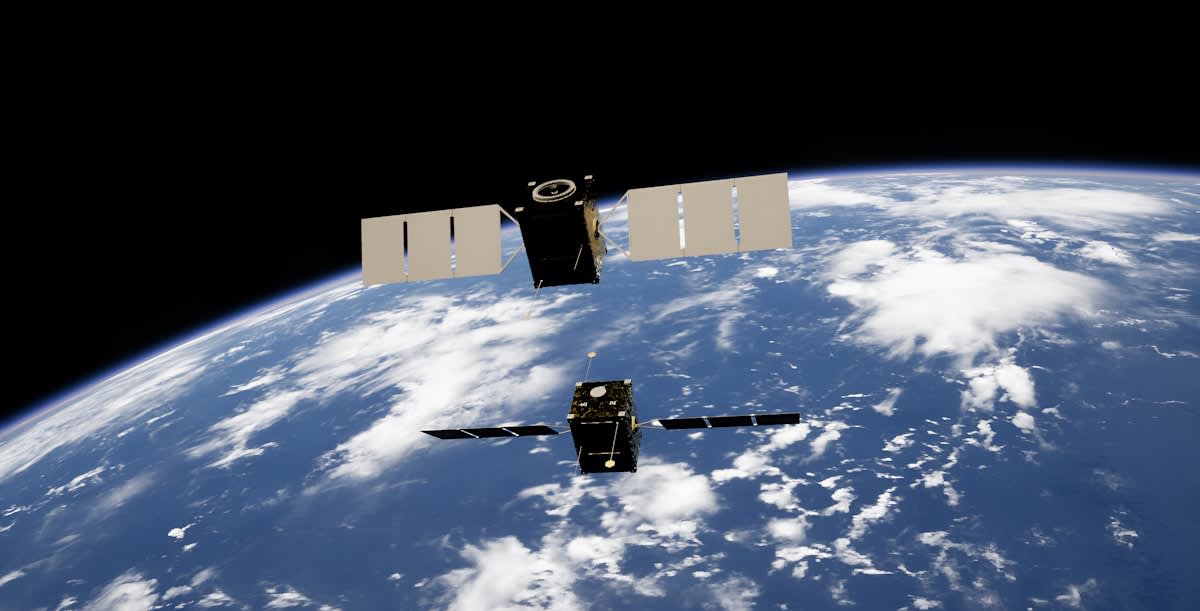
The economic risk extends beyond the satellites themselves. Global Positioning Systems (GPS) and weather monitoring satellites operate in higher orbits but are still affected by the debris clouds that migrate upward. A disruption in these services would paralyze global logistics, aviation, and agriculture. The interdependence of the modern economy on orbital assets means that space traffic is not just a technical issue, but a systemic financial risk. The cost of a total orbital lockout would be measured in trillions of dollars.
Ultimately, the solution requires a transition toward a sustainable orbital economy. This means moving away from the 'launch and forget' mentality toward a circular model of satellite lifecycle management. The industry must move toward standardized docking ports on all satellites to facilitate easy removal. Without a mandatory, global framework for traffic management, the current trend of expansion will eventually lead to a hard ceiling on orbital capacity. The window to implement these safeguards is closing as quickly as the distance between satellites.