
The prevailing narrative in artificial intelligence focuses almost exclusively on the ethereal: weights, biases, and the relentless pursuit of higher TOPS (Tera Operations Per Second). We treat the hardware as a transparent utility, a mere vessel for the model. This abstraction is a dangerous luxury. As intelligence migrates from the climate-controlled sterility of hyperscale data centers to the chaotic fringes of the physical world—the humid jungles of Southeast Asian manufacturing hubs or the caustic salt-spray environments of North Sea oil rigs—the primary constraint is no longer algorithmic efficiency. It is materiality.
Edge AI is currently hitting a physical wall. When a neural network executes on a compact SoC (System on Chip) at the edge, it generates concentrated thermal energy that cannot be dissipated by the passive cooling solutions typically found in small-form-factor devices. This leads to thermal throttling, where the clock speed is forcibly reduced to prevent permanent hardware failure. The result is a non-deterministic latency profile. For an autonomous drone or a high-speed industrial sorter, a sudden 30% drop in inference speed isn't just a performance lag; it is a systemic failure.
The Thermal Throttling Paradox
We are witnessing a paradox where the most powerful Edge AI chips are often the least usable in real-world deployments. High-density compute clusters generate heat that traps itself within the device chassis, creating localized hotspots that degrade the silicon over time. This thermal stress accelerates electromigration, the gradual movement of ions in a conductor, which eventually leads to circuit failure. Why do we continue to prioritize peak theoretical performance over sustained operational stability? The industry has mistaken a sprint for a marathon.
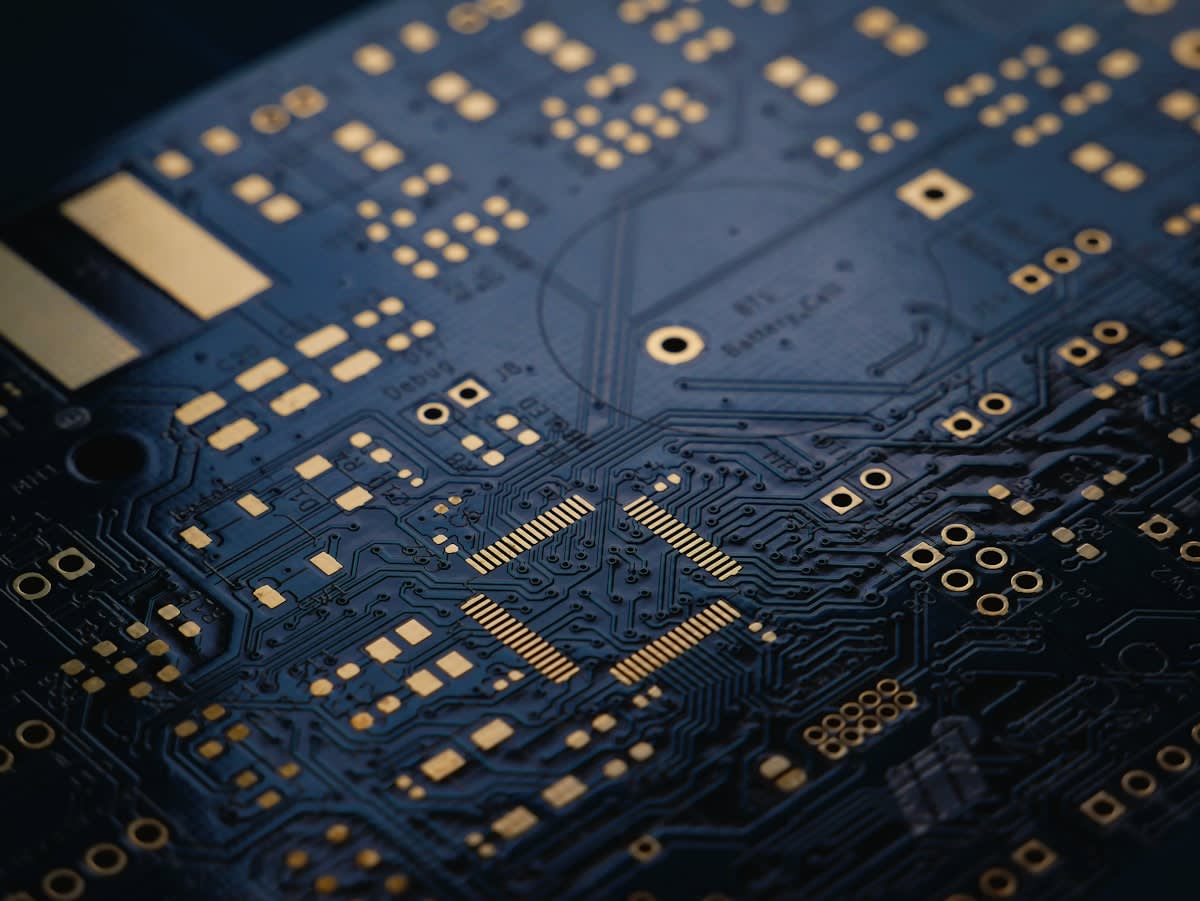
Effective thermal management is no longer about adding a larger heat sink; it is about the strategic orchestration of the entire thermal path. This involves the transition from standard thermal interface materials (TIMs) to advanced graphite sheets or phase-change materials that can move heat away from the SoC with surgical precision. Without this, the 'intelligence' at the edge is fragile, fluctuating in capability based on the ambient temperature of the room. Can we truly call a system 'autonomous' if its cognitive ability is dictated by a thermometer?
The Performance Cliff
Thermal throttling typically triggers when junction temperatures exceed 100 degrees Celsius, leading to an immediate and sharp decline in inference throughput, often reducing real-time processing capabilities by 40% or more in uncooled enclosures.
This volatility creates a massive liability for industrial operators. In a precision robotics environment in Germany, a millisecond of unexpected latency caused by a thermal spike can result in a mechanical collision. The hardware is capable of the math, but the physics of the enclosure are failing the mission. We have spent a decade optimizing the software stack, yet we are neglecting the copper and the ceramic.
The transition from lab to field exposes another critical vulnerability: environmental ingress. This is where conformal coating enters the strategic equation.
Chemical Defense as a Stability Requirement
Conformal coating is often dismissed as a final assembly step, a simple lacquer applied to protect against dust. This is a profound misunderstanding of its role in Edge AI. In high-humidity environments, such as the electronics assembly plants in Vietnam, atmospheric moisture creates microscopic conductive paths across PCB traces. This leads to dendritic growth—tiny metallic whiskers that cause intermittent short circuits. These faults are notoriously difficult to diagnose because they often disappear when the board is removed from the environment for testing.
"The failure of an Edge AI node is rarely a failure of the model; it is almost always a failure of the boundary between the silicon and its environment."— Lead Systems Architect, Industrial AI Initiative
The selection of the coating material is not a trivial choice; it is a trade-off between protection and thermal performance. Acrylic coatings are easy to apply and repair but offer poor moisture resistance. Silicone coatings provide excellent thermal flexibility and moisture protection but can act as an insulating blanket, trapping heat within the components they are meant to protect. This creates a direct conflict: the more you protect the board from the environment, the more you risk overheating the processor.
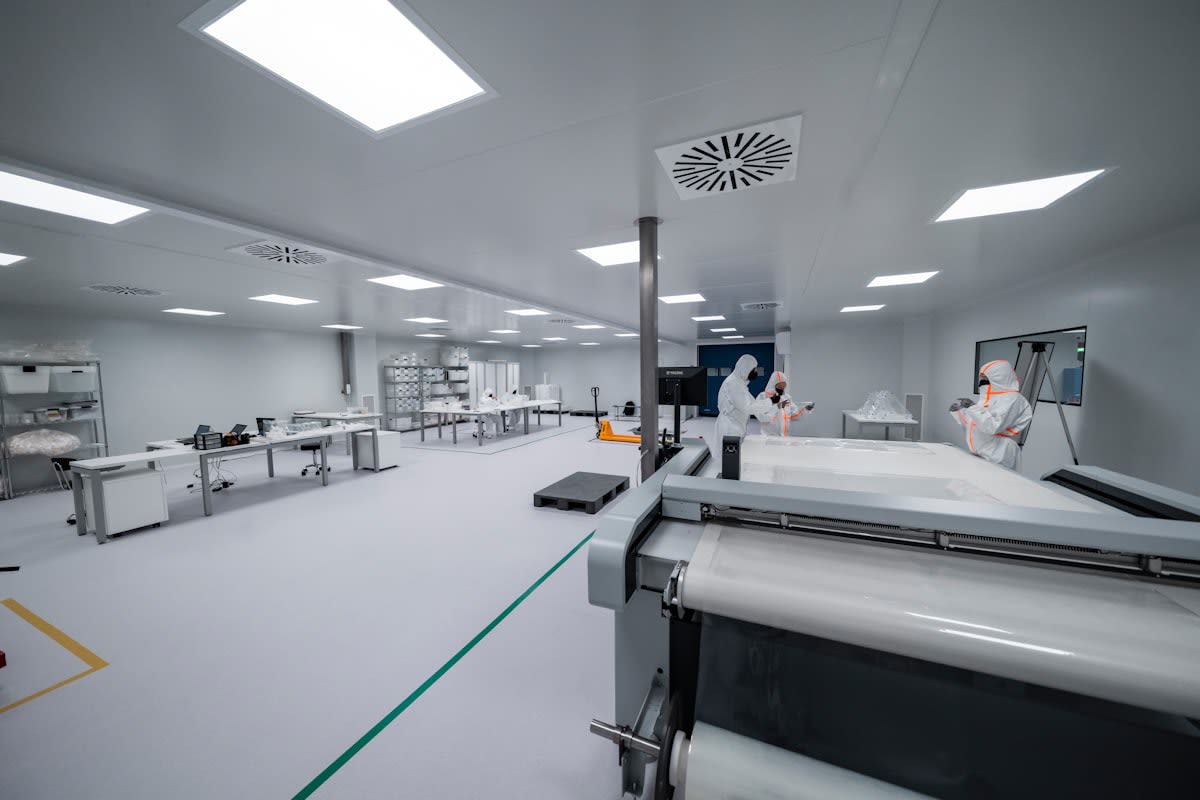
Parylene coatings, applied via vapor deposition, offer the gold standard in protection, providing a pinhole-free barrier that penetrates the smallest crevices. However, the cost and complexity of application are prohibitive for mass-market devices. This forces engineers into a precarious balancing act. If they under-specify the coating, the device fails in six months due to corrosion. If they over-specify, the device fails in six weeks due to thermal exhaustion.
The systemic shift we are seeing is the move toward 'Environment-First' design. Instead of designing a board and then wondering how to protect it, leading firms are now mapping the thermal and chemical profile of the deployment site before a single trace is laid on the PCB.
The Strategic Trade-off Matrix
To understand why this dictates stability, one must look at the intersection of material science and compute density. The following data outlines the conflict inherent in choosing a protection strategy for Edge AI hardware. Each choice impacts the stability of the system in a different way, shifting the failure point from the chemical to the thermal.
| Coating Material | Moisture Resistance | Thermal Conductivity | Repairability | Primary Failure Mode |
|---|---|---|---|---|
| Acrylic | Low | High | Excellent | Corrosion/Shorts |
| Silicone | High | Moderate | Poor | Thermal Throttling |
| Urethane | Very High | Low | Impossible | Overheating |
| Parylene | Extreme | Moderate | Impossible | Cost-driven Scalability |
When we analyze this matrix, it becomes clear that there is no 'perfect' solution. There is only an optimized compromise. The stability of an Edge AI deployment is therefore defined by how well the engineer has aligned the material choice with the environmental stress. A device deployed in the arid heat of the Atacama Desert requires a different chemical and thermal strategy than one deployed in the humidity of a Singaporean warehouse.
This realization is forcing a convergence between hardware engineering and site survey. We are seeing the rise of 'Environmental Digital Twins,' where the thermal behavior of a coated PCB is simulated in a virtual model of the deployment site before production. This is the only way to ensure that the AI doesn't simply shut down the moment the summer heat hits.
Beyond the Component: Systemic Resilience
The economic implications of neglecting these factors are staggering. The cost of replacing a failed Edge AI node in a remote location—including the logistics of shipping, the labor of a technician, and the cost of downtime—often exceeds the initial cost of the hardware by a factor of ten. In this light, spending an extra 5% on high-grade conformal coating and advanced thermal interfaces is not an added expense; it is a risk mitigation strategy.
- Reduction of unplanned downtime in remote industrial sites by up to 60% through optimized coating selection.
- Prevention of 'silent failures' where thermal throttling degrades AI accuracy without triggering a system crash.
- Extension of hardware lifecycle from 2 years to 5+ years in caustic environments.
- Stabilization of inference latency, enabling deterministic real-time control loops.
Ultimately, the stability of Edge AI is a problem of physics, not logic. We can build the most sophisticated transformer models in the world, but if the silicon is choking on its own heat or corroding in the rain, the intelligence is irrelevant. The winners in the Edge AI race will not be those with the fastest chips, but those who master the chemistry of the enclosure. The materiality bottleneck is the final frontier of distributed intelligence.