Prerequisites for Low-Waste Manufacturing
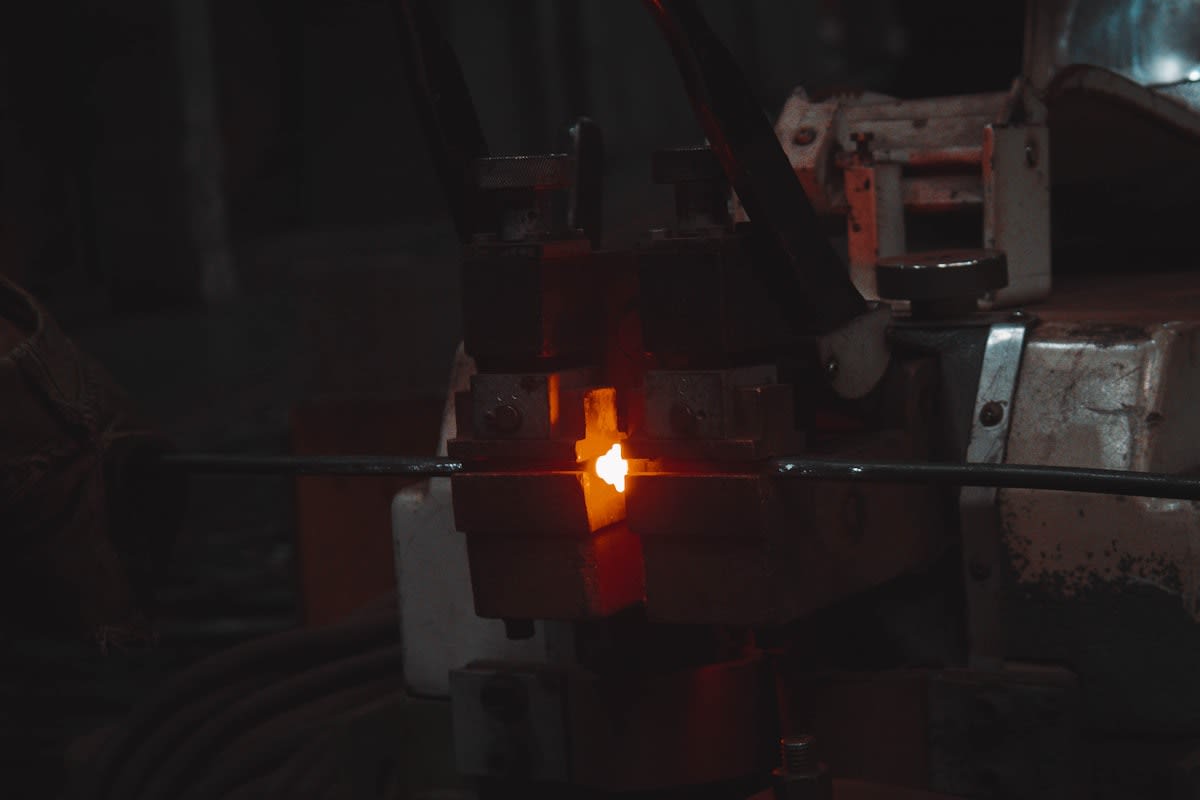
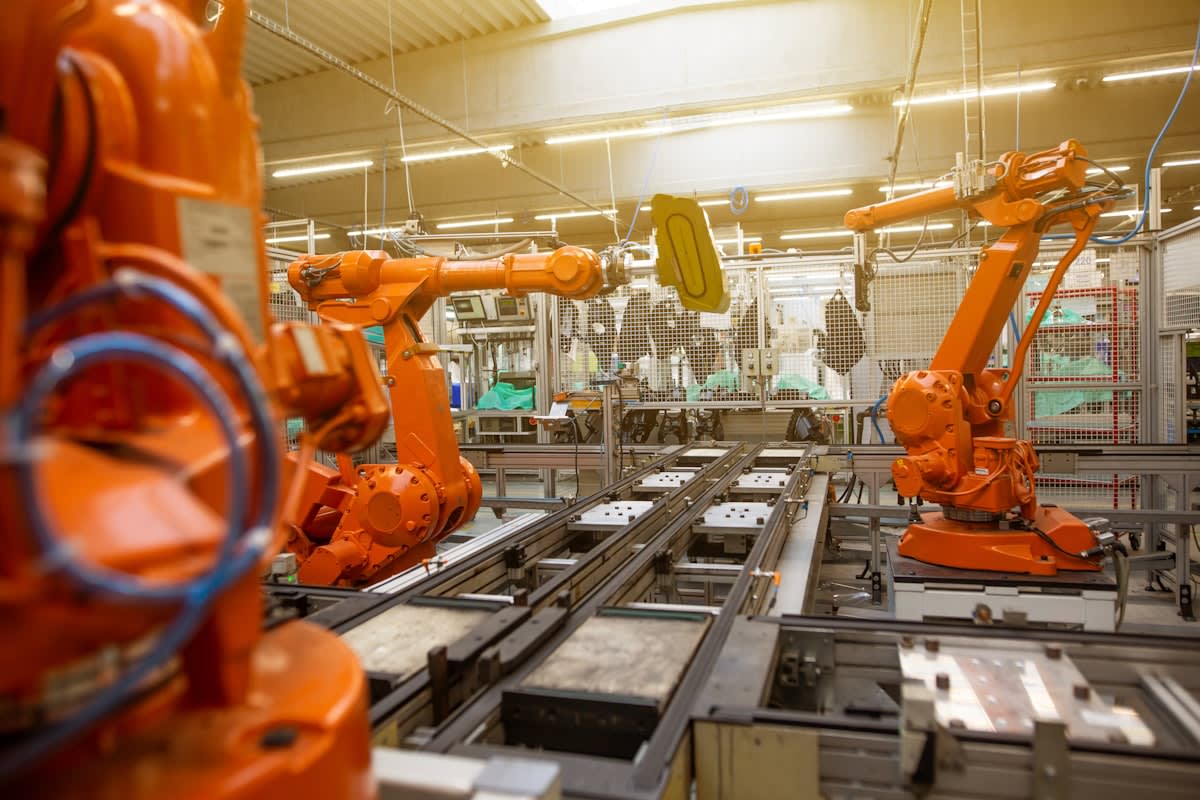
Reducing the buy-to-fly (BTF) ratio requires a fundamental departure from traditional subtractive logic. You cannot simply optimize a CNC program to save material when the starting ingot is ten times the weight of the finished component. To move toward near-net-shape production, a facility must first secure high-throughput robotic platforms capable of large-scale metal deposition. This includes the integration of Wire Arc Additive Manufacturing (WAAM) systems, such as the Vipra AM platform developed by Italy's Caracol, which allow for the rapid build-up of material in a geometry that closely mirrors the final part. Without this hardware, you are merely rearranging the deck chairs on a sinking ship of wasted titanium and nickel alloys.
Beyond hardware, the prerequisite is a shift in material procurement and certification. Traditional casting, while efficient, often struggles with the complexity required for next-generation engines like the Rolls-Royce UltraFan 30. Practitioners must establish a pipeline for specialized powders and wires, ensuring that the material properties of an additive build match the rigorous standards of a forged part. This requires a deep partnership with materials providers who are currently gaining financial muscle in the supply chain. If your quality assurance team is still thinking in terms of 20th-century forging, the transition to near-net-shape will fail at the certification stage.
The Execution Path to Near-Net-Shape
Why continue to pay for metal that you only intend to turn into swarf? The objective is to bring the BTF ratio as close to 1:1 as possible. This is achieved by layering material only where it is structurally necessary, then performing a final, light machining pass to achieve precision tolerances. The following steps outline the operational sequence for implementing this reduction across a production line.
- Audit existing BTF ratios across all high-value components to identify parts where more than 70% of the raw material is wasted during machining.
- Deploy WAAM for large-scale structural components. Utilize platforms like Caracol's Vipra AM to create near-net-shape preforms, significantly reducing the volume of material that must be removed in the final stage.
- Integrate advanced investment casting for engine components. Leverage the capabilities of specialists like the UK-based Doncasters, which recently secured a $919 million IPO to further invest in aerospace supply chain efficiencies, to produce complex geometries that minimize raw material overhead.
- Implement additive manufacturing for refractory metals. For parts requiring tungsten, such as those being produced by Freemelt for Proxima Fusion's stellarator in Germany, use 3D printing to avoid the near-impossible task of machining bulk tungsten.
- Apply Atomic Layer Deposition (ALD) for precision surface engineering. Use technology like that from Forge Nano to add critical functional layers at the atomic level, ensuring that performance is not dependent on bulk material thickness.
- Execute a final precision machining pass on the near-net-shape part to meet aerospace tolerances, ensuring the amount of material removed is minimal.
The WAAM Advantage
Wire Arc Additive Manufacturing (WAAM) is the heavy lifter of BTF reduction. By using an electric arc to melt wire, it achieves deposition rates far higher than powder-bed fusion, making it the only viable option for the massive components found in commercial jet engines.
The financial impact of these steps is immediate. When a company like Doncasters invests nearly a billion dollars into the supply chain, they are betting on the fact that precision casting and near-net-shape production are the only ways to sustain the current demand for civil jet and engine production. The recovery of the civil aviation sector, coupled with the surge in defense demand seen at the 2026 Farnborough Airshow, means that material scarcity is now a strategic risk. Those who cannot lower their BTF ratios will find their margins eaten by the rising cost of raw titanium and nickel.
| Method | Typical BTF Ratio | Material Waste | Primary Application |
|---|---|---|---|
| Traditional Machining | 10:1 to 20:1 | High | Simple geometries |
| Investment Casting | 3:1 to 5:1 | Moderate | Complex engine parts |
| WAAM / Additive | 1.2:1 to 2:1 | Very Low | Large structural components |
Transitioning to these methods is not without friction. The integration of robotic AM into a legacy workflow requires a complete rethink of how parts are fixtured and inspected. For instance, the use of AI in borescope inspections, as adopted by Pratt & Whitney, shows that the industry is moving toward digital verification of internal geometries. If you are still relying on manual measurements for a WAAM-produced part, you are creating a bottleneck that negates the speed gains of the additive process.

Refractory Metals and Surface Precision
Some materials simply cannot be machined efficiently. Tungsten is a prime example. In the pursuit of net-energy stellarators, the collaboration between Freemelt and Proxima Fusion demonstrates that 3D printing is the only way to handle such difficult materials without an astronomical BTF ratio. When the material is this hard, subtractive manufacturing is not just wasteful; it is economically ruinous. The ability to print tungsten parts directly to near-net-shape removes the need for expensive, slow, and wasteful grinding processes.
Once the bulk shape is achieved, the focus shifts to the surface. This is where Atomic Layer Deposition (ALD) enters the sequence. Forge Nano's investment in a North Carolina facility, backed by $100 million in DOE funding, highlights the move toward precision surface engineering for defense and aerospace batteries. Instead of using bulk material to achieve a certain property, ALD allows for the application of a few atomic layers. This ensures that the part remains lightweight while gaining the necessary chemical or electrical properties, further driving down the overall material weight of the flight assembly.
Projected Material Waste Reduction by Method
Executive Insight
+18.4%
YTD Growth
The convergence of these technologies—WAAM for bulk, casting for complexity, and ALD for surface—creates a manufacturing stack that is resilient to material price shocks. As global security risks push defense production to the forefront, the ability to produce weapons and aircraft parts rapidly without wasting 90% of the raw material becomes a competitive advantage. The industry is no longer just fighting for orders; it is fighting for the materials to fulfill them.
Common Pitfalls in BTF Reduction
- Over-reliance on post-processing: If your near-net-shape part requires as much machining as a solid block, you have failed. The goal is a light finish, not a total rebuild.
- Ignoring thermal stress: WAAM and other additive processes introduce significant internal stresses. Failing to implement proper heat treatment will lead to warping during the final machining pass.
- Underestimating certification timelines: Regulators are slower than printers. Ensure your validation process is running in parallel with your hardware implementation.
- Neglecting the supply chain: Relying on a single source for specialized additive wires or powders creates a new vulnerability that can halt production more effectively than a machine breakdown.
The most dangerous mistake is treating additive manufacturing as a standalone solution. It is a component of a broader near-net-shape strategy. Whether it is the $919 million bet by Doncasters on casting or the robotic innovations from Caracol, the objective is the same: stop paying for the scrap heap. Precision is not about how much you can remove; it is about how little you need to take away.