
Why do we still believe that a massive, centralized factory is the only way to ensure drug purity? This assumption is a relic of the 20th century. For cell therapies, the monolithic plant is a liability. It creates a distance between the point of manufacture and the patient that can kill a living product. We are seeing a hard turn toward modularity. By printing medicine in modular boxes—essentially closed-loop, automated platforms—we move the factory to the clinic. It is not about shrinking the process; it is about distributing the capability.
Prerequisites for Modular Deployment
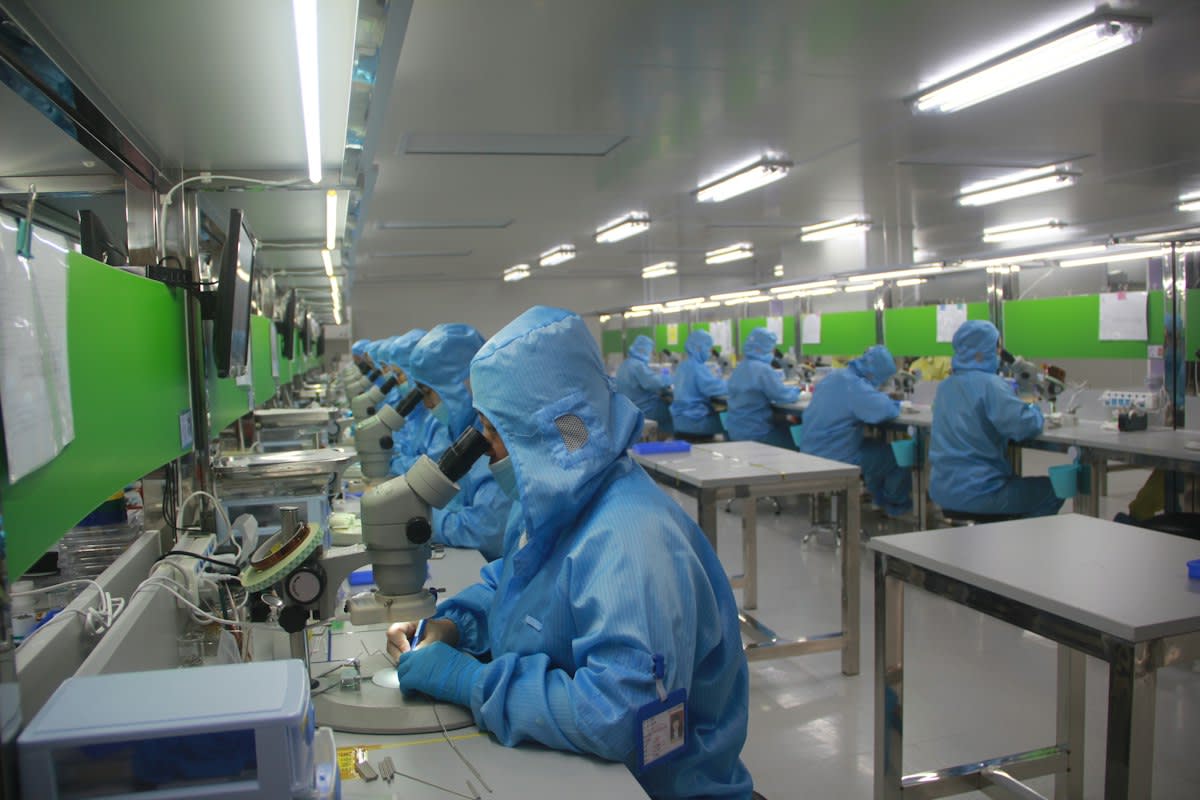
You cannot simply drop a modular box into a warehouse and expect GMP (Good Manufacturing Practice) compliance. The infrastructure must support the automation. Most failures occur because the facility lacks the precise environmental controls required to maintain the integrity of the modular unit. You need a foundation that supports turnkey engineering and stringent GMP compliance to ensure contamination-free production (Source: OpenPR, 2026). Without this, your modular box is just an expensive paperweight.
- Closed-loop hardware: End-to-end platforms or modular unit-operation instruments (Source: InsightAce Analytic, 2026).
- Digital Orchestration: A Manufacturing Execution System (MES) to track data integrity (Source: IndexBox, 2026).
- Single-Use Consumables: Dedicated cassettes, tubing sets, and reagent kits to eliminate cross-contamination (Source: InsightAce Analytic, 2026).
- Regulatory Framework: A validated path for DSCSA compliance, especially when distributing across borders (Source: Newswire, 2026).
Step-by-Step Implementation Strategy
Deployment is a sequence of precision. You start by isolating the unit operation. Do not attempt to automate the entire chain on day one. Instead, identify the most brittle part of your process—usually the capture or the expansion phase—and modularize that first. This allows you to validate the closed system without risking the entire batch.
- Define the Unit-Operation: Select whether you need an integrated end-to-end platform or specific modular instruments for iPSC or adherent cell processing (Source: InsightAce Analytic, 2026).
- Integrate Digital Orchestration: Deploy an MES. Providers like Critical Manufacturing in Portugal or GE Digital in the US offer the data historian solutions necessary for GMP data integrity (Source: IndexBox, 2026).
- Establish the Consumable Chain: Secure a reliable supply of single-use cassettes. The cost of these consumables is a primary barrier to entry, but they are non-negotiable for closed-system sterility (Source: InsightAce Analytic, 2026).
- Execute Process Validation: Run non-human primate studies or equivalent validation trials to ensure the modular box replicates the centralized lab results (Source: Newswire, 2026).
- Scale-Out, Not Scale-Up: Instead of building a larger machine, deploy additional modular boxes. This 'scale-out' approach supports forward growth in cell therapy manufacturing (Source: IndexBox, 2026).
Transitioning from a lab bench to a modular box requires a shift in mindset. You are no longer a chemist; you are a systems integrator. The mechanical failure of a single tubing set can void an entire patient's therapy.
Global Context: From Suzhou to Puerto Rico
The application of this technology varies by terrain. In China, Suzhou Pharma is leveraging turnkey engineering and modular construction to create contamination-free environments (Source: OpenPR, 2026). They focus on the physical shell. Meanwhile, in the Americas, companies like Vicapsys Life Sciences are focusing on vertical integration. By combining manufacturing with distribution platforms in Puerto Rico and targeting the Indian Health Service, they are solving the last-mile problem for underserved markets (Source: Newswire, 2026).
"The high cost of developing, implementing and running automated cell therapy manufacturing platforms is a significant barrier to the market. The platforms themselves are expensive to build and require specialist instrumentation, robotics, single use consumables, software integration and GMP infrastructure."— Market Analysis Report, InsightAce Analytic (2026)
Does the cost justify the move? For rare cell therapies, yes. The ability to produce a batch locally avoids the risk of degradation during long-haul transport. The weight of the regulatory burden is shifted from the product to the process. If the process is validated in a closed modular box, the location of the box becomes less relevant.

The Practitioner's Reality: Internal Frictions
Here is what the brochures don't tell you. There is a constant war between the software engineers and the cleanroom technicians. The engineers want a fully closed, 'black box' system where the human is just a loader. The technicians, however, know that sensors fail. They want manual overrides and sight-glasses to see if the cells are actually expanding. When a sensor drifts in a closed modular system, you can't just reach in and fix it without breaking the sterile seal. This conflict often leads to 'validation drift,' where the actual operation of the machine deviates from the written SOP just to keep the product alive.
Editorial Note: The Consumable Trap
The debate over single-use consumables is the industry's biggest hidden cost. While they ensure sterility, the reliance on a single vendor for proprietary cassettes creates a dangerous dependency. If a vendor in one part of the world faces a supply chain break, your entire modular fleet stops.
Common Pitfalls and Failures
The most common mistake is over-automation. Practitioners often try to automate the 'orchestration' before they have mastered the 'unit operation.' If your basic cell expansion is inconsistent, adding a robot just means you are producing failures faster. Another failure point is ignoring the data historian. If you use a modular system but keep your logs in a manual spreadsheet, you will fail your GMP audit instantly (Source: IndexBox, 2026).
- Failure to account for 'Cold Chain' integration at the modular exit point.
- Underestimating the training time for personnel to operate robotic orchestration hardware (Source: InsightAce Analytic, 2026).
- Over-reliance on a single MES provider without a data portability plan.
- Neglecting the physical requirements of the 'box' (power, HVAC, vibration) in the host facility.
Fact-Check & Accuracy Note
Verifiable sources for this guide include market data from IndexBox (2026) regarding GMP capture systems and InsightAce Analytic (2026) regarding automated cell therapy platforms. Academic debate continues regarding the cost-effectiveness of 'scale-out' versus 'scale-up' for non-personalized cell therapies, where the overhead of multiple modular units can exceed that of one large reactor.